Last updated November 18, 2026
Free written scope consultation - allowances, timeline, and change-order rules on paper before a single trade is scheduled
Bathroom Remodeling Warning Signs Every Homeowner Should Know
A contractor who can’t hand you a written price before demo day will almost always hand you a surprise invoice after it. And in Nevada, that invoice has no legal cap unless your contract says otherwise. That single fact reshapes how you should shop for a bathroom remodel: the dangerous part of the project isn’t the tile saw or the plumbing rough-in, it’s the paperwork you sign before anyone shows up. Most red flags never appear on the job site. They appear at the kitchen table, in a three-line bid written on a notepad, or in a “we’ll work out the details later” handshake. This guide walks through the contract gaps, the verbal-estimate pattern, and the physical signs inside your Winchester bathroom that predict trouble long before your first fixture gets pulled.
Quick Answer
The biggest bathroom remodeling red flags are contractual, not cosmetic: no written line-item price, no defined scope, no warranty clause, and no proof of Nevada licensing and insurance. These gaps predict cost overruns more reliably than any online review. Soft subfloor, caulk gaps, and efflorescence on grout are the physical warnings you can photograph and hand to a contractor before work begins so the scope is honest from day one.
Styles & brands we work with
- Kitchen remodeling
- Bathroom remodeling
- Home additions & ADU
- Roofing
- Windows & doors
- Driveway & pavers
- Fence
Table of Contents
- The Paper Trail Problem: Why Red Flags Live in the Contract
- The Verbal Estimate That Changes at the Door
- Contract Language Gaps That Predict Cost Overruns
- Physical Warning Signs Inside Your Bathroom
- What a Real Written Guarantee Should Say
- Nevada Licensing and Insurance Checks (Step by Step)
- Real Bathroom Remodel Costs in Winchester
- Common Mistakes to Avoid
The Paper Trail Problem: Why Red Flags Live in the Contract
In our experience, homeowners spend 80 percent of their shopping energy on finishes and 20 percent on the paperwork. It should be the reverse. A contractor who is rigorous about the contract is almost always rigorous about the screws behind the drywall. The reverse is also true: a contractor who’s casual about pricing is usually casual about waterproofing, sequencing, and cleanup.
The reason this matters more in bathrooms than in almost any other room is that the stakes are hidden. A bad kitchen paint job fails in front of you. A bad shower pan fails behind tile, four to twelve months in, after a slow leak has already soaked the framing. The contract is the only thing still protecting you at that point.
If you already have a scope in mind, the smartest move is to compare a written bid against the process we lay out on our Bathroom Remodeling in Winchester page. Anything missing from that bid compared to a well-structured one is a warning sign, and it costs nothing to notice it before demo day.
Three things should be in writing before a single tile is touched: a fixed price with line items, a defined scope (including what’s not included), and a warranty clause that states duration, coverage, and who to call if something fails. If any of the three is missing or vague, treat it as a signal, not an oversight.
The Verbal Estimate That Changes at the Door
The verbal-estimate pattern is the most common story we hear from Winchester homeowners. It almost always unfolds the same way. You get a number during the walkthrough. It sounds reasonable. You book the job. Then demo day arrives, the drywall comes off, and the walls are open. That’s the exact moment the price moves.
The reasoning sounds legitimate the first time you hear it: “we found rot behind the shower valve,” or “your subfloor isn’t code-compliant,” or “this wasn’t in the original scope.” Some of it may even be true. The problem is that none of it is verifiable from your side, because the original number was never itemized. You have no line to compare to, no unit price to check, and no cap on the change order. Nevada law allows change orders to be priced however the contract permits, so if the contract doesn’t cap them, the only ceiling is your willingness to walk away mid-project.
A written line-item price heads this off. Not a range. Not a ballpark. A number with the specific fixtures, tile, substrate, and labor separated out, so that if the scope changes after demo, both sides are negotiating from an agreed baseline rather than from the contractor’s gut.
Watch for these phrasings in the bid:
- “Price is approximate pending demo” with no defined change-order process
- “TBD” or “allowance” for major items (vanity, tile, shower valve) with no cap stated
- “Plus materials” without a materials list
- No written price at all, only a verbal figure and a start date
- Prices scribbled on the back of a business card or texted as a screenshot
Any of these is fair grounds to slow down and ask for a real written number before the deposit is paid.
Contract Language Gaps That Predict Cost Overruns
Think of a remodeling contract like a construction to-do list you can hold someone to. If a specific item isn’t in writing, it isn’t really promised. The most predictive contract gaps we see in Winchester bathroom jobs fall into a short list:
- No fixed price. The contract quotes a range or says “approximately.” That’s an invitation to drift.
- No defined scope. The bid says “new shower” without naming the valve, the tile, the waterproofing system, the drain, or the backer board. Every one of those is a change order waiting to happen.
- No change-order process. A legitimate contract names what happens if the scope changes: signed addendum, written price before work proceeds, no work without your initials.
- No warranty clause. If the contract is silent on the guarantee, ask directly: what’s covered, how long, and how do you report a problem?
- No completion date or arrival window. A start date is not a schedule. You should see an arrival window and a target completion.
- No cleanup or debris-removal clause. A contractor who isn’t contractually obligated to haul off demo debris usually won’t.
None of these gaps require an inspector or a lawyer to spot. They require you reading the whole contract slowly, with a pen in hand, before you sign it. The moment to catch them is always before the deposit, not before the tile.
For a broader look at how a properly structured remodel is sequenced, our General Contractor in Winchester page walks through the phases from permit to punch list.
Physical Warning Signs Inside Your Bathroom
Before your contractor arrives for the estimate, walk into the bathroom with your phone and photograph every surface. You’re building a record. The photos go to the contractor during the walkthrough, and they help you compare bids on the same set of facts. Here’s what to look for.
Soft subfloor
Press the heel of your hand into the floor near the toilet and along the tub apron. If the floor gives, or if you feel a slight bounce you can’t explain, the subfloor has likely been wet. In Winchester, where summer monsoon moisture and hard-water scale both work against bathroom floors, this is common. A soft subfloor is a scope item, not a surprise: get it in writing.
Caulk gaps and failing seals
A hairline gap between the tub and tile, or caulk that’s pulling away from the wall, is the leading cause of slow water intrusion behind tile. Photograph it. Mention it in the walkthrough. If the contractor doesn’t add “re-caulk and reseal” to the written scope, that’s the first red flag.
Efflorescence on grout
That white, powdery bloom on grout lines is efflorescence: mineral salt pushed to the surface by water traveling through the tile assembly from behind. Efflorescence on a bathroom wall or floor is a sign of moisture where moisture shouldn’t be. A contractor who shrugs it off as “just hard water” is either inexperienced or hoping you won’t ask.
Water stains and mold on the ceiling below
Check the ceiling of the room below the bathroom. A rust ring or a bloom of mold on drywall means the shower pan or supply line is already leaking. That’s a plumbing scope item, and it belongs on the written bid.
Failing grout at the shower receptor
Grout that’s cracked or missing at the shower base means water is already in the assembly. If the contractor’s bid doesn’t mention “shower pan inspection,” slow down. In our experience, Winchester bathroom tear-outs reveal this more often than homeowners expect, and it needs to be priced in writing before the demo begins.
What a Real Written Guarantee Should Say
A written guarantee isn’t a page of marketing language with a seal at the bottom. It’s a short, specific promise. Here’s what to look for before you accept one.
- A duration. “We stand behind our work” is not a duration. A real guarantee says how long: 30 days, 1 year, longer. Our 365-Day Done Right Promise has a specific length because that’s what makes it enforceable.
- What’s covered. Labor only? Materials too? Waterproofing failures? The specific list of covered failure modes should be in the document, not implied.
- What’s excluded. Everything has exclusions. The guarantee that lists them honestly is more trustworthy than the one that claims to cover everything.
- How to report a problem. A phone number, an email, a written process. If the guarantee says “call us” without a number, it’s not a guarantee.
- Who comes back. The company that did the work. Not a subcontractor you have to track down. Not a warranty company.
- A free return visit for repair failures. If the work fails inside the guarantee period, you shouldn’t be charged a service call or a re-inspection fee. That’s a specific standard we hold ourselves to, and it’s worth asking any contractor to put in writing.
A hollow guarantee usually gives itself away in three sentences: “satisfaction guaranteed,” “we care about quality,” and a signature line with no date on it. Ask for the version with a date and a coverage list, and read it before you sign anything.
Nevada Licensing and Insurance Checks (Step by Step)
Nevada contractor law is specific, and it’s worth knowing what to verify. The state licenses residential contractors through the Nevada State Contractors Board, and any contractor doing a bathroom remodel in Winchester above a relatively modest dollar threshold needs an active license. The steps below take about ten minutes and will rule out more bad actors than any part of this guide.
- Ask for the license number in writing. Not a photo of a card on a phone. The number, printed on the bid or the contract.
- Look up the license on the Nevada State Contractors Board website. Confirm: the license is active, the classification matches residential work, and the name matches the name on the contract.
- Ask for a certificate of general liability insurance. The certificate should name the business entity you’re contracting with, not a truck or a sole proprietor’s first name.
- Ask for proof of workers’ compensation coverage. If the contractor has employees (not just subs), Nevada requires it. This protects you if a worker is hurt on your property.
- Confirm the contract terms match what the license says. A licensed “ABC Remodeling LLC” shouldn’t sign a contract as “ABC Home Services” unless the license covers both.
- Ask who pulls the permit. A legitimate contractor pulls the permit in their name and has it inspected. If the bid says “permit pulled by homeowner,” that’s a warning sign.
If any of these six checks hits a wall, treat it as a reason to keep calling. There’s no polite middle ground on licensing, and the contractor who respects this process will hand you the paperwork before you ask.
Real Bathroom Remodel Costs in Winchester
Numbers help. Here are the ranges we see for bathroom work in Winchester, so you have a written benchmark to compare any bid against. If a bid lands well below or well above these ranges with no explanation, that’s a flag worth asking about.
- Cosmetic refresh (paint, vanity swap, toilet, no tile removal): $4,500 – $9,500
- Mid-range full bath (new tile, fixtures, vanity, waterproofing): $14,000 – $26,000
- Primary bath remodel (gut, shower rebuild, tile, double vanity, upgraded fixtures): $28,000 – $55,000
- Shower-only rebuild with waterproofing and pan: $6,500 – $14,000
- Permit fees (typically pulled by contractor): $250 – $900 depending on scope
Cambria and Silestone countertop tops add $600 to $1,800 over a laminate vanity, depending on square footage. Kohler and Moen fixture upgrades typically add $800 to $2,500 over standard. These are the pieces that make a bid go from “suspiciously cheap” to “realistic,” and they belong on the line-item price in writing.
If your bathroom is part of a larger whole-home project, our team at the Penhallow Remodeling Winchester home page can walk you through how bathroom pricing interacts with broader remodel scope, and the Kitchen Remodeling in Winchester page shows the same written-price structure applied to kitchen work.
Common Mistakes to Avoid
- Accepting the lowest bid without a line-item breakdown. The lowest number that isn’t itemized is usually the highest number once the change orders run their course.
- Paying a large deposit before the contract is signed. Nevada deposit limits exist for a reason. Never hand over more than the contract specifies, and never before the contract is fully written and signed by both sides.
- Relying on a verbal promise that the crew will “take care of it.” If it isn’t in the written scope, it isn’t promised. Ask for it in writing or don’t rely on it.
- Skipping the permit because the contractor says it’s not needed. In Winchester, even modest bathroom work often requires a permit when it touches plumbing, electrical, or structural. A contractor who avoids permits is avoiding inspection.
- Not photographing the bathroom before demo. Photos before, during, and after are your proof of condition. They also help if the contractor tries to attribute pre-existing damage to your plumbing after their work fails.
- Choosing a contractor without confirming warranty terms in writing. “We stand behind our work” is not a warranty. Ask for the duration, coverage, and reporting process in the contract.
- Letting a “special price today only” pressure you into signing. No legitimate contractor needs a countdown timer. A written price stays valid for a stated period, not a weekend.
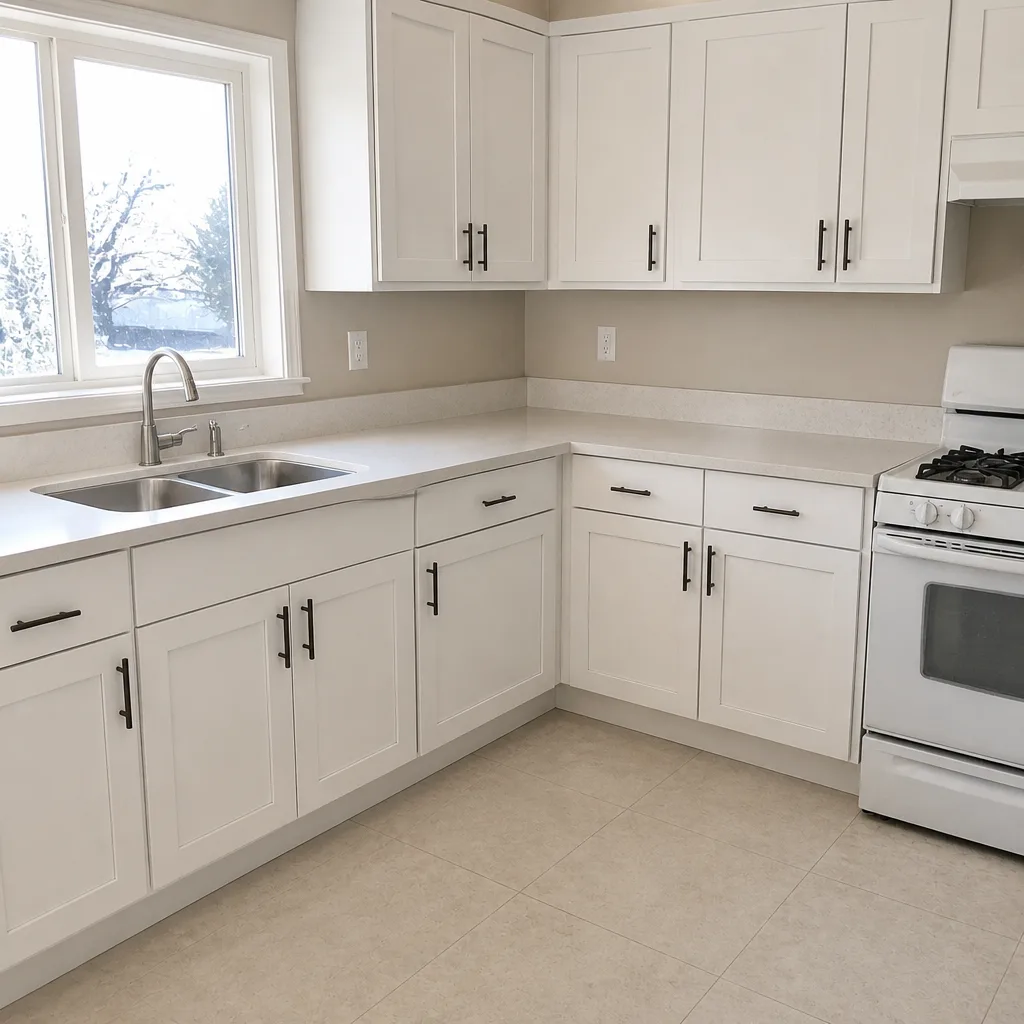
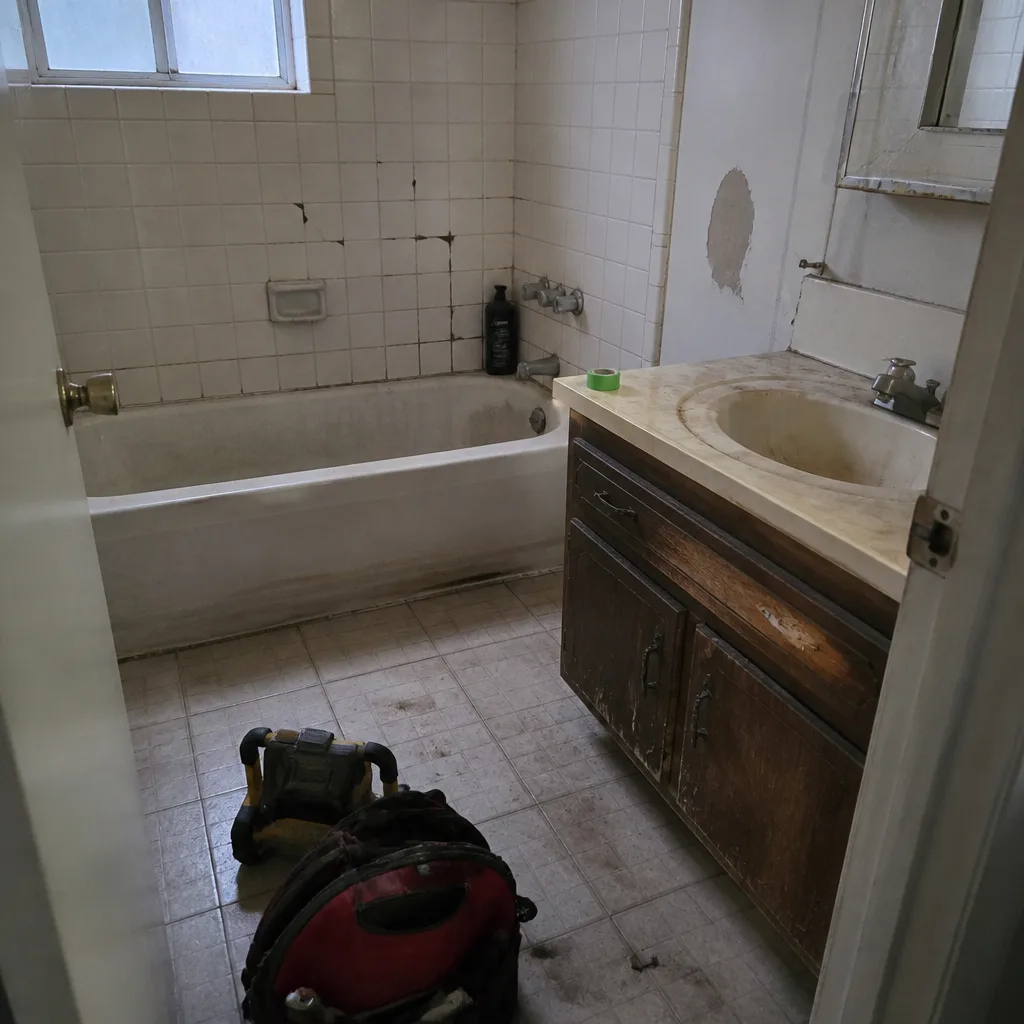
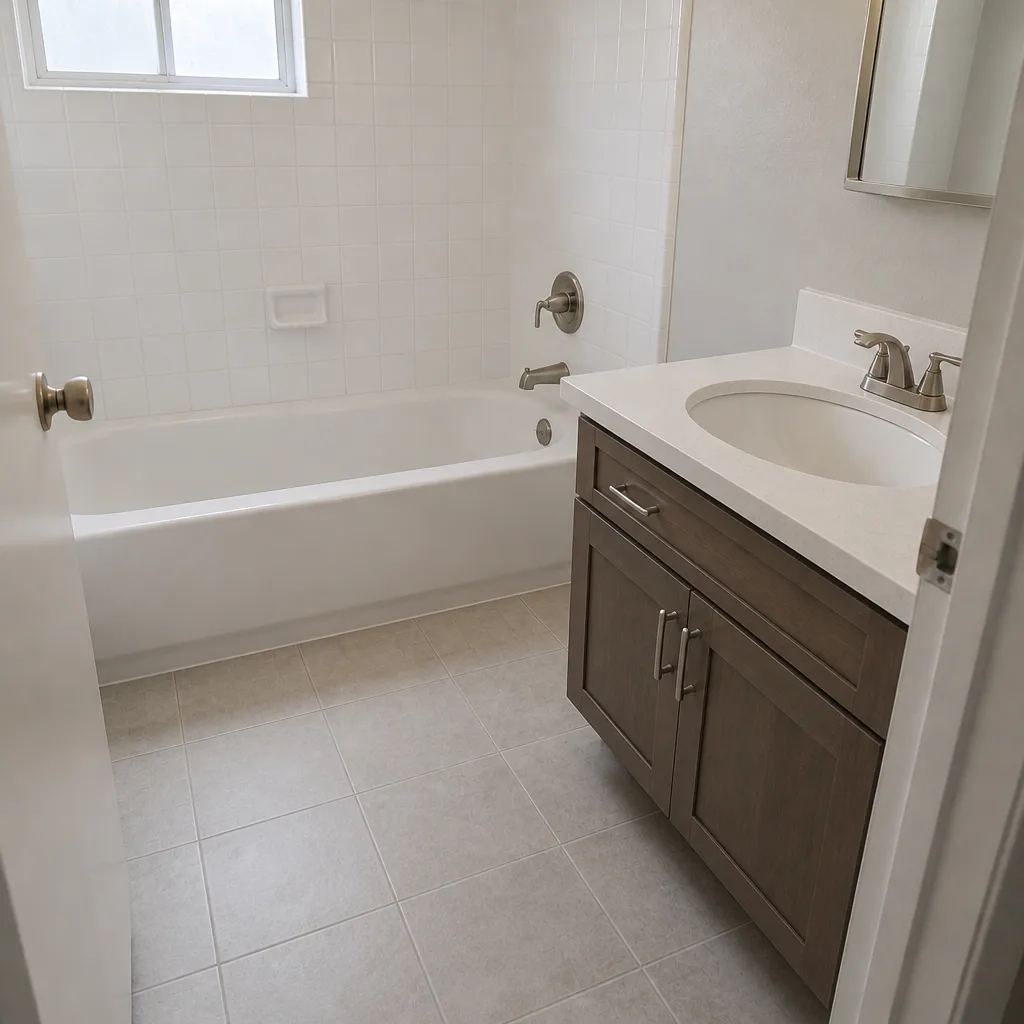
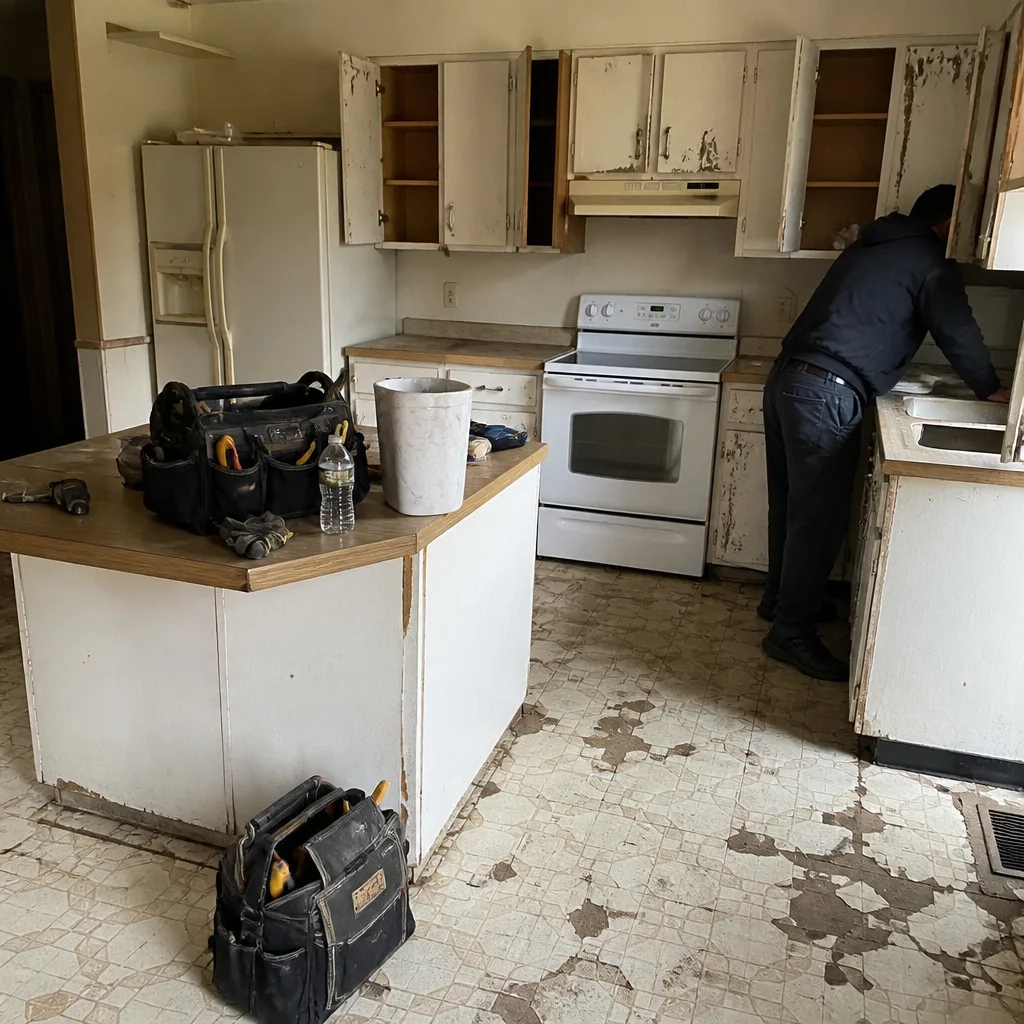
See the difference
 Before
 After
 Before
 After
 Before
 After
When to Call a Professional
Some warning signs require a trained set of eyes before you book any work. Soft subfloor, efflorescence on grout, water staining on the ceiling below the bathroom, and a shower pan that flexes underfoot all point to moisture issues that a cosmetic remodel will only hide. So does any bid that comes in without a line-item price, without a warranty clause, or without proof of Nevada license and insurance. Our technicians at Penhallow Remodeling Winchester have up to 22 years of experience reading these signals and laying out a written scope before any tile is touched. Free estimates in Winchester are available by calling (844) 797-9439. Bring the photos. Bring the bids you’ve already received. We’ll compare them against a written line-item scope and tell you exactly what’s missing.
Frequently Asked Questions
No written line-item price. A contractor who quotes a verbal range or an “approximate” figure has no obligation to hold that number, and any change after demo becomes your problem. Ask for a written price before any work starts.
Mid-range full bath remodels in Winchester typically run $14,000 to $26,000, and primary bath remodels run $28,000 to $55,000 depending on scope, tile, and fixtures. A cosmetic refresh with no tile removal usually lands between $4,500 and $9,500. Call (844) 797-9439 for a written, line-item estimate – estimates are free.
Ask for the license number in writing, then look it up on the Nevada State Contractors Board website. Confirm the license is active, the classification covers residential work, and the name matches the entity on your contract. Also ask for a certificate of general liability insurance and proof of workers’ comp.
A duration, a list of what’s covered, a list of what’s excluded, and a clear way to report a problem. If the guarantee doesn’t have a date and a phone number, it isn’t enforceable. Our 365-Day Done Right Promise is written on every project because that’s what makes the promise real.
Because the original price was never itemized. Once the walls come off, the contractor can call anything “unforeseen” without a line item to compare to. A written scope with unit prices and a defined change-order process prevents this. Call (844) 797-9439 to have a written bid reviewed before the deposit is paid.
Soft subfloor, caulk gaps at the tub and tile, efflorescence on grout, water staining on the ceiling below, and a flexing shower pan all point to moisture where it shouldn’t be. Photograph each one and bring the photos to the estimate. Call (844) 797-9439 for a free walkthrough in Winchester.
The Bottom Line
The warning signs of a bad bathroom remodel live at the contract table, not the job site. A written line-item price, a defined scope, a change-order process, and a real warranty clause are the four things that predict whether your Winchester bathroom project stays on budget. Add a licensing and insurance check on the Nevada State Contractors Board site, and you’ve ruled out more bad actors than any review score. Physical signs inside the bathroom – soft subfloor, caulk gaps, efflorescence – belong in the written scope, not in the “we’ll see once we demo” category. Get all four in writing before the deposit, and the odds of a surprise invoice drop to near zero.
If you’re pricing a bathroom remodel in Winchester, call (844) 797-9439 for a free written estimate. A live person answers 24/7. Every project comes with a written price before work starts, background-checked uniformed technicians, and our 365-Day Done Right Promise in writing.
Written by the team at Penhallow Remodeling Winchester.