
Last updated November 18, 2026








Free written scope consultation - allowances, timeline, and change-order rules on paper before a single trade is scheduled
General Contractor Troubleshooting: Common Problems and How to Fix Them
The most common complaint filed against Nevada contractors isn’t shoddy work. It’s a contractor who stopped showing up. That gap between what homeowners fear (bad craftsmanship) and what actually derails projects (silence, drift, and disappearing acts) tells you something important: most remodel disasters start on paper, or in the absence of it. This guide walks you through the three failures that account for the vast majority of mid-project breakdowns, gives you the exact documentation steps that hold up if you need to file with the Nevada State Contractors Board, and explains your lien exposure as a Winchester homeowner. You’ll leave knowing what to do in the first 48 hours of a no-show, how to spot scope creep before it eats your budget, and why a written arrival window is the single best insurance against a ghost contractor.
Quick Answer
If your contractor disappears, stops communicating, or abandons your project in Nevada, document everything in writing immediately, send a formal notice of default by certified mail, and file a complaint with the Nevada State Contractors Board if work doesn’t resume within the notice period your contract specifies. For scope creep, refuse verbal changes and require a signed change order before any extra work begins. For failed inspections, get the inspector’s written correction list and hold your contractor to fixing it at their cost if the failure was due to their workmanship or code compliance.
Styles & brands we work with
- Kitchen remodeling
- Bathroom remodeling
- Home additions & ADU
- Roofing
- Windows & doors
- Driveway & pavers
- Fence
Table of Contents
- The First 48 Hours of a No-Call, No-Show
- Three Common Failures and How to Respond
- When Scope Creep Explodes the Price
- When Work Fails Inspection
- How to Document Problems That Hold Up With the State
- Change Order Dispute vs. Contract Breach
- Your Lien Rights as a Nevada Homeowner
- Prevention: Why a Written Arrival Window Matters
The First 48 Hours of a No-Call, No-Show
Your contractor was supposed to be there Monday at 8 a.m. It’s now Tuesday afternoon and your calls go to voicemail. What you do in the next two days shapes everything that follows, both practically and legally. Nevada treats contractor abandonment seriously, but the board and the courts want to see that you acted promptly and reasonably, not that you waited three weeks and then got angry.
Here’s the response sequence we recommend, and it’s the same one we’d follow ourselves:
- Send one written message the same day. Email or text, not a phone call. Keep it neutral: “We expected your crew Monday at 8 a.m. Please confirm your schedule for this week.” You’re creating a timestamp, not a confrontation.
- Photograph the job site as it stands. Date-stamped photos of the work in progress, materials on site, and any exposed areas protect you if the contractor later claims they did more than they did.
- Check your contract for the notice clause. Most well-written contracts specify how many days of non-performance constitute default. If yours doesn’t, Nevada’s default standard under most residential contracts is a reasonable period, often seven to ten days.
- Send a formal notice of default by certified mail once the no-show stretches past the window your contract specifies. State the facts, reference the contract, and give a deadline to resume.
- Do not pay another draw. If you’re on a progress-payment schedule, stop it. Paying for work that isn’t happening weakens your position with the board and with any future lien dispute.
If you’re in Winchester and the contractor is licensed in Nevada, you have a real remedy: the Nevada State Contractors Board can investigate abandonment, and a proven complaint can lead to disciplinary action against the license. That’s leverage, but only if your paper trail is solid. For homeowners who already have a licensed general contractor on the job and want to understand how a properly structured contract protects them, our page on general contractor services in Winchester lays out what a written scope, price, and schedule should include before work starts.
Three Common Failures and How to Respond
In our experience, nearly every mid-project crisis falls into one of three categories: the contractor disappears, the price balloons through scope creep, or the work fails inspection. Each demands a different response, and confusing them wastes time you don’t have.
The Contractor Disappears
The ghost contractor is the number-one complaint category in Nevada. The response is the notice-of-default sequence above, followed by a board complaint if the deadline passes without resumption. Don’t hire a replacement crew until you’ve formally terminated the contract in writing; doing so before termination can expose you to a breach claim.
The Price Balloons Through Scope Creep
Scope creep is the slow bleed. It starts with “while we’re in there, we might as well…” and ends with a final invoice 40% higher than the signed number. The fix is procedural: no verbal changes, ever. Every addition gets a written change order with a price and a schedule impact, signed before the work happens.
The Work Fails Inspection
A failed inspection is often a code-compliance or workmanship issue, and the contractor who did the work owns it. Get the inspector’s written correction list, hand it to the contractor in writing, and confirm in the same message who pays for the fix and by when. If the failure was caused by their work, the cost is theirs.
Winchester sees its share of plumbing-rough and electrical-rough inspection failures because older housing stock here often has outdated rough-in that wasn’t brought to current code before new work began. A contractor who pulls permits and builds inspection milestones into the schedule prevents this. It’s the reason our own projects include the permit and inspection timeline in the written price from day one.
When Scope Creep Explodes the Price
Scope creep is the quiet killer. It rarely arrives as a single dramatic increase; it comes in a dozen small “while we’re in there” decisions that each seem reasonable and each add cost. By the time the invoice arrives, you’re looking at a number that bears no resemblance to the one you signed.
The distinction that matters is between authorized and unauthorized changes:
- Authorized change: a written change order, signed by you, stating the work, the price, and any schedule impact. This is the only legitimate way scope grows.
- Unauthorized change: a verbal “we’ll just do X while we’re here” with no price stated up front. This is where disputes start.
If you’re already in the middle of a creep dispute, pull your original scope document and mark exactly which items were included and which were added. The line between included and added is the line between a legitimate bill and a dispute. If a charge appears on your invoice that doesn’t trace to a signed change order, you have a right to refuse it and to demand the written justification.
We’ve watched homeowners in Winchester accept a 30% markup on cabinetry because the contractor said the “upgraded line” was necessary, when a KraftMaid or Wellborn line at the original price would have done the job. Materials upgrades are one of the most common scope-creep vectors, and they’re the easiest to prevent: get the cabinet line, the countertop brand, and the fixture brand written into the original scope so a substitution requires your signature. If you want to see how a properly itemized scope looks for a kitchen, our page on kitchen remodeling in Winchester walks through the categories that should always be spelled out before demo day.
When Work Fails Inspection
Failed inspections cost time and money, and the question of who pays is usually the spark. The answer depends on why it failed. If the failure was caused by the contractor’s workmanship, code compliance, or failure to follow the approved plans, the contractor bears the cost of correction. If the failure was caused by a design flaw in plans you supplied from a third party, the picture gets murkier and depends on what your contract says.
Here’s the response plan:
- Get the written correction list from the inspector. Verbal feedback isn’t enough; you need the code citations and the specific corrections required.
- Send it to the contractor in writing with a request for a correction plan and a timeline.
- Confirm in writing who is responsible for the correction cost before any rework begins. If the contractor disputes responsibility, escalate to the board rather than letting the rework proceed on a handshake.
- Do not pay the final draw until the re-inspection passes and you have the signed-off inspection record.
Winchester’s older neighborhoods tend to have more inspection friction because partial remodels can expose existing non-compliant conditions that the new work is now required to address. A contractor who anticipates this, and prices the required corrections into the original scope rather than discovering them mid-inspection, saves you both the surprise and the argument. That’s the difference between a written price that holds and a verbal estimate that “changes at the door.”
How to Document Problems That Hold Up With the State
The Nevada State Contractors Board doesn’t act on feelings. It acts on records. A complaint that’s backed by dated photos, written correspondence, and a signed contract gets investigated; a complaint that’s a narrative of frustration without documentation gets closed without action. Here’s what to keep from day one:
- The signed contract with scope, price, schedule, arrival window, and payment schedule.
- Every change order, signed and dated.
- Dated photos of the job site at every phase, including before work started.
- All written correspondence (email, text) with dates. Text messages are admissible and useful; screenshots with timestamps are better.
- Payment records matching the payment schedule.
- Permit and inspection records from the city or county.
If you’re filing a formal complaint, the board will typically want the contract, a written summary of the dispute with dates, evidence of the problem, evidence of payments made, and proof you’ve attempted to resolve it directly. The board is reachable through its Nevada offices, and a homeowner who arrives with the packet above is taken seriously.
One detail that often goes missing: proof that the contractor was licensed at the time the contract was signed and throughout the project. Licensing status can change, and a contractor who was licensed when you signed but lapsed mid-project creates a distinct claim. Check the license number, and keep the record. This is one of the reasons our own projects are backed by a written guarantee on every job: certainty in writing is worth more than any promise made verbally.
Change Order Dispute vs. Contract Breach
These two problems look similar from the outside and demand very different responses. Confusing them can cost you your leverage.
A change order dispute is a disagreement about what was included, how much an addition should cost, or whether a change was authorized. It’s a contract-interpretation problem. The response is to re-read the original scope, compare it against the change order or invoice, and negotiate in writing. If the two sides can’t agree, mediation is a reasonable next step. A breach-of-contract claim over a change order is usually overkill and expensive.
A contract breach is a failure to do what the contract requires: not showing up, not finishing, not providing the work at the agreed price, or abandoning the job. That’s a much more serious claim, and it’s the one the Nevada State Contractors Board is set up to investigate. The response is formal: notice of default, certified mail, a deadline to cure, and a board complaint if the deadline passes.
The distinction matters because a board complaint against a change-order dispute typically goes nowhere (the board isn’t a small-claims court), while treating a real breach as a negotiation wastes the clock. When in doubt, ask which obligation the contractor failed to meet, and reference that obligation by its contract clause.
Your Lien Rights as a Nevada Homeowner
A mechanic’s lien is a claim against your property filed by someone who supplied labor or materials and wasn’t paid. It survives the sale of the home and can block refinancing, which is why it’s the single most expensive version of a contractor dispute.
Here’s what Nevada homeowners need to understand:
- You can be liened even if you paid your contractor in full. Subcontractors and material suppliers can file a lien against your property if your general contractor didn’t pay them, even though you fulfilled your end.
- Nevada has specific pre-lien notice requirements that claimants must follow, and deadlines measured from the completion of the work or the last furnishing of materials. Missing a deadline can void the lien, so document every date.
- The best protection is a lien release with every payment. Every check you write should be paired with a conditional lien release for the amount paid, and a final unconditional lien release on the last payment.
If you receive a lien notice, don’t ignore it. Contact an attorney promptly; the deadlines are tight and the wrong move can leave the claim on your title. And if your contractor is still working, ask for lien releases with each draw before you hand over the check. It’s a standard practice for a well-run project, and a contractor who resists it is telling you something.
Prevention: Why a Written Arrival Window Matters
Here’s the insight that changes the whole equation: the ghost-contractor problem is almost always a paperwork problem. A contractor who agreed to a written arrival window has already agreed to a specific, checkable commitment. That single clause, in the original contract, is the best preventive measure against a contractor who stops showing up, because it turns “whenever” into a documented obligation.
The Kingswell Way puts it plainly: say the price before the work, show up in the window we gave, and leave the place cleaner than we found it. Those three commitments are the difference between a remodel that stays on the rails and one that goes sideways. A written arrival window, a written price before work starts, a written guarantee on the finished job, and a clean job site aren’t extras; they’re the baseline.
If you’re in the market for a contractor and want to know what a properly structured contract looks like, our page on bathroom remodeling in Winchester shows how a scope, price, and guarantee fit together in one of the most common small projects. And if you’re still deciding who to hire, the starting point is our Penhallow Remodeling Winchester home, where we lay out the written-price and written-guarantee standard that should be the floor for any contractor working in your home.
Common Mistakes to Avoid
- Accepting a verbal estimate. A verbal number is not a price; it’s a starting point for negotiation. Get the number in writing, with scope itemized, before a single tool is picked up.
- Paying the next draw before the work is done. Progress payments should follow completed work, never precede it. A homeowner who pays ahead has less leverage than one who pays in arrears.
- Not photographing the site at every phase. Photos are the single cheapest insurance you have. Take them before work starts, after each phase, and at the moment something goes wrong.
- Ignoring the license number. Nevada requires licensed contractors, and the board needs proof of license status at signing. Keep the record; check the number before signing, not after.
- Treating a change order as a conversation. A “while we’re in there” is not a change order. No signed paper, no work, no charge. Say it kindly and say it every time.
- Skipping the lien release on progress payments. Every payment should come with a conditional lien release for the amount paid. Without one, you’re exposed even when your own payment is current.
- Waiting three weeks to act on a no-show. The first 48 hours are your strongest window. Use them.
See the difference
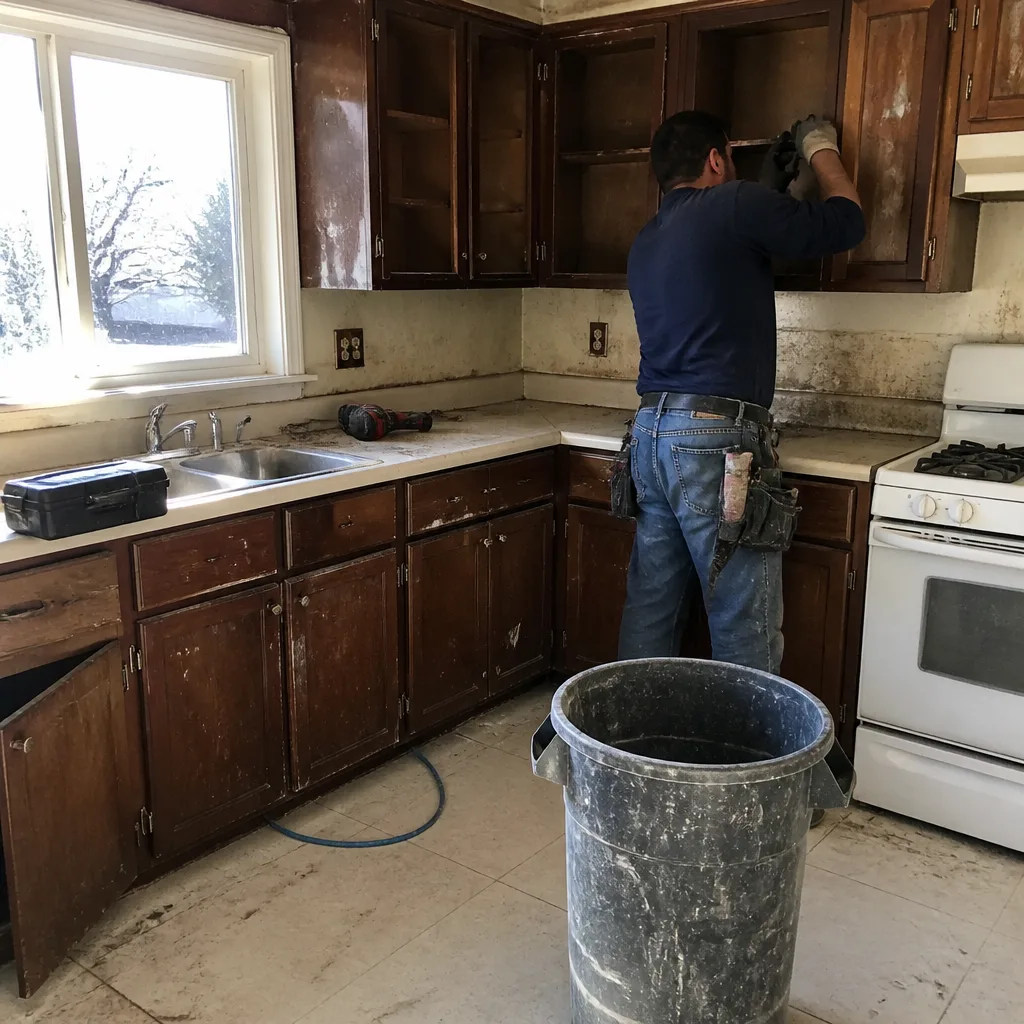 Before
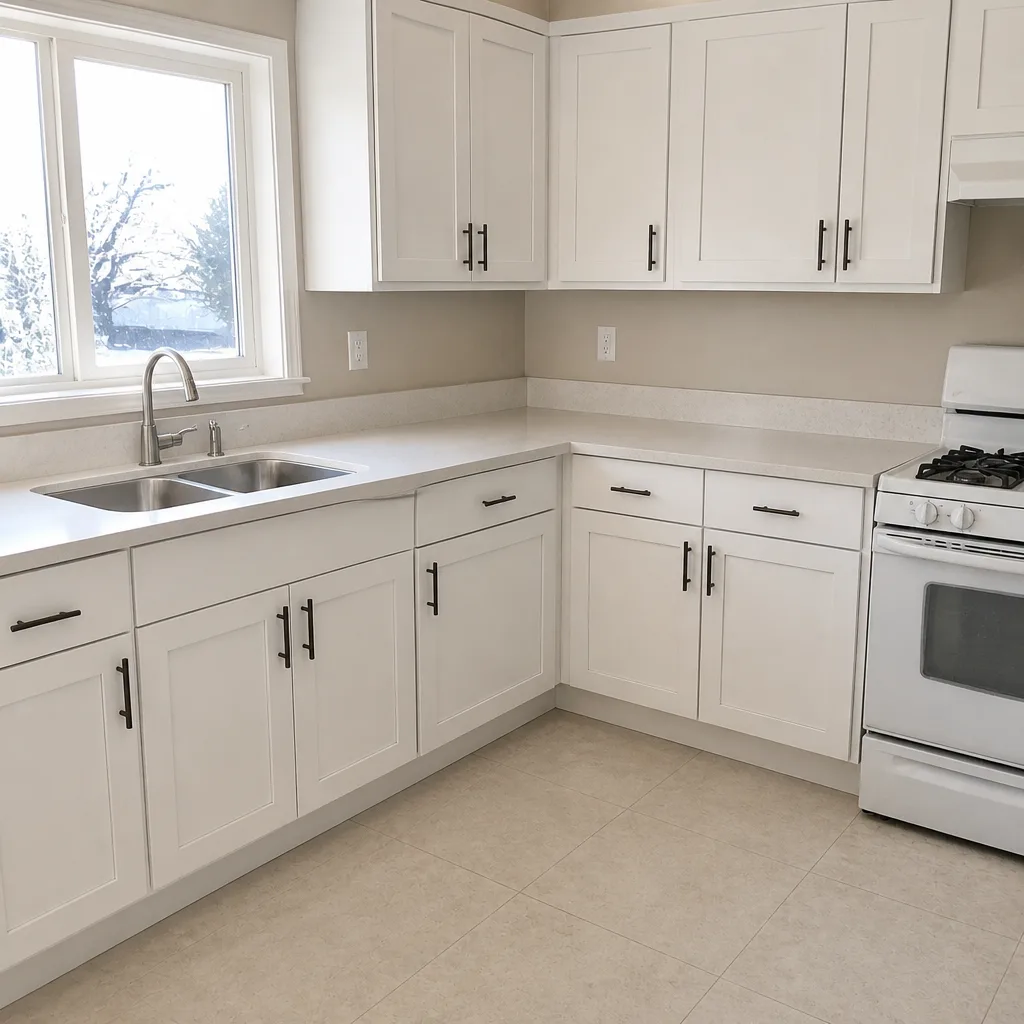 After
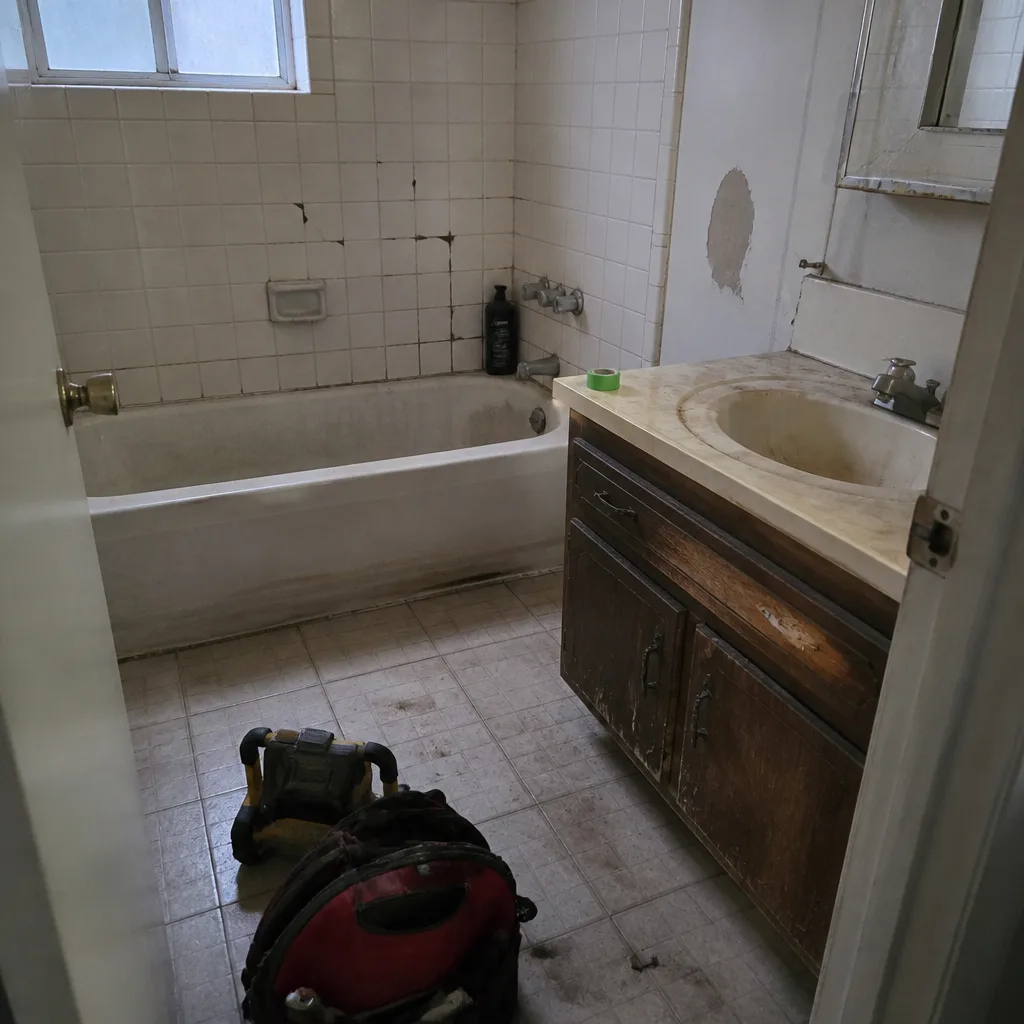 Before
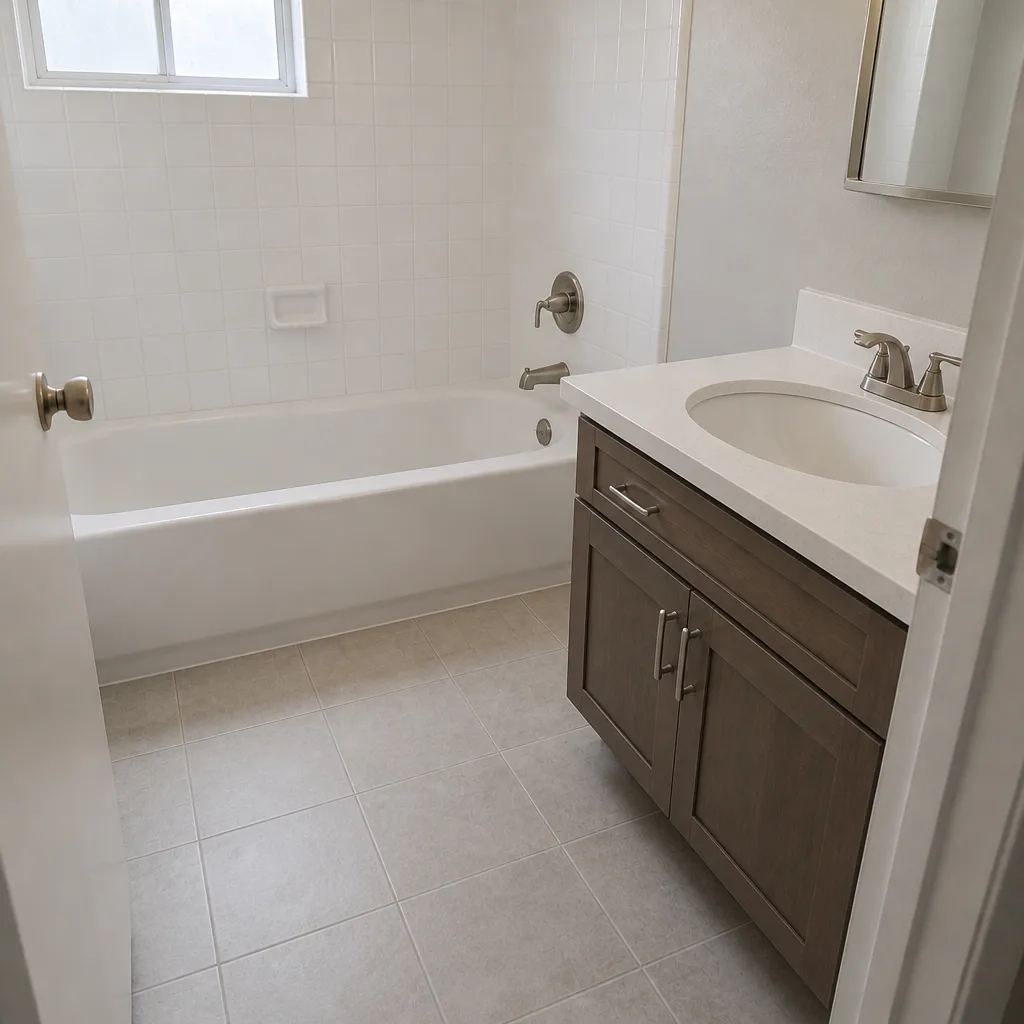 After
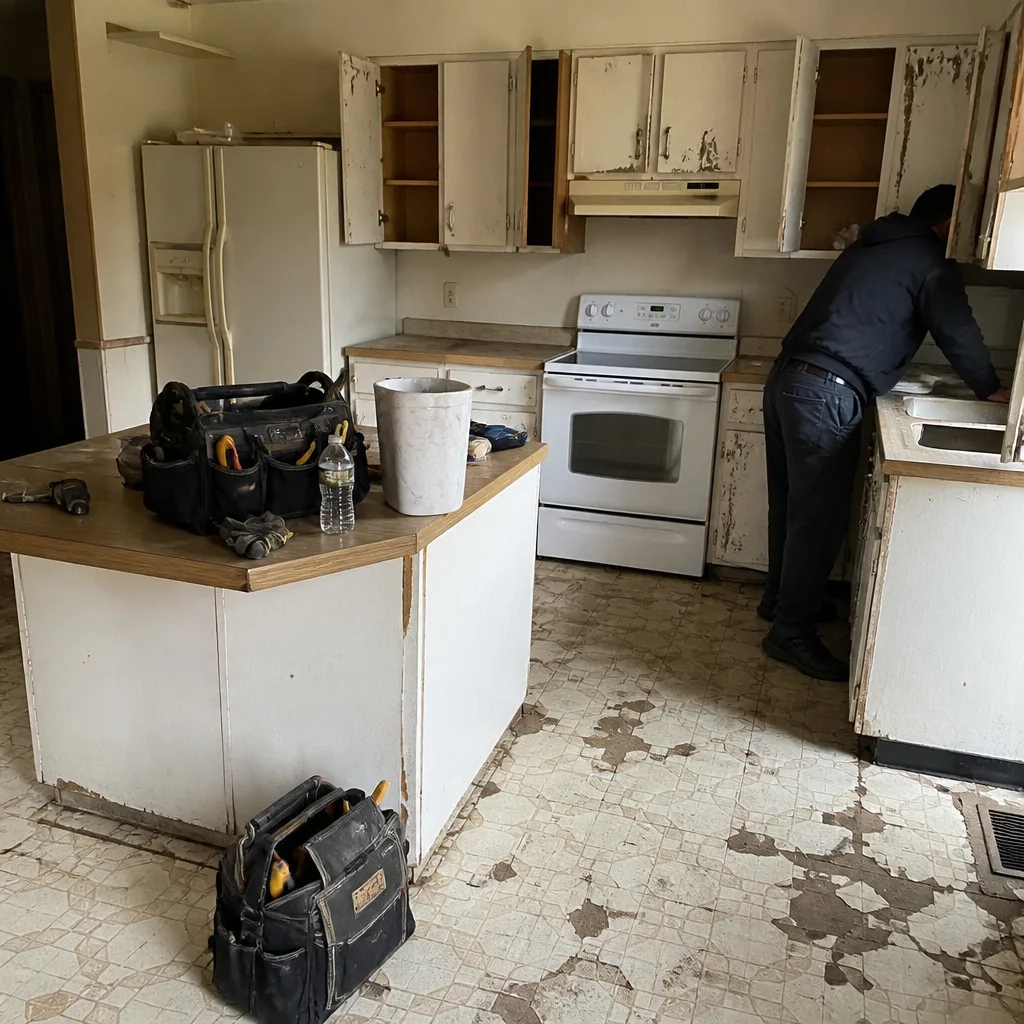 Before
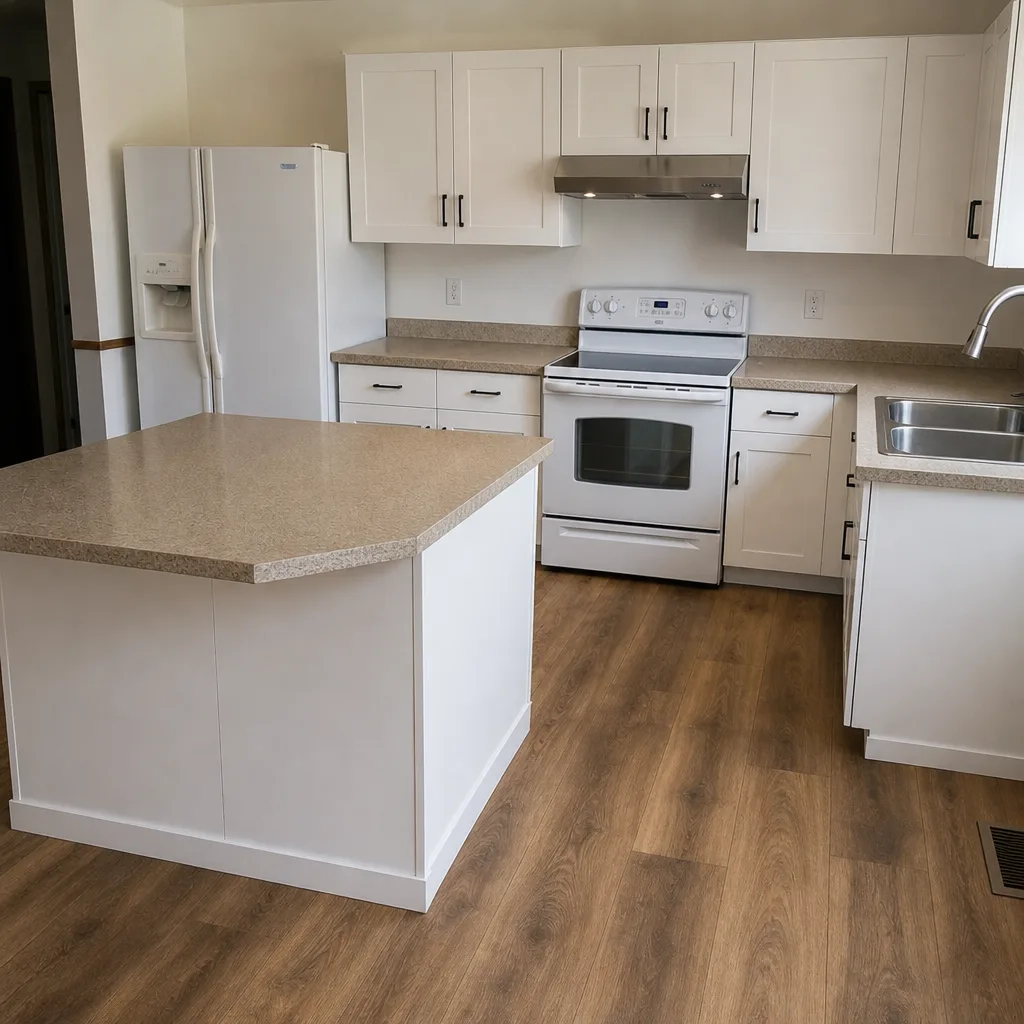 After
When to Call a Professional
Some of these problems are fixable with a conversation and a written change order. Others need a licensed general contractor who understands Nevada’s board process, knows how to pull the right permits, and builds inspection milestones into the project from the start. Call us if your contractor has gone silent, if a change-order dispute has stalled the job, if the work failed inspection and no one is owning it, or if you’re a Winchester homeowner planning a kitchen, bathroom, or whole-home remodel and want a written price before work starts. Penhallow Remodeling Winchester offers free estimates in Winchester. Call (844) 797-9439 and a real person will answer, any time of day or night. Every project gets a written price before a single cabinet is pulled, a defined arrival window, and a written 365-Day Done Right Promise that covers the work for a full year after it’s finished.
Frequently Asked Questions

Send one written message the same day, photograph the job site, check your contract for the notice clause, and send a formal notice of default by certified mail once the no-show passes the period your contract specifies. If work doesn’t resume by the deadline, file a complaint with the Nevada State Contractors Board. Do not pay another draw while the job is stalled. Call (844) 797-9439 if you want a free estimate from a Winchester contractor who puts the schedule and price in writing.
A change order is legitimate when it’s written, signed, and priced before the work happens. Scope creep is a verbal “while we’re in there” with no signed paper. Pull your original scope, mark which items were included and which were added, and refuse any charge that doesn’t trace to a signed change order. Call (844) 797-9439 for a free estimate with itemized scope.
If the failure was caused by the contractor’s workmanship, code compliance, or failure to follow approved plans, the contractor bears the cost of correction. If a third-party design you supplied caused the failure, the answer depends on your contract. Get the inspector’s written correction list, hand it to the contractor in writing, and confirm responsibility before rework starts. Call (844) 797-9439 for a free estimate from a Winchester contractor who builds inspections into the written schedule.
Yes. In Nevada, subcontractors and material suppliers can file a mechanic’s lien against your property if your general contractor didn’t pay them, even when you’ve paid in full. Protect yourself by requiring a conditional lien release with every progress payment and a final unconditional lien release on the last one. Call (844) 797-9439 before your next payment to talk through the paperwork.
Nevada sets deadlines, and the exact window depends on the facts of your dispute, so confirm the current deadline with the board or an attorney rather than relying on a guess. What you control is your documentation: dated photos, signed contracts, written correspondence, and payment records. A complete packet filed promptly is investigated; a late or thin one often isn’t. Call (844) 797-9439 for a free estimate and to learn what a properly documented contract looks like.
A written arrival window is a specific time commitment in the contract for when the crew arrives, not a vague “sometime next week.” It matters because it turns “whenever” into a checkable obligation, which is the single best preventive measure against a ghost contractor. Kingswell standard projects include one on every job, along with a written price before work starts and a written guarantee on the finished work. Call (844) 797-9439 for a free estimate in Winchester.
The Bottom Line
Most contractor problems start on paper. A contractor who disappears usually wasn’t pinned down to a written arrival window and schedule; a price that balloons usually wasn’t locked to a signed scope and change-order process; an inspection failure usually wasn’t built into the permit and milestone plan. The fix is less about confrontation and more about documentation. Act in the first 48 hours when something goes wrong, keep every record, know the difference between a change-order dispute and a contract breach, and protect yourself from liens with releases on every payment. A Winchester homeowner who insists on a written price, a written schedule, and a written guarantee before work starts has already prevented most of what this guide is about. If you’d like a contractor who works that way, call Penhallow Remodeling Winchester at (844) 797-9439 for a free estimate. A real person answers, and the price you get in writing on day one is the price on the invoice.
Written by the team at Penhallow Remodeling Winchester.