Last updated November 18, 2026

Free written scope consultation - allowances, timeline, and change-order rules on paper before a single trade is scheduled
Choosing the Right Construction Brand: A Buyer’s Guide for Winchester
A luxury vinyl plank rated for “high traffic” in a Connecticut showroom has no rating for a 185°F subfloor. That’s roughly what the floor of a south-facing Winchester room can reach in July when the sun hits an uninsulated slab. Brand reputation built in humid climates doesn’t transfer to the Mojave. In this guide, you’ll learn which performance specs actually matter for Winchester homes, how to read a spec sheet instead of a showroom display, and how to verify a brand’s claims with third-party test data before you buy.
Quick Answer
The best construction brands for Winchester are the ones that publish hard performance numbers for heat, UV, and thermal cycling, not the ones with the biggest showroom presence. For slab-on-grade homes in the Las Vegas Valley, that means flooring with a documented dimensional stability rating and UV inhibitors, exterior paint formulated for high-solar-exposure climates, flexible tile adhesives and anti-fracture membranes, and cabinetry built to handle HVAC-driven humidity swings. Ask your contractor for a written material spec and treat it as a normal request, not a suspicious one.
Styles & brands we work with
- Kitchen remodeling
- Bathroom remodeling
- Home additions & ADU
- Roofing
- Windows & doors
- Driveway & pavers
- Fence
Table of Contents
- Why Winchester Homes Punish the Wrong Materials
- Flooring on Slab: The Specs That Matter
- Exterior Paint and the Three-Year Failure
- Tile, Grout, and Thermal Cycling
- Cabinet Construction in a Dry Climate
- How to Verify a Brand’s Claims
- Common Mistakes to Avoid
- Frequently Asked Questions
Why Winchester Homes Punish the Wrong Materials
Winchester sits in a basin where summer highs push past 110°F and surface temperatures on dark exterior finishes can climb another 40 degrees above ambient. Add the UV load: the Las Vegas Valley gets around 4,500 hours of sunshine annually, and UV doesn’t just fade finishes. It breaks down polymer chains in vinyl, degrades paint binders, and cooks the adhesive under tile. Materials that earn glowing reviews in Seattle or Atlanta are being tested against a completely different set of stresses here.
The second factor is the housing stock. A large share of Winchester homes sit on slab-on-grade foundations, meaning flooring goes directly onto concrete with no crawlspace buffer. Concrete conducts heat efficiently. In an unshaded south-facing room, that slab can radiate warmth into a plank floor for hours after sunset, then cool overnight. That daily expansion-contraction cycle is what separates a floor that lasts twenty years from one that cups and gaps by year four.
Third is HVAC cycling. In a dry climate, wood products don’t swell from ambient humidity the way they do in the Midwest. Instead, indoor relative humidity can swing from 15% in summer (air conditioning running hard) to 45% in winter. Cabinets and wood flooring move with those swings. In our experience remodeling Winchester kitchens, we’ve pulled cabinet doors that swelled shut in February and rattled loose by August because the box material wasn’t rated for interior humidity variation.
Understanding these three pressures – UV, slab heat, and HVAC cycling – is the whole game. Once you know what’s stressing the material, the brand conversation becomes a spec conversation, which is a much better place to be.
Flooring on Slab: The Specs That Matter
Flooring is where Winchester homeowners get burned most often, and it’s almost always because they bought on style and traffic rating instead of heat performance. Three specs matter more than anything on the box:
- Temperature range. A quality luxury vinyl plank or engineered wood should publish a service temperature range. Look for a stated upper limit of at least 120°F for ambient air and a separate note on radiant or slab heat. If the manufacturer won’t publish a number, that’s your answer.
- Dimensional stability rating. This is the material’s resistance to expanding and contracting under heat. It’s often expressed as a percentage of change per temperature delta, or listed as “passes ASTM F2199” (the standard test for resilient flooring dimensional stability after heat exposure). Ask for the number, not the badge.
- UV inhibitor presence. Many vinyl products include UV stabilizers, but not all. A product without them will fade or yellow on the sun-exposed side of a Winchester room while the shaded side stays true – a two-tone floor by year five.
Solid hardwood is a tough sell on slab in Winchester. It moves too much with moisture and doesn’t tolerate direct adhesion well. Engineered hardwood with a quality plywood core and a cross-ply construction handles the cycling better, but you still want the manufacturer’s slab installation spec in writing, including the required moisture vapor emission rate of the concrete.
Tile is the safest bet for slab heat. Porcelain handles the temperature swings without complaint. What fails is the layer underneath, which we’ll get to. If you’re planning a flooring replacement as part of a larger project, our team at Penhallow Remodeling Winchester can spec materials against your specific slab conditions.
Exterior Paint and the Three-Year Failure
Standard VOC-compliant exterior paint frequently fails in the Las Vegas Valley before year three. Not because it’s a bad product, but because it was formulated for a climate where UV exposure peaks lower and surface temperatures stay well under 150°F. Here, acrylic binders degrade faster, chalk buildup accelerates, and the film loses elasticity, which is when you see hairline cracking on stucco and peeling on sun-facing trim.
When you’re evaluating exterior paint brands for a Winchester home, look for these specifics:
- Explicit high-UV or desert-climate formulation language. The manufacturer should name the climate or solar exposure in the product literature, not just on the marketing page.
- Elongation percentage. Higher elongation means the film stretches with substrate movement instead of cracking. Premium elastomeric coatings typically publish this figure.
- Chalk and fade resistance data. ASTM D523 (specular gloss) and ASTM D2244 (color change) test results tell you how much the finish will degrade under UV. Ask for the values.
- Recommended surface temperature range for application. In Winchester, exterior paint applied to a sun-baked stucco wall at 3 PM can fail to cure properly. A brand that publishes an upper application temperature limit is telling you it understands heat.
Color choice matters too. Dark colors absorb more solar energy and run hotter, which shortens paint life on south and west elevations. If you want a deep charcoal or espresso on the front elevation, budget for a higher-grade coating and plan on a recoat sooner than you would on a lighter palette. That’s not a sales pitch – it’s physics.
This is also where brand selection intersects with installation. A premium coating applied to a poorly prepped surface fails just as fast. Proper prep on a Winchester stucco exterior means patching, priming bare spots with a bonding primer, and confirming moisture content before the topcoat goes on. For larger exterior scopes, our general contractor in Winchester team coordinates the sequencing so paint isn’t fighting with siding work.
Tile, Grout, and Thermal Cycling
On a Winchester slab, tile fails at the adhesive and grout layer long before the tile itself gives out. The slab expands and contracts with daily heat cycles, and the tile assembly above it has to accommodate that movement. When it can’t, you get cracked grout lines, tented tile, and eventually loose pieces.
Here’s what “flexible” and “anti-fracture” actually mean on a spec sheet:
- Flexible thinset mortar is formulated with polymer modifiers that let the cured mortar bed flex slightly with substrate movement. The datasheet will list an ANSI classification – look for ANSI A118.4 (modified) or A118.11 (for plywood), and check for a stated deflection allowance. Standard unmodified mortar (A118.1) has almost no give.
- Anti-fracture membrane is a sheet or liquid applied between the slab and the tile that isolates the tile from substrate cracks. Schluter’s Ditra line is one of the well-known examples, and its published specs include crack-bridging capability. The word “anti-fracture” on a product label means little without the test data behind it; ask for the ASTM C627 rating (the Robinson floor test), which grades assemblies from residential to extra-heavy commercial.
- Grout flexibility matters too. Cementitious grout is rigid. For slab installations subject to thermal movement, a polymer-modified or single-component grout with published flexibility data holds up better in the long run.
For tiled showers and wet areas, waterproofing is a separate layer that must be specified independent of the tile. The assembly matters more than the tile brand. A $3 tile on a properly waterproofed, decoupled substrate will outperform a $15 tile bedded directly to slab. We’ve seen this play out in Winchester bathrooms repeatedly, and it’s a big reason our bathroom remodeling in Winchester work starts with the substrate conversation, not the tile display.
Cabinet Construction in a Dry Climate
Cabinets in a dry climate face a different kind of stress than cabinets in humid regions. Instead of worrying about moisture swelling the boxes, you’re dealing with the interior humidity swing from air conditioning in summer to heating in winter – and that swing moves wood, MDF, and plywood at different rates. A cabinet box that doesn’t handle that motion will show door gaps, sticking drawers, and finish cracks within a couple of years.
What to look for in cabinet construction for a Winchester home:
- Box material. Plywood boxes with a furniture-grade veneer core move more predictably than particleboard. MDF is fine for painted finishes because it’s homogeneous, but it doesn’t tolerate moisture well at all, so it should not be used where plumbing or a dishwasher sits nearby.
- Joinery type. Dovetail drawers and doweled or mortise-and-tenon face frames hold up under repeated seasonal movement better than stapled or glued-only construction. Ask which joinery method the brand uses and where.
- Finish and edge banding. A catalyzed conversion varnish or a factory-applied polyurethane holds up better than a shop-applied lacquer in a climate where finish movement is constant. Edge banding should be glued and trimmed, not just applied with adhesive backing, because heat softening is a real concern near ovens and ranges.
- Door and drawer front stability. Solid wood five-piece doors move with humidity swings around the panel. MDF-core doors with applied molding move less. If you love the look of solid wood, expect to allow for that movement in the hinges and latches.
- Published humidity rating. The best cabinet brands publish an operating humidity range. KraftMaid and Wellborn, two of the lines we install most often in Winchester kitchens, both publish construction and warranty documentation that speaks directly to interior environment conditions.
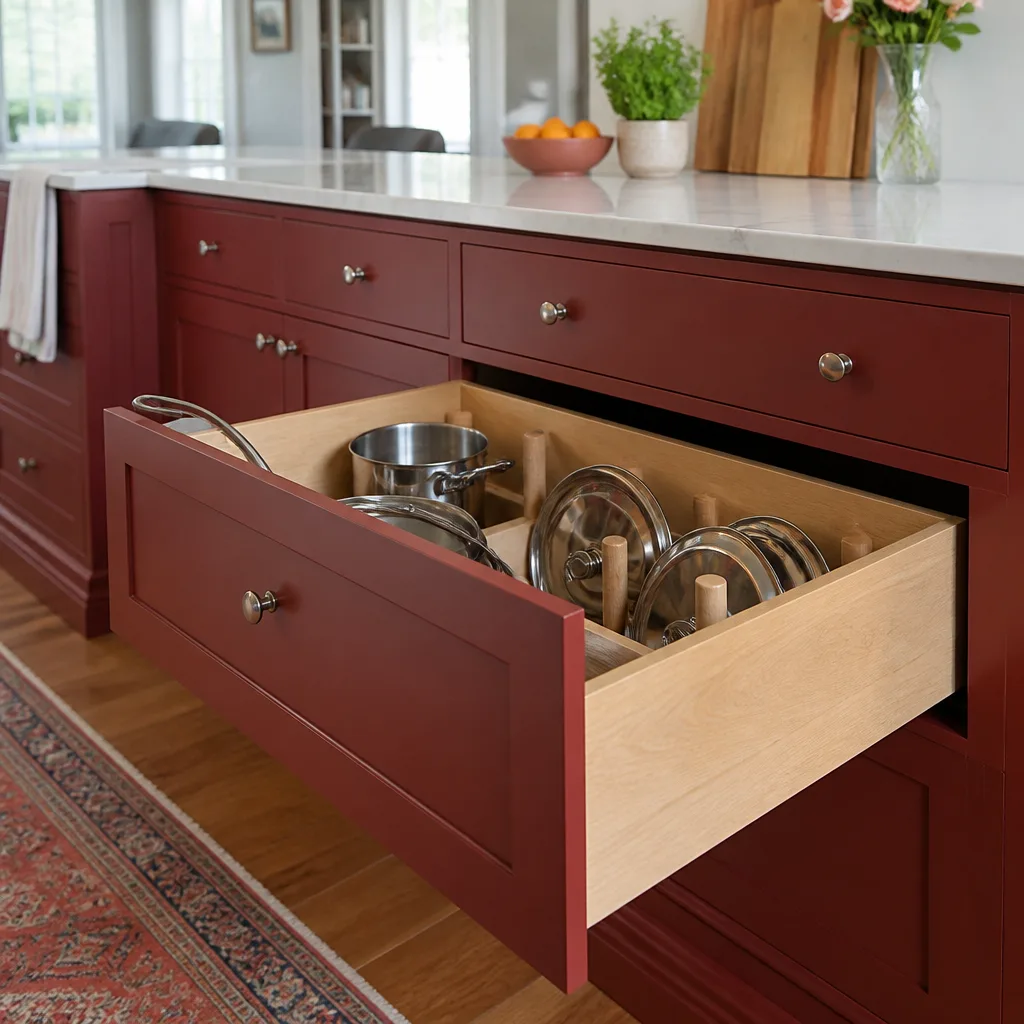
The kitchen is the highest-stress environment in the house – heat from the range, moisture from the sink, and HVAC cycling throughout. That’s why our kitchen remodeling in Winchester process includes a written material spec for the cabinetry before anyone signs a purchase order. You should see that from any contractor worth hiring.
How to Verify a Brand’s Claims
Manufacturer marketing is written to sell. Third-party test data is written to inform. Learning to tell the difference is the single most valuable skill in this guide.
Here’s a step-by-step process for verifying any brand’s claims on any material you’re considering:
- Ask for the actual test standard. Any meaningful performance claim references an ASTM, ANSI, or ISO standard. “High traffic rated” is marketing. “Passes ASTM F3261 at Class T” is data. If the brand doesn’t cite a standard, the claim is unverified.
- Request the product datasheet, not the brochure. Datasheets list test results, application limits, and warranty conditions. Brochures list features. Ask your contractor for datasheets for every material on the spec.
- Check the warranty terms against Winchester conditions. Many warranties void coverage for installations outside a stated temperature range, or for installations over radiant heat, or for exterior application in high-UV climates. Read the exclusions.
- Look for independent certification programs. Programs like GREENGUARD, FloorScore, and the Tile Council of North America’s material testing program are third-party verifications of specific claims, not brand endorsements.
- Ask your contractor for their written material spec. This is a normal request and any experienced contractor will have one. If a contractor pushes back or says they “just use the best,” that’s a red flag. You’re the buyer; you’re entitled to know what’s going on your walls and floors.
This brings us to the larger point of this guide. The best brand in Winchester is the brand whose claims you can verify against the specific conditions of your home – not the brand with the biggest ad budget. A written material spec, backed by published test data, is the only real defense against a contractor who’s guessing.
Common Mistakes to Avoid
- Buying on showroom lighting. A floor, cabinet, or countertop looks different under showroom spotlights than it will under 110°F Winchester sun. Ask for a sample to take home and look at it in your actual room with the actual light.
- Trusting a traffic rating alone. “High traffic” is a wear-layer measure. It says nothing about heat tolerance or dimensional stability. Both matter in Winchester, and traffic rating is the less important of the three.
- Assuming national reviews transfer. A five-star review from a homeowner in Portland is meaningless for slab-on-grade performance in the Las Vegas Valley. Look for reviews and installation notes from homeowners in similar climates – southern Nevada, Arizona, and inland Southern California.
- Skipping the moisture test on slab. Before any flooring or tile goes down over a slab in Winchester, the concrete needs a moisture vapor emission test. Skipping it is the single most common cause of adhesive and coating failure.
- Choosing dark exterior finishes on south and west elevations. The aesthetic is great. The performance penalty is real. Dark stucco and siding on the sun-facing side of a Winchester house will run hotter and age faster than the same materials in a lighter tone.
- Accepting a verbal material list. “We’ll use a good LVP” is not a material spec. You want brand, product line, and installation method in writing, so there’s no surprise when the truck shows up with a cheaper substitute.
- Assuming a warranty covers Winchester conditions. Many national brand warranties exclude or limit coverage for installations in high-temperature or high-UV environments. Read the exclusions before you buy, not after something fails.
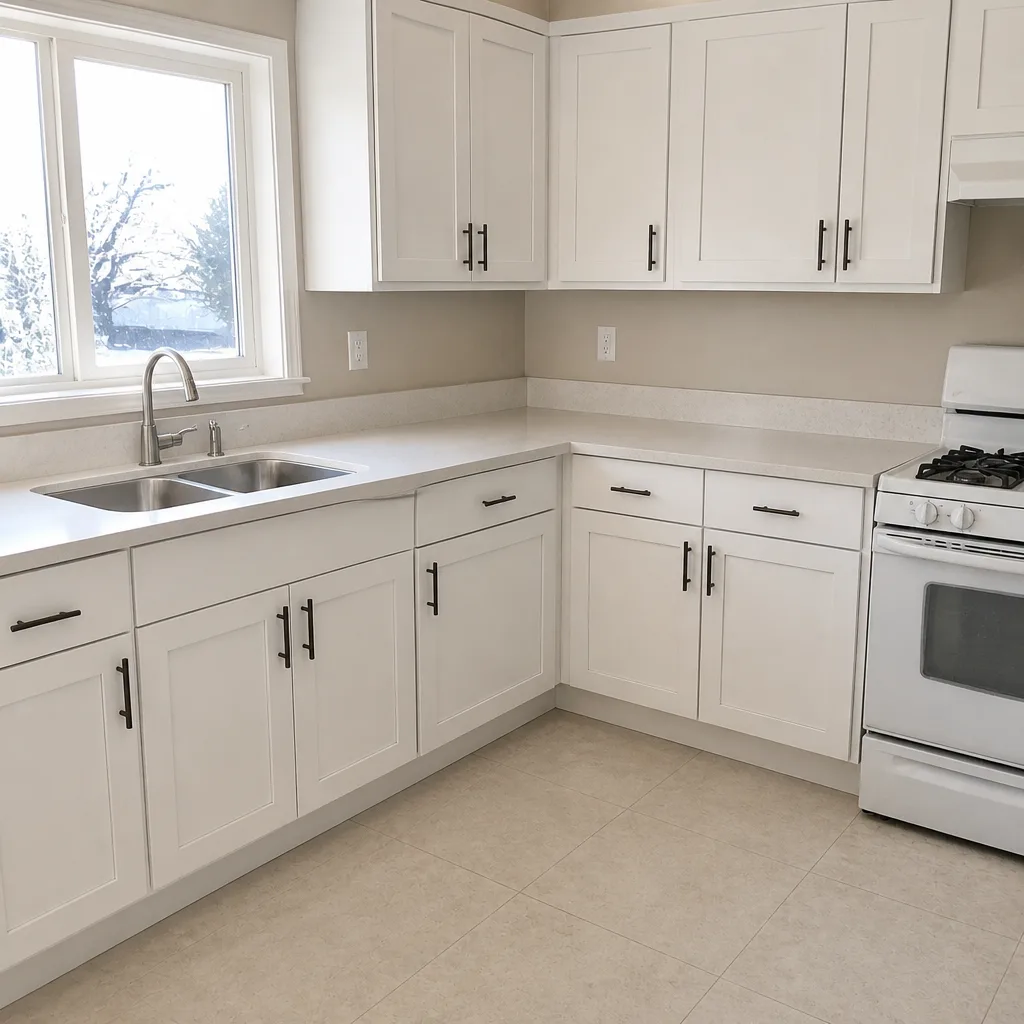
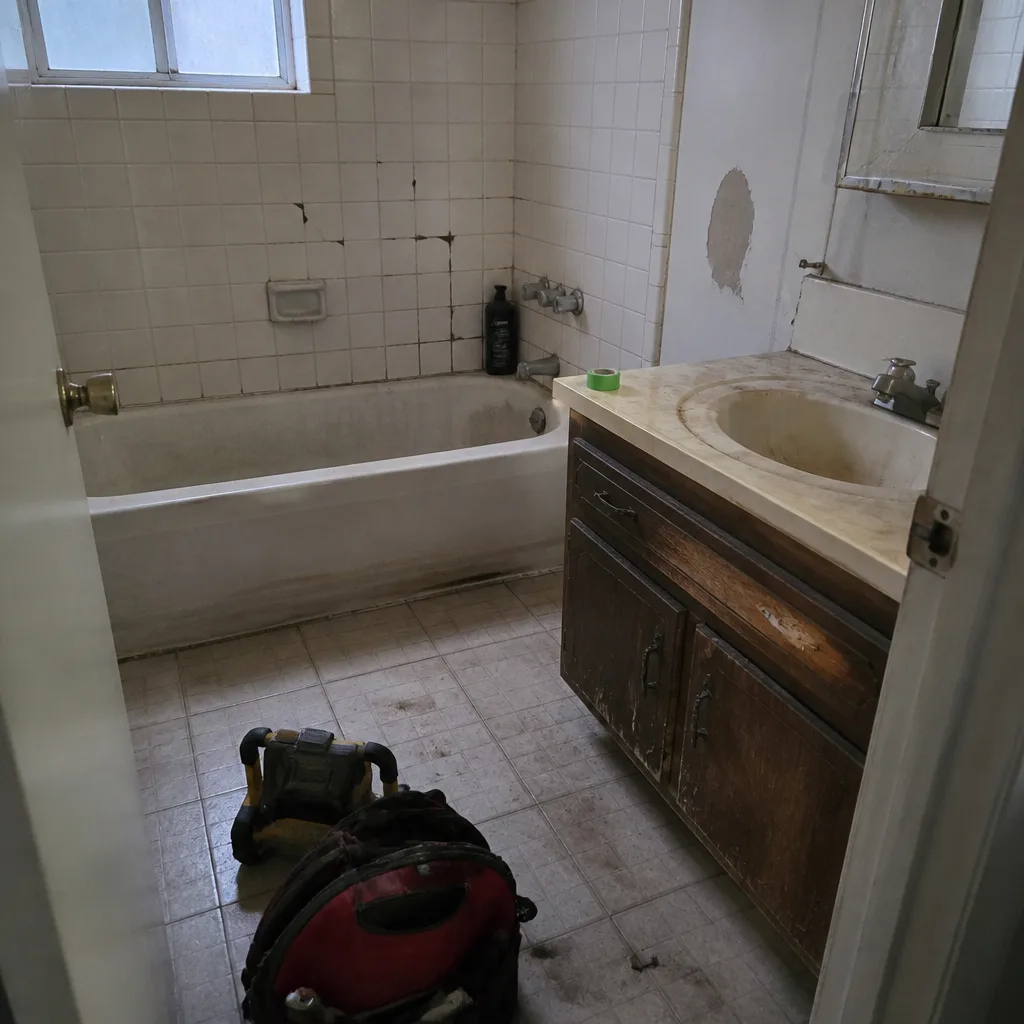
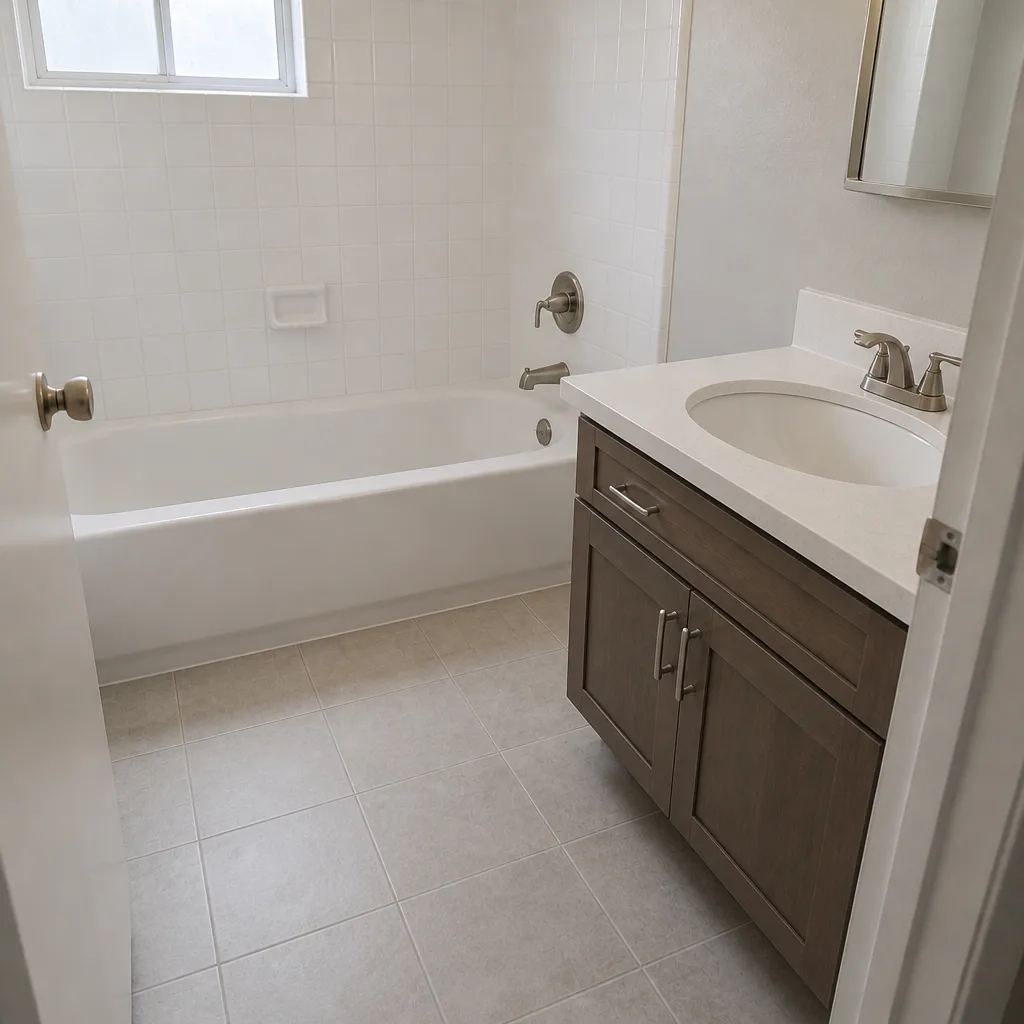
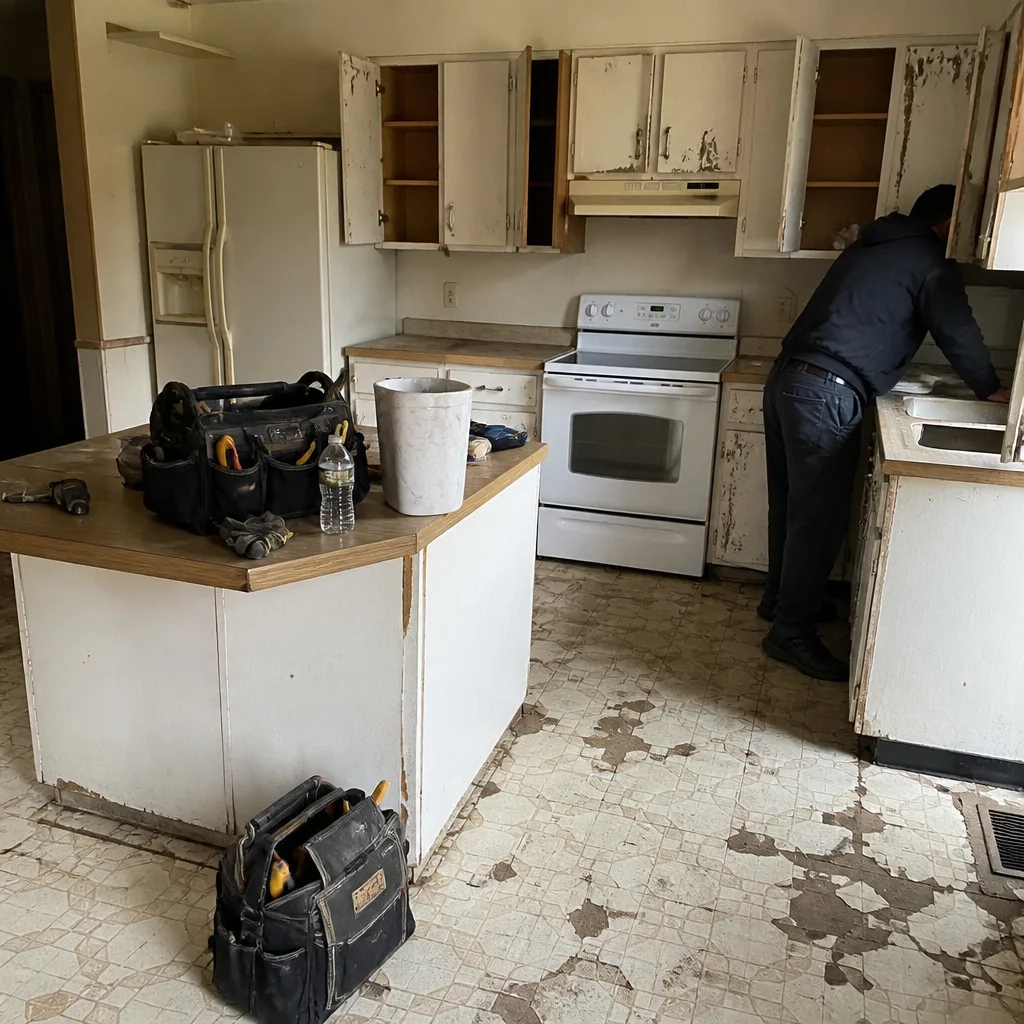
See the difference
 Before
 After
 Before
 After
 Before
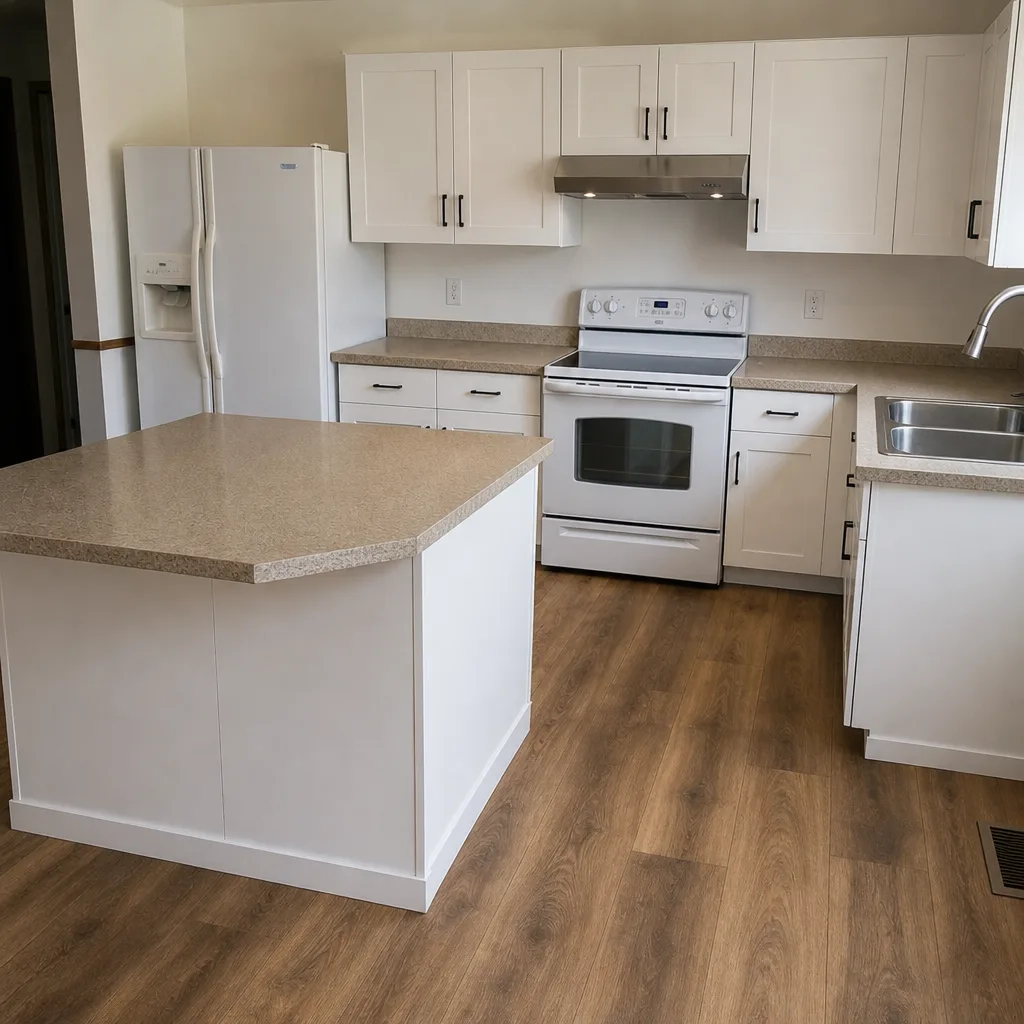 After
When to Call a Professional

If you’re sorting through flooring options for a slab-on-grade home and every manufacturer datasheet is pointing in a different direction, that’s a conversation worth having with someone who’s installed these products in this climate. Same for exterior paint selection on a two-story stucco home where a failure at year three means scaffolding rental and a full repaint. And any project where the cabinet boxes are moving, the tile grout is cracking along slab joints, or a prior installation is showing distress that the original installer hasn’t addressed. Penhallow Remodeling Winchester offers free estimates in Winchester – call (844) 797-9439 to schedule yours, and bring your material questions with you.
Frequently Asked Questions
There isn’t one universal brand – the right answer depends on the room, the sun exposure, and whether the slab has a moisture barrier. What matters more than brand name is that the product publishes a dimensional stability rating, a slab installation service temperature up to at least 120°F, and UV inhibitors. Porcelain tile over an anti-fracture membrane is the most forgiving option in Winchester’s heat, and engineered wood with a cross-ply core is the safest of the wood look-alikes. Call (844) 797-9439 for a spec that matches your specific slab condition – estimates are free.
UV exposure in the Las Vegas Valley runs higher than most of the country, and surface temperatures on sun-facing walls can reach 150°F or more. Standard exterior paints formulated for moderate climates lose elasticity and chalk faster under those conditions – three to four years instead of seven to ten. Ask for a product with published UV-resistant formulation language, elongation data, and a stated application temperature range. Call (844) 797-9439 to review paint options with us before you buy.
An anti-fracture membrane is a layer between the slab and the tile that absorbs small substrate movements and cracks before they reach the tile. It works when it’s an actual TCNA-tested assembly with a published ASTM C627 rating, not when “anti-fracture” is just a word on a box. Schluter’s Ditra line is one widely used example with published test data behind it. Call (844) 797-9439 for a free estimate that includes specified substrate build-up.
Yes, and the difference shows up in the box material and joinery. A plywood box with dovetail drawers handles interior humidity swings from 15% to 45% more predictably than a stapled particleboard box. KraftMaid and Wellborn, two of the lines we install most often in Winchester, both publish construction details you can compare. Call (844) 797-9439 if you want help reading cabinet specs side by side – estimates are free.
Yes, and it’s a sign you’re a good buyer. A written spec (brand, product line, and installation method for every material on the job) protects you from substitutions and from products that don’t suit Winchester conditions. Any experienced contractor will provide one without hesitation. Call (844) 797-9439 to schedule a free estimate with us and see our written spec process firsthand.
Most Winchester kitchen remodels run four to eight weeks from demo to final walkthrough, depending on cabinet lead time and whether electrical or plumbing has to move. Bathroom remodels typically run three to five weeks. A written schedule, included with the free estimate, is the only way to know what your specific project timeline looks like. Call (844) 797-9439 for a free estimate with a written timeline.
The Bottom Line
The best construction brand in Winchester is the one whose published spec sheet holds up against UV load, slab heat, and HVAC cycling – not the one with the biggest showroom display. Ask for datasheets, check the test standards, read the warranty exclusions, and request a written material spec before any work starts. That one habit will save you more money over the life of your home than any single brand decision. Our technicians have up to 22 years of experience installing the products that perform in this climate, and every job comes with The Kingswell Way in writing: say the price before the work, show up in the window we gave, leave the place cleaner than we found it.
Call (844) 797-9439 today to schedule your free estimate with Penhallow Remodeling Winchester. Estimates are free, the price is in writing before any work starts, and every project is backed by our 365-Day Done Right Promise.
Written by the team at Penhallow Remodeling Winchester.