
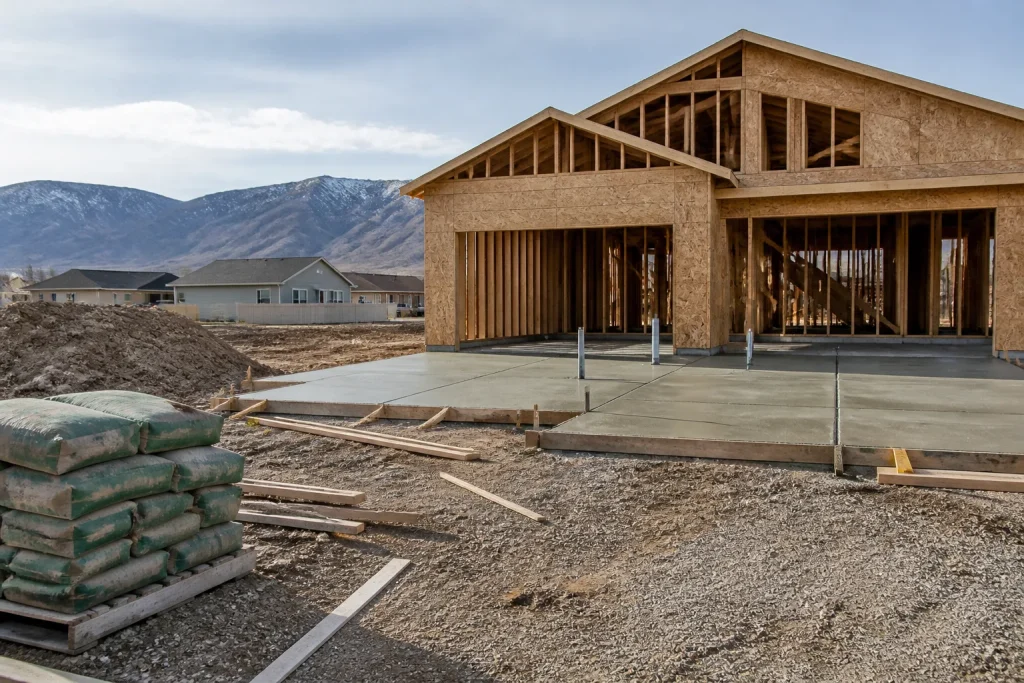
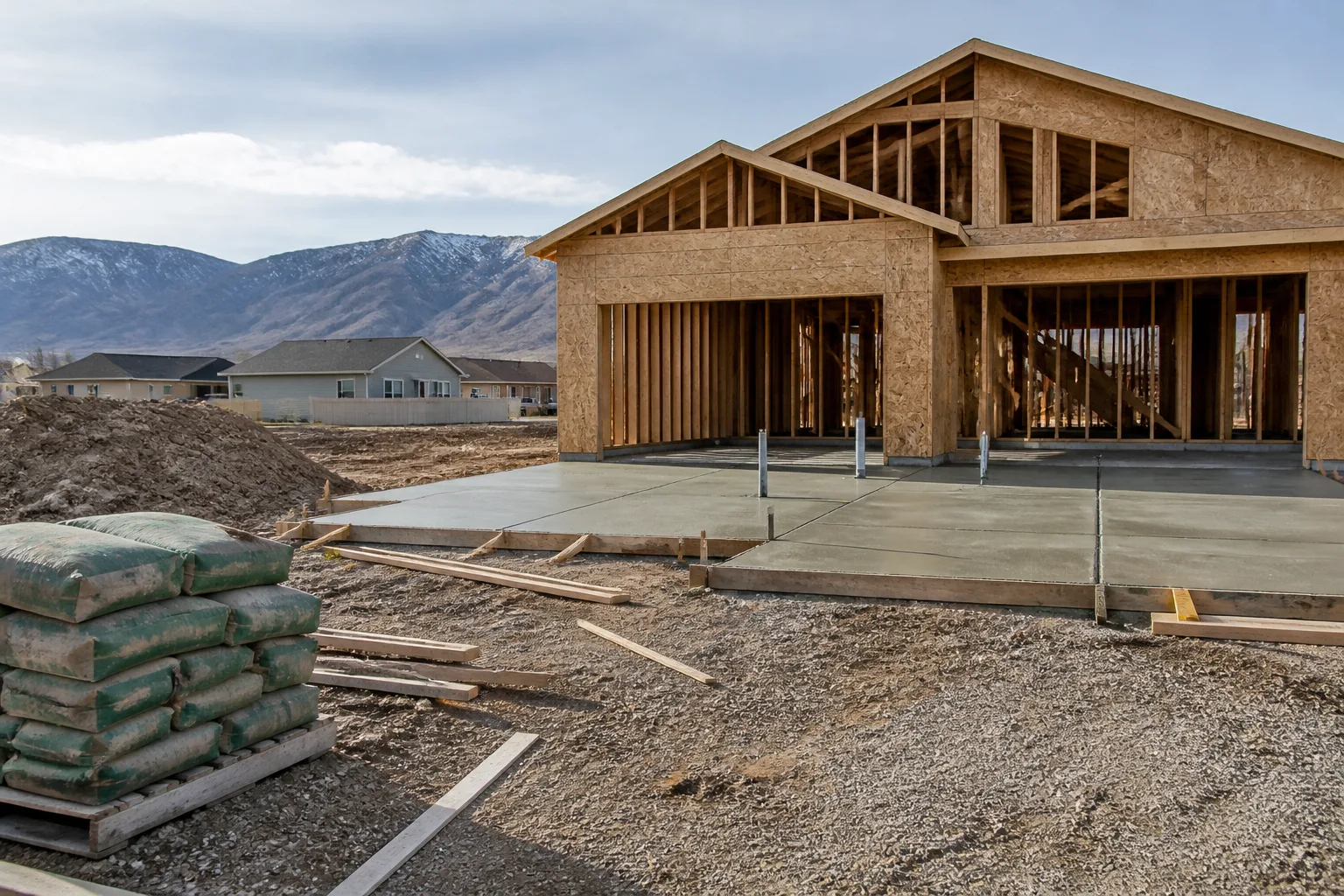
Quikrete General Contractor in Winchester: A Homeowner’s Guide
Quikrete 5000 and Quikrete Crack Resistant Concrete look almost identical on a pallet. One is right for a 4-inch slab in Nevada heat; the other can set you up for a cracked surface by August. The difference isn’t on the front of the bag in letters big enough to read from the truck. Your contractor should know which is which before the truck shows up, and this guide is written so you can check that they do.
If you’d rather hand the whole pour to someone who reads the label for a living, call (844) 797-9439 and we’ll set up a free estimate.
Why Quikrete Products Aren’t Interchangeable in Winchester

Quikrete makes more than a dozen residential concrete mixes, and they’re not graded on the same curve. A bag of 5000 and a bag of Sand Mix both say “concrete” on them, but they cure at different rates, hit different compressive strengths, and are meant for different jobs. In Winchester, where summer afternoons push past 100°F and the ground bakes all day, picking the wrong mix isn’t a small error. It shows up as hairline cracks, a chalky surface, or a slab that spalls before its first winter.
We’ve watched this play out on driveways and patio pads across Winchester. A crew grabs what’s stacked by the gate, mixes it wet because it’s hot and they want working time, and pours. Three weeks later the homeowner is calling us about a surface that looks like a dried riverbed. The material was fine. The choice and the curing weren’t.
Here’s the plain-English breakdown of the four mixes you’ll see most often on residential work in Winchester:
- Quikrete 5000 – A high-strength mix (roughly 5,000 psi at 28 days) for structural slabs, footings, and anything that carries load. It’s the workhorse for a garage slab or a shed foundation.
- Quikrete Crack Resistant – Blended with fibers to resist shrinkage cracking. Good for driveways, sidewalks, and patio slabs where surface appearance matters. It is not a substitute for 5000 in a load-bearing application, even though the bag looks the same.
- Quikrete FastSetting – Cures quickly, often ready for foot traffic in a few hours. Useful for post holes and small repairs where you can’t wait a day. In Nevada heat, “fast” gets faster, and mixing it too wet ruins the strength.
- Quikrete Sand Mix – Topping and repair material, not structural concrete. People use it for thin patches and bed coats. Poured as a slab, it will fail.
That’s the vocabulary. The rest of this guide is about using it to ask better questions.
Why Cure Time Management Matters More in Nevada Heat
Concrete doesn’t dry. It hydrates. The water in the mix reacts with the cement chemically, and that reaction is what makes the slab hard. When the air is 105°F and the wind is up, the water evaporates off the surface faster than the cement can use it. The reaction stalls. You get a weak, dusty top layer that cracks and flakes, even though the bag said 5,000 psi.
The fix is management, not a different bag. On Winchester pours in July and August, a careful contractor will:
- Pour early in the morning, before the ground and the air heat up.
- Keep the mix at the water ratio on the bag, not “a little wetter because it’s hot.” Extra water cuts strength, sometimes by a third.
- Cover the fresh slab with plastic sheeting or a curing compound to hold moisture in.
- Mist or fog the surface during the first day if it’s drying too fast.
- Leave it covered for several days, not several hours.
Anyone who tells you curing doesn’t matter in the desert has it backwards. It matters more here. In our experience, most residential concrete failures we’re called out to inspect in Winchester trace back to curing, not to the product itself.
What to Ask Your Contractor Before the Pour
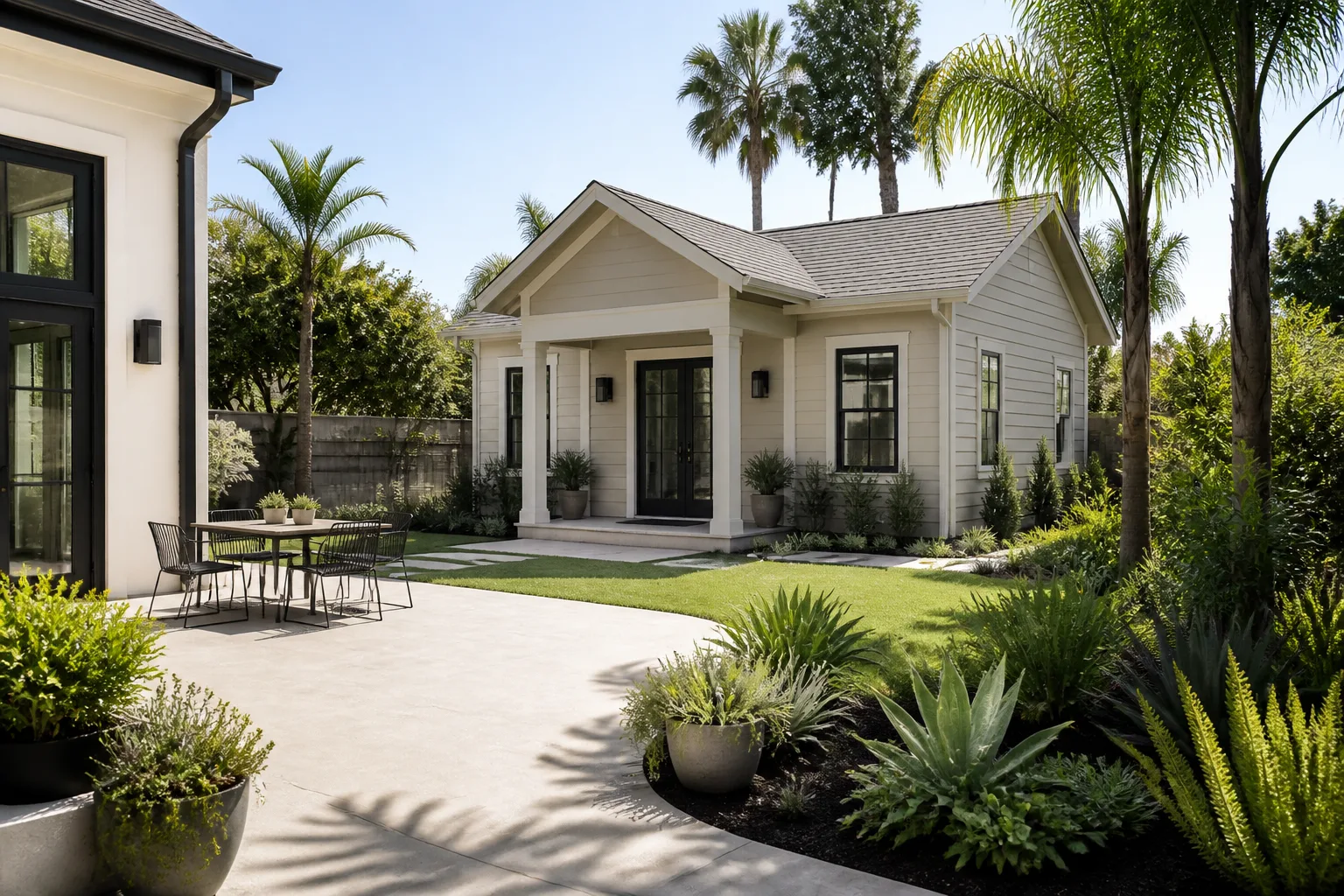
You don’t need to mix anything. You need to ask four questions and listen for specific answers. A contractor who knows the material will answer them without flinching.
- Which mix are you using, and why? “Quikrete” alone isn’t an answer. You want a product name: 5000, Crack Resistant, FastSetting, Sand Mix. And you want the reason tied to the job – load-bearing, surface appearance, fast cure, thin repair.
- What’s the water-to-mix ratio? The bag specifies it. A good answer references the bag or a measured ratio. A bad answer is “we go by feel.”
- How will you cure it? Plastic, curing compound, wet burlap, or a combination. If curing isn’t mentioned, that’s a red flag in Winchester heat.
- What compressive strength should we expect at 28 days? For a load-bearing slab with 5000, that’s around 5,000 psi. For a Crack Resistant patio slab, it’s lower and that’s fine – because the job isn’t load-bearing. The answer should match the application.
Ask these before the truck is ordered, not the morning of. A contractor who can’t answer them is telling you something useful about how the rest of the job will go. If you’d rather work with a team that puts the answers in writing before the first bag is opened, our General Contractor in Winchester page explains how we scope concrete and remodel work.
How to Read a Quikrete Line Item on a Written Estimate
Most concrete estimates come as a lump sum: “Patio slab – $4,200.” That’s not enough to check. A useful estimate breaks out the materials so you can confirm the product matches the job.
Look for a line item that names the product. “Quikrete 5000, 60-lb bags, 42 units, garage slab” tells you what’s being poured and why. “Concrete mix, various” tells you nothing. If the estimate is for a driveway and the line item says Sand Mix, stop and ask. If it’s for a 4-inch patio slab and the line item doesn’t specify Crack Resistant or a fiber-reinforced mix, ask why. In Winchester, where our freeze-thaw swings are gentler than the mountains but our summer heat is unforgiving, the wrong spec on paper becomes a visible problem in the pour.
You should also see labor, formwork, base prep (compacted gravel or road base), and curing listed separately or clearly bundled. Concrete lives or dies on what’s under it and what happens after the pour. An estimate that only mentions the bag price is missing the two things that actually determine whether the slab lasts.
What a Workmanship Guarantee Should Cover for Concrete
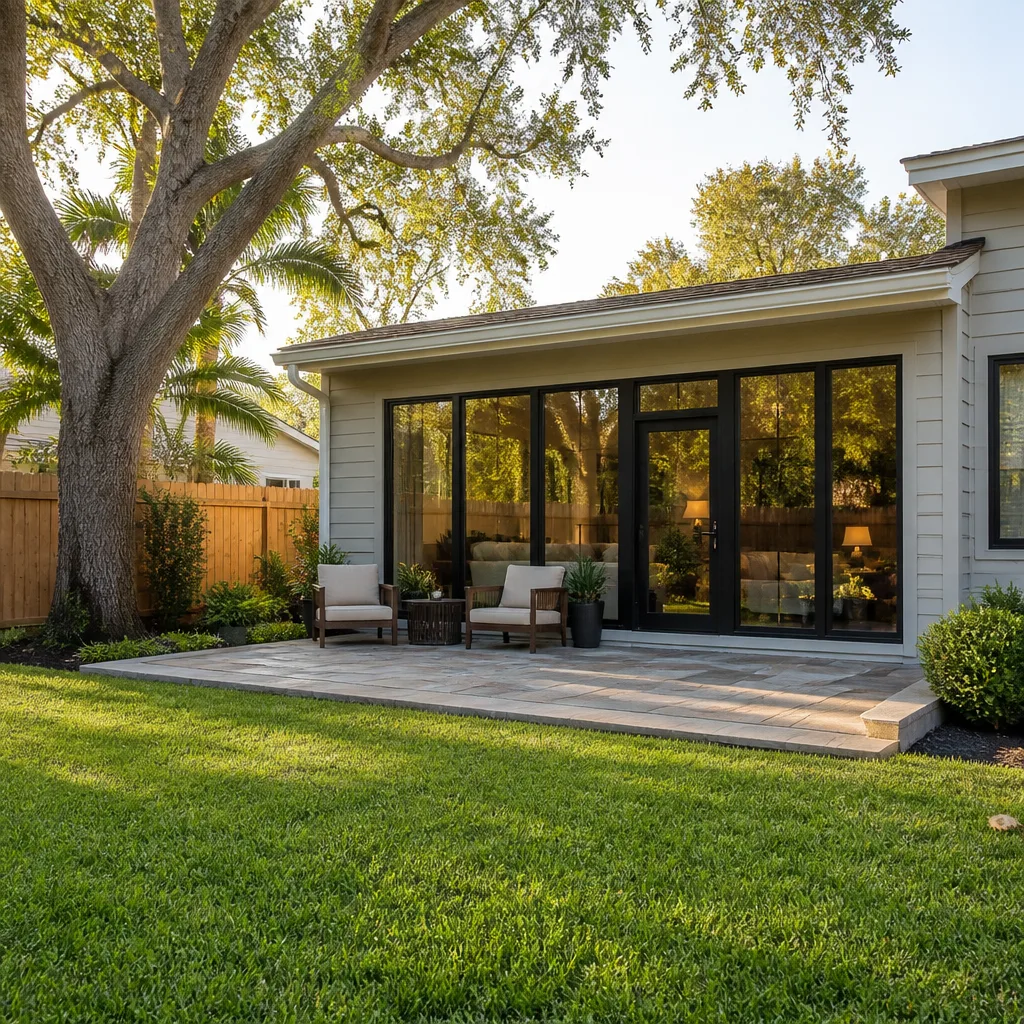
Concrete fails in two very different ways, and they need different guarantees.
Surface failure means cracking, scaling, dusting, or spalling on the top layer. It’s usually a curing or mix problem, and it’s fixable – grind, patch, reseal, or in bad cases a thin overlay. A workmanship guarantee should cover it and say so in writing.
Structural failure means the slab has heaved, settled unevenly, or cracked through its full depth. That’s a base prep, subgrade, or load problem, and remediation is usually demolition and repour. That’s a much bigger number, and the guarantee needs to say who pays.
Ask your contractor which one is covered and for how long. A real guarantee names the period and the remedy in plain language. We put a 365-Day Done Right Promise on every project, and it’s written into the paperwork before work starts – if something fails inside that window, we come back and fix it. For concrete, that promise covers surface failures and the workmanship that causes them. Base failures get scoped case by case, and we say so upfront rather than after the fact.
When to Call a Pro (and Related Services in Winchester)
Small bag jobs are fine for a homeowner: a fence post, a mailbox footing, a patch on a step. Once you’re pouring a driveway, patio, garage slab, or anything tied to the structure of the house, the stakes jump. Mistakes there cost thousands to undo, and in Winchester’s heat the margin for a sloppy mix or a skipped cure is smaller than in cooler climates.
This is also where concrete intersects with the rest of a remodel. A new patio slab is often the first step in an outdoor kitchen or a covered porch. A bathroom remodel with a curbless shower needs a properly sloped and cured subfloor before tile goes down – and that’s where we reach for products like Schluter waterproofing systems to keep water where it belongs. Our Bathroom Remodeling in Winchester and Kitchen Remodeling in Winchester teams handle the interior side; a qualified concrete contractor handles the slab. If you’re planning both, get the slab right first.
One more thing worth knowing: Quikrete is a fine brand, but the mix that gets poured under your house should be specified on paper, not picked by whoever grabbed the nearest pallet. Our Penhallow Remodeling Winchester home page explains how we handle scoping and written pricing across every job.
What happens when you call
- 1
A real person answersNo phone trees – you reach a local pro.
- 2
You get an upfront price rangeHonest numbers before anyone is dispatched.
- 3
A background-checked tech heads outLicensed & insured, dispatched right away.
- 4
You approve before work beginsNothing starts until you say go.
The Bottom Line
The bag tells you what’s inside. The application tells you which bag to use. Any contractor working in Winchester should be able to name the Quikrete product going into your slab, explain why it fits the job, tell you the water ratio and the curing method, and hand you a guarantee that distinguishes surface failure from structural failure. If they can, you’re in good shape. If they can’t, that’s your answer.
If you’re in Winchester and want a written price and a written guarantee before the first bag is opened, Penhallow Remodeling Winchester offers free estimates. Call (844) 797-9439 – a live person answers any hour, and we’ll talk through the job before anyone touches a tool.
Frequently Asked Questions
Quikrete 5000 is a high-strength mix (roughly 5,000 psi at 28 days) meant for load-bearing slabs, footings, and structural work. Crack Resistant is a fiber-reinforced mix designed to reduce surface cracking on driveways, patios, and sidewalks. They look similar on a pallet, but 5000 goes where the load is and Crack Resistant goes where the surface appearance matters. Using the wrong one in Winchester’s heat is a common source of premature cracks. Call (844) 797-9439 for a free estimate and we’ll help you spec the right product.
Only when you need the surface usable within a few hours, such as post holes or small patches where you can’t wait a day. FastSetting cures quickly, which sounds great, but in Nevada heat it cures even faster and leaves less working time to place and finish. For most driveway, patio, and slab work in Winchester, a standard mix with proper curing beats a fast-set every time. If your contractor is defaulting to FastSetting on a slab, ask why.
A basic 4-inch patio slab in Winchester typically runs $8-$14 per square foot installed, depending on base prep, finish (broom, stamped, exposed aggregate), and whether the site needs grading or haul-off. A 200-square-foot patio lands around $1,600-$2,800. Add $2-$4 per square foot for stamped or colored finishes. Call (844) 797-9439 for a written, line-item estimate – estimates are free.
Because “concrete mix, various” on a written estimate tells you nothing about whether the right product is being poured. A useful line item names the Quikrete product (5000, Crack Resistant, FastSetting, Sand Mix), the quantity, and the application. That lets you confirm the spec matches the job before the pour. Any contractor who won’t itemize is asking you to trust a number you can’t check. Call (844) 797-9439 for an estimate that lists what’s actually going into the ground.
Written by the team at Penhallow Remodeling Winchester.
Need Construction Help?
Call Penhallow Remodeling Winchester - the local pro we connect you with is licensed and insured, here with fast after-hours help in Winchester.
(844) 797-9439