Last updated November 18, 2026

Free written scope consultation - allowances, timeline, and change-order rules on paper before a single trade is scheduled
Kitchen Remodeling Warning Signs Every Homeowner Should Know
If a contractor gives you a price range instead of a written number, that range will almost always expand toward its upper end once your old cabinets are on the driveway and your kitchen is unusable. We’ve watched this play out in Winchester more times than we’d like. The most expensive kitchen remodeling mistakes aren’t made on the job site with a hammer and a bad measurement. They’re made in the first conversation, at your kitchen table, before anyone picks up a tool. There are five specific things a contractor can say or fail to say in that first meeting that predict exactly how the project will end. This guide walks through each one, plus the structural red flags hidden inside your existing kitchen, the exact steps to verify a Nevada contractor’s license, and the one sentence that protects your wallet from demo-day surprises.
Quick Answer
The biggest kitchen remodeling warning signs are a price given as a range instead of a written number, a scope described vaguely (“we’ll figure it out as we go”), no mention of permits, no written guarantee offered before work starts, and pressure to sign a contract the same day. Any one of these is a reason to slow down. Two or more together usually mean the project will cost more, take longer, and end with you chasing a contractor who stops answering the phone.
Styles & brands we work with
- Kitchen remodeling
- Bathroom remodeling
- Home additions & ADU
- Roofing
- Windows & doors
- Driveway & pavers
- Fence
Table of Contents
- The First Conversation Predicts the Whole Project
- The Five Verbal Warning Signs in a First Meeting
- The “Open-Wall Surprise” Tactic Explained
- Structural Warning Signs Inside Your Existing Kitchen
- How to Verify a Nevada Contractor’s License
- What the Written-Price Standard Actually Protects You From
- Permits, Inspections, and What Winchester Requires
- What Kitchen Remodeling Really Costs in Winchester
The First Conversation Predicts the Whole Project
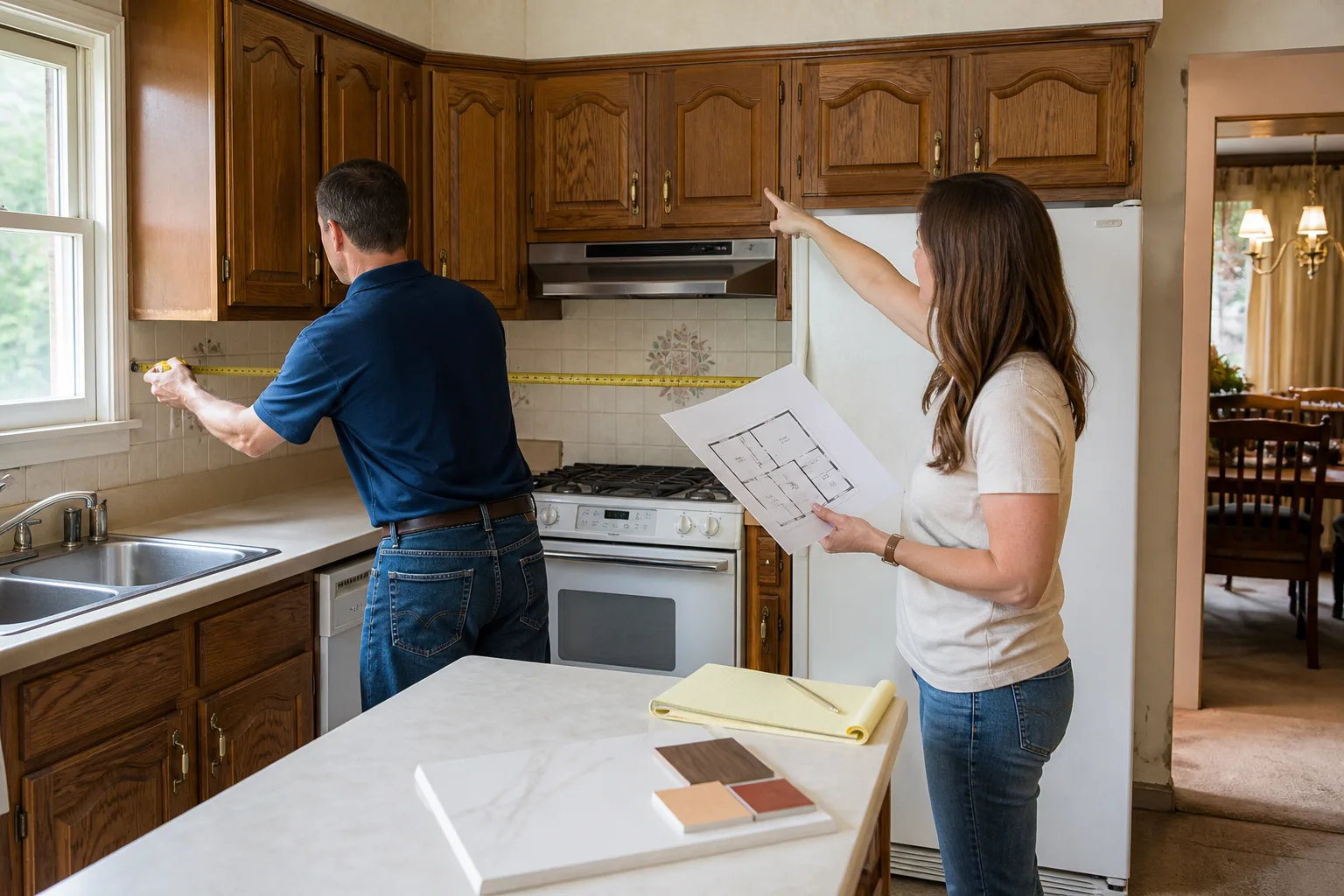
Pay close attention to the first contractor meeting. Not the showroom, not the website, not the glossy brochure with granite photos. The first face-to-face conversation. That’s where the project’s character gets set, and everything after it follows the pattern established in those opening twenty minutes.
A contractor who pulls out a notepad and asks what you actually want to do in your kitchen is already doing the work of a real remodel. A contractor who pulls out a contract and asks for a signature before your coffee gets cold is doing something else entirely. In Winchester, we’ve walked into homes where the previous “contractor” quoted a number off the top of his head, then handed over a one-page contract with a clause about “additional work charged at cost plus 30%.” That clause is where the money went. The homeowner thought the number was $28,000. It finished at $51,000.
The pattern is consistent enough to be predictable. When someone gives you a ballpark before they’ve seen your layout, measured your space, or looked inside a single cabinet, they’re either estimating wildly or planning to expand the scope later. Neither is good for you. A kitchen has almost no standard dimensions once you get past the doorframe. The wall on the left might have a plumbing stack inside it. The floor might be three layers of linoleum over a subfloor that was never rated for tile. A contractor who doesn’t need to look before quoting has already decided not to look later.
What should you listen for? Ask the contractor to describe the entire project back to you from start to finish. Not the price. The sequence. A real professional can walk you through the order of work – demo, framing, mechanicals, inspections, drywall, cabinets, countertops, tile, trim, punch list – without hesitating. Someone who’s winging it will get lost around the second week and start saying “and then we finish it up.” There is no step called “finish it up.” That’s a marketing phrase, not a milestone.
The Five Verbal Warning Signs in a First Meeting
These are the five patterns we’ve come to recognize as reliable predictors of cost overruns, delays, and the phone calls that stop getting returned around week six. Any one is worth a second interview with another contractor. Two or more should end the conversation.
- Vague scope. “We’ll handle the details as we go” or “we’ll work around whatever we find.” A written scope names every item: cabinets, countertop material, sink, faucet, faucet rough-in, electrical outlets, under-cabinet lighting, backsplash, floor covering, trim, paint. If the contractor won’t put the list in writing, the list isn’t real. Vague scope is how a $30,000 kitchen becomes a $47,000 kitchen.
- “We’ll figure it out as we go.” This is the verbal cousin of vague scope, and it’s worse because it sounds friendly. What it actually means is “we’ll bill you for every decision we make without your input, after the work is done.” Every choice in a kitchen remodel should be made before demo starts, in writing, with a price attached.
- No mention of permits. If the first conversation doesn’t include the word “permit” and the phrase “we’ll pull them,” that’s a warning that the contractor plans to skip the inspection process. Skipping permits is not a shortcut to a cheaper job; it’s a liability you’ll carry when you sell the house, and a safety risk on gas lines and electrical.
- No written guarantee offered. If you have to ask “what happens if something fails,” the answer is usually nothing beyond a handshake. A real guarantee is printed, dated, and covers a defined period. Ours is the 365-Day Done Right Promise, and it’s included on every project in writing. If a contractor doesn’t offer theirs without being prompted, ask to see it before you sign anything.
- Pressure to sign same-day. “This price is only good today” is not a pricing policy. It’s a sales tactic. Legitimate pricing on a kitchen remodel doesn’t expire at midnight. If a contractor claims it does, that contractor is selling you something that isn’t a remodel – they’re selling you the feeling of having made a decision fast enough. Slow down.
In Winchester, the pressure tactic we hear about most often is the “we’ll hold the slot” pitch on Thursday afternoon, implying work might not start until next spring if you don’t sign by Friday. Kitchen remodels don’t work that way. A serious contractor will gladly hold a scheduled start date for a week while you read the contract. If they won’t, you’ve learned something important about how they’ll handle the rest of the job.
The “Open-Wall Surprise” Tactic Explained
Here’s how it works. A contractor bids low – noticeably lower than the other numbers you got – to win the job. The written price shows $24,000 for a full kitchen remodel. You sign because it’s a written number and the contractor seems honest. Then demo day arrives, the old cabinets come out, and the contractor points at the open wall and says something like, “Well, we couldn’t have known the plumbing was like this. That’s going to be extra.”
That’s not a surprise. That’s a planned surprise. Any contractor with more than a few kitchens behind them knows several things about older construction. They know that on a house north of twenty years old, the wall behind the sink probably has galvanized steel plumbing, not copper. They know the subfloor in a kitchen with linoleum over slab probably has moisture issues. They know the electrical in a kitchen built before 1980 probably has two outlets where the code now requires six. The “we couldn’t have known” claim only works if the contractor never looked.
The fix is simple and you can insist on it. Before demo starts, ask the contractor to include a section in the written price that addresses hidden conditions – specifically, what the plan is if any of these are found. A written price from a contractor who intends to honor it will state something like: “The price above includes all work detailed in this scope. If pre-existing conditions are discovered during demo that could not reasonably be identified before work began, we will stop work, document the condition in writing, and provide a written change order with a price before any additional work proceeds. No work will be performed at additional cost without a signed change order from the homeowner.” That’s the whole sentence. Ask for it if a contractor doesn’t offer it.
The second half of the protection is a pre-demo walkthrough. Before you sign, ask the contractor to look behind a cabinet, pull the electrical panel cover, and check the shutoff valves under the sink. Not every hidden condition is discoverable, but the ones that aren’t are fewer than the ones that are – if the contractor actually checks. If they won’t check before quoting, the open-wall surprise is one step closer to happening.
Structural Warning Signs Inside Your Existing Kitchen
Some warning signs aren’t in what the contractor says. They’re in what your existing kitchen already tells you. Disclose these upfront, ask the contractor how they plan to handle them, and get the answer in writing.
- Signs of past water damage. Look under the sink and at the back panel of the cabinet next to the sink and dishwasher. Water stains, soft wood, or a musty smell after rain usually mean a slow leak that predates you. If the contractor writes off the water damage without investigating the source, that’s a warning. Repairing the damage without finding the leak is how a kitchen remodel fails in the first month.
- Outlet count. Count the outlets in your kitchen. Count the GFCI outlets specifically. A kitchen built before the 1980s frequently has two outlets where current code requires six to eight. Asking a contractor what your current setup is, and what code requires on a remodel, is a direct test of whether they plan to pull permits. A permit means the electrical gets inspected. No permit means it doesn’t.
- The “non-load-bearing” assumption. If your contractor proposes to remove a wall and calls it non-load-bearing without actually checking, stop. A wall is load-bearing or it isn’t, and that question gets answered by opening the wall, checking the framing, and looking at the joists above. If a contractor says “it’s fine, I can tell just by looking,” ask them to put that in writing along with their license number. The answer will tell you a lot.
- Older hardware and plumbing behind the wall. Galvanized steel supply lines, cast iron drains, and knob-and-tube wiring all show up in kitchens from a certain era. These are functional, but they don’t meet current code, and they need to be addressed in the scope if the kitchen is being brought up to current standards. Ask directly.
- Improper venting for the range hood. A range hood that recirculates rather than vents to the outside is common in older Winchester homes. If you’re remodeling the kitchen, this is the moment to fix it, and the contractor should mention it before you ask.
The theme running through all these is simple. The contractor who brings up these structural realities themselves in the first conversation is showing you they’ve done this before. The one who has to be prompted, or who avoids the subject entirely, is showing you something else.
How to Verify a Nevada Contractor’s License
In Nevada, a general contractor working on a kitchen remodel is required to hold a license from the Nevada State Contractors Board. Verifying that license takes about five minutes, and it is the single highest-value five minutes you will spend on the entire project. Here’s the exact sequence.
- Get the license number in writing before you sign anything. Ask the contractor to write their license number on the contract, on the estimate, or on a business card. Nevada law requires licensed contractors to display the number on their advertising, so they’ll know it, and they should give it to you without hesitation.
- Search the Nevada State Contractors Board database. The board maintains a public license lookup. Enter the number and check two things: that the license is active, and that it isn’t expired. An expired license is not a license.
- Confirm the license classification covers kitchen remodeling. Nevada licenses are classified by scope. A license for painting or landscaping doesn’t cover a kitchen remodel, even if the same person runs the painting business. The classification is printed right next to the license status.
- Check the bond and insurance. Nevada requires licensed contractors to carry a bond. The board listing shows whether the bond is current. It also shows proof of liability insurance. If either is missing or expired, the contractor doesn’t meet Nevada’s requirements for a residential project.
- Look for prior complaints or disciplinary actions. The same listing shows the complaint history. A single old complaint from a decade ago isn’t disqualifying. A pattern of recent complaints, or a discipline action that resulted in a suspension, is a signal to walk away.
- Verify the name on the contract matches the name on the license. Contractors sometimes operate under a trade name, which is fine, as long as the licensed entity is named on the contract. If the person signing doesn’t match the license, ask why.
- Ask for a certificate of insurance directly from the insurer. Not a copy of a policy. A certificate mailed or emailed from the insurance company with the name of the business and the policy dates. If the contractor can’t produce that, insurance coverage is a guess.
One more thing Winchester homeowners should know: Nevada also requires a written contract for residential work over a certain dollar threshold, and the contract must include the license number, the scope of work, the total price, the schedule, and the legal right to a three-day right of rescission. A contract that’s missing these isn’t necessarily illegal, but a contract that’s missing these is a preview of how the rest of the job will go. Details matter in a kitchen remodel, and the paperwork is where that habit starts.
What the Written-Price Standard Actually Protects You From
A written price before any work starts isn’t a luxury. It’s not a marketing gesture. It’s a specific commitment that removes specific risks from your project. Here’s what it protects against, and what it doesn’t.
It protects you from the “ballpark creep” that ends most amateur kitchen remodels in a shouting match. When a contractor tells you “it’ll be somewhere between $25K and $40K,” the number you hear is $25K. The number they mean is $40K. The written price forces the number onto paper where it can’t move. That’s what we do on every Winchester project: a written price before any work starts, so the number on day one is the number on the invoice.
It protects you from the “additional work at cost plus” clause, which is where contractors hide open-ended pricing. Under a written-price contract, additional work either isn’t happening or comes with its own written change order and its own number before any of it starts. Two prices, both in writing, both in front of you before the work is done.
It protects you from the “we’ll figure out the materials later” problem. When the written price names the materials, you know what’s going in the kitchen. KraftMaid cabinetry. Cambria quartz countertops. A Kohler sink. A Moen faucet. When those names are in the contract, you can price-shop on your own time and see the exact difference between one cabinet line and another. When the contract just says “quality cabinetry,” the contractor decides what “quality” means.
It protects you on time, too. A written price should be paired with a written schedule, including start date and completion date. The written schedule is where the contractor’s real capacity shows up. If the schedule says the job will take six weeks and the contractor’s calendar is legitimately open, six weeks is realistic. If the schedule is vague, the job will stretch.
What the written price doesn’t protect against is a contractor who writes a price and then doesn’t show up. That’s what the guarantee is for, and it’s why the guarantee needs to be in writing too. Our 365-Day Done Right Promise covers every project in writing. If a repair fails inside the guarantee period, we come back and fix it at no charge. There’s no service call, no re-inspection fee, and no argument about whether it’s our problem. It’s our problem, and it’s in writing.
If a contractor doesn’t offer a written price, the exact language to request is this: “I’d like the total price in writing, with the scope of work detailed, the materials named, the schedule included, and a clear statement of what happens if conditions behind the wall require additional work. My decision will be based on the written document, not a verbal estimate.” A contractor who balks at that sentence is showing you exactly how the project will go.
Permits, Inspections, and What Winchester Requires
A kitchen remodel in Winchester almost always requires a building permit, and frequently requires separate electrical, plumbing, and mechanical permits depending on what’s being changed. The exact threshold varies by the scope of work. Replacing cabinets and countertops in kind usually doesn’t require a permit. Moving a wall, changing the plumbing layout, adding or relocating electrical circuits, or moving a gas line requires permits and inspections. The inspections catch what the human eye can’t see after the drywall goes up.
Why this matters in Winchester specifically: our climate runs hot and dry through the summer, and kitchen ventilation matters more here than in a humid climate. A range hood that doesn’t actually vent outdoors, combined with a kitchen that’s been closed up all day in July, loads the home’s HVAC system and drives cooking odors through the house. Inspectors look for proper venting, and if the contractor isn’t pulling a permit, nobody looks. The kitchen works for a year, then the homeowner notices the smell and can’t figure out why.
Inspections also catch the plumbing issues that hide in older homes. A kitchen in Winchester that’s thirty or forty years old frequently has a shutoff valve that’s never been turned. The inspector turns it. If it fails, that’s a problem that would have caused a flood two years later. Better now, before the cabinets are in.
The permit question should be on your first-meeting checklist, alongside the license number. Ask the contractor directly: “What permits does this project require, and will you pull them?” A real contractor will answer without hesitating and put “permits pulled and inspections passed” in the written contract. If they mention “we don’t pull permits for something this small,” that’s the answer. It’s the wrong answer.
What Kitchen Remodeling Really Costs in Winchester
Here’s roughly what a full kitchen remodel runs in the Winchester market, depending on layout, cabinet line, and countertop material. These numbers reflect real project pricing, not magazine averages, and they’re what we use to build written estimates.
- Cosmetic refresh (cabinet refacing or paint, new countertop, new backsplash, new sink and faucet): $8,000 to $18,000. This is the right tier for a kitchen in good structural shape where the plumbing and electrical stay put.
- Full remodel with new cabinets in a mid-range line (Wellborn or comparable), new countertops in quartz or granite, new flooring, new appliances in their existing locations: $22,000 to $42,000. This is the most common Winchester project we quote.
- Full remodel with new cabinets in an upper line (KraftMaid or comparable), Cambria or Silestone quartz countertops, layout changes, new electrical throughout, new flooring, new appliances: $45,000 to $70,000. The wide range here reflects how much the electrical, plumbing, and layout changes drive the number.
- Structural changes (removing or adding a wall, moving a gas line, relocating plumbing to a new wall): Add $5,000 to $15,000 depending on scope and inspections.
What drives the number up in Winchester: pre-1980 construction, which often means galvanized plumbing and undersized electrical. Quartz countertops versus laminate. Cabinet layout changes versus cabinet replacements in the same footprint. What keeps the number down: keeping plumbing and electrical in the existing locations, choosing a mid-range cabinet line, sticking with a laminate countertop if the budget is tight, and staying in the same floor plan.
Every one of these numbers is the kind of thing that should be in the written estimate before you sign – as a total number, with the scope described in detail. If the contractor won’t give a total, or gives a range instead, refer back to warning sign number one. The range will expand, and it will expand toward the top.
Common Mistakes to Avoid
- Choosing the lowest bid. The lowest bid is almost never the final cost. In Winchester kitchens we’ve been called in to finish, the “lowest bid” is the one that came with an unwritten scope, a verbal change-order process, and a contractor who didn’t show up after the first week of demo. The number that matters is the written number, not the one that gets you in the door.
- Skipping the permit check to save time. Skipping permits feels like a shortcut and it always costs more in the end. When you go to sell the house, unpermitted work has to be disclosed, and a buyer’s inspector will find it. Pulling the permit costs a few hundred dollars and a couple of inspections – far less than dealing with a failed sale or a code compliance issue.
- Paying a large deposit before the contract is signed. Nevada has rules about deposits on residential work, and a responsible contractor doesn’t need a large check before the contract is fully executed with a written price and schedule. A deposit is reasonable. Paying half the project cost before a written scope exists is not.
- Buying appliances before the cabinets are measured. Kitchen remodels look simple until you discover the refrigerator is a half-inch too wide for the cabinet opening. Measure twice, buy once. Wait for the contractor’s written cabinet layout before buying any appliance, especially the range and refrigerator.
- Not asking what “finished” means. “Finished kitchen” means different things to different contractors. Does it include the trim, the paint, the shoe molding, the caulk at the backsplash, the floor transition at the doorway? Get the definition in writing. The difference between “finished” and “finished, with all the punch list items done” is a five-figure dispute on a big project.
- Ignoring the small voices. If something in the first conversation made you uncomfortable – a joke about the last homeowner, a dismissive comment about permits, a vague answer about the guarantee – that’s the project speaking to you. Winchester homeowners who trust that instinct usually avoid the project that starts badly and ends the same way.
- Hiring on price alone without reading the contract. The contract is the project. If the contract is one page and the project is ten weeks of full kitchen remodel, the contract is missing nine pages of detail. Read it. Ask questions. A real contractor will sit with you and go through every line.
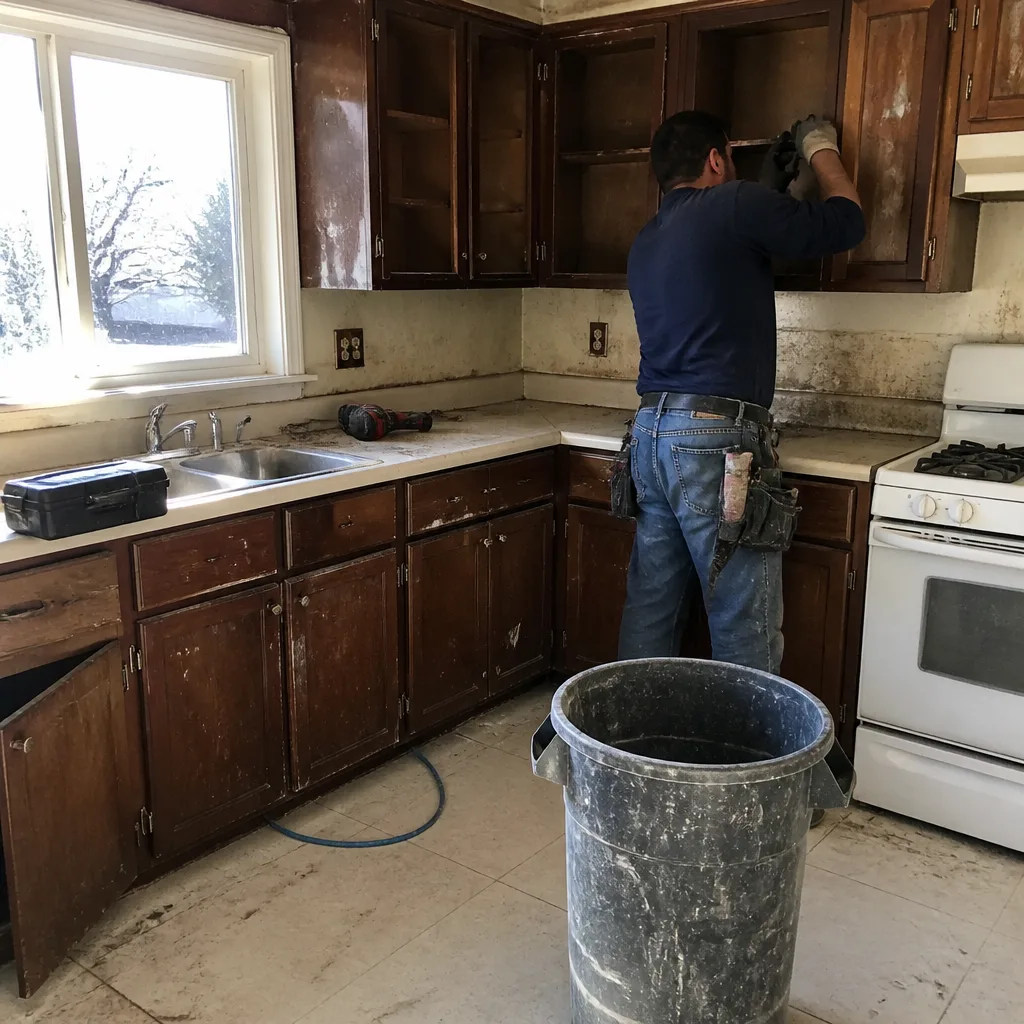
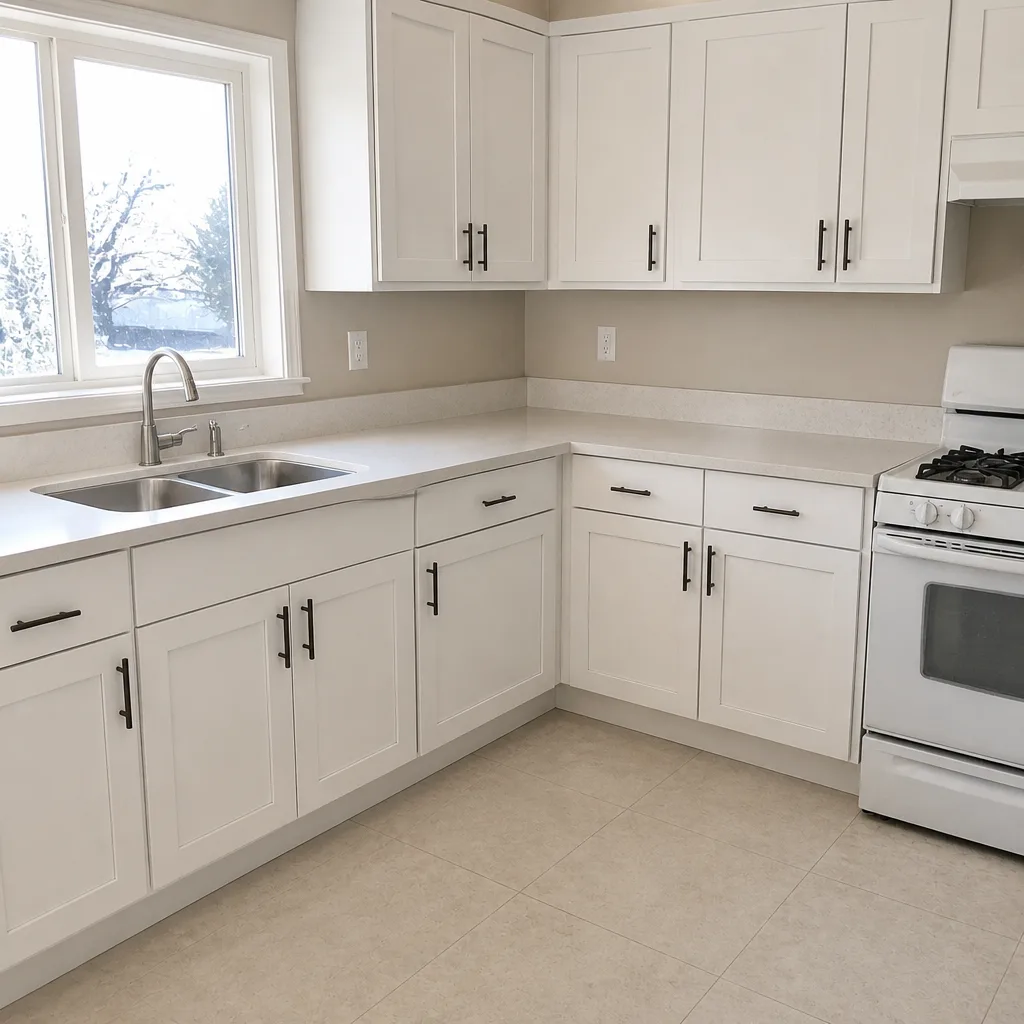
See the difference
 Before
 After
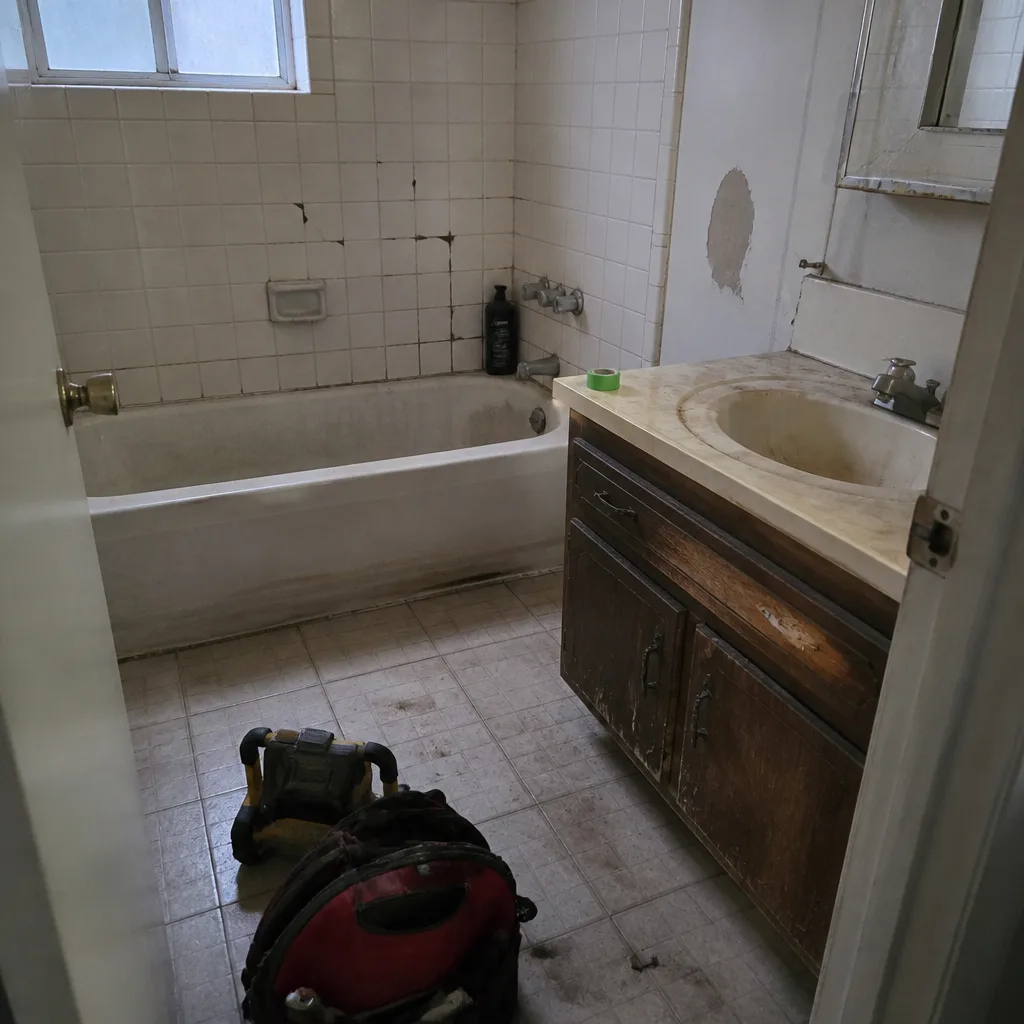 Before
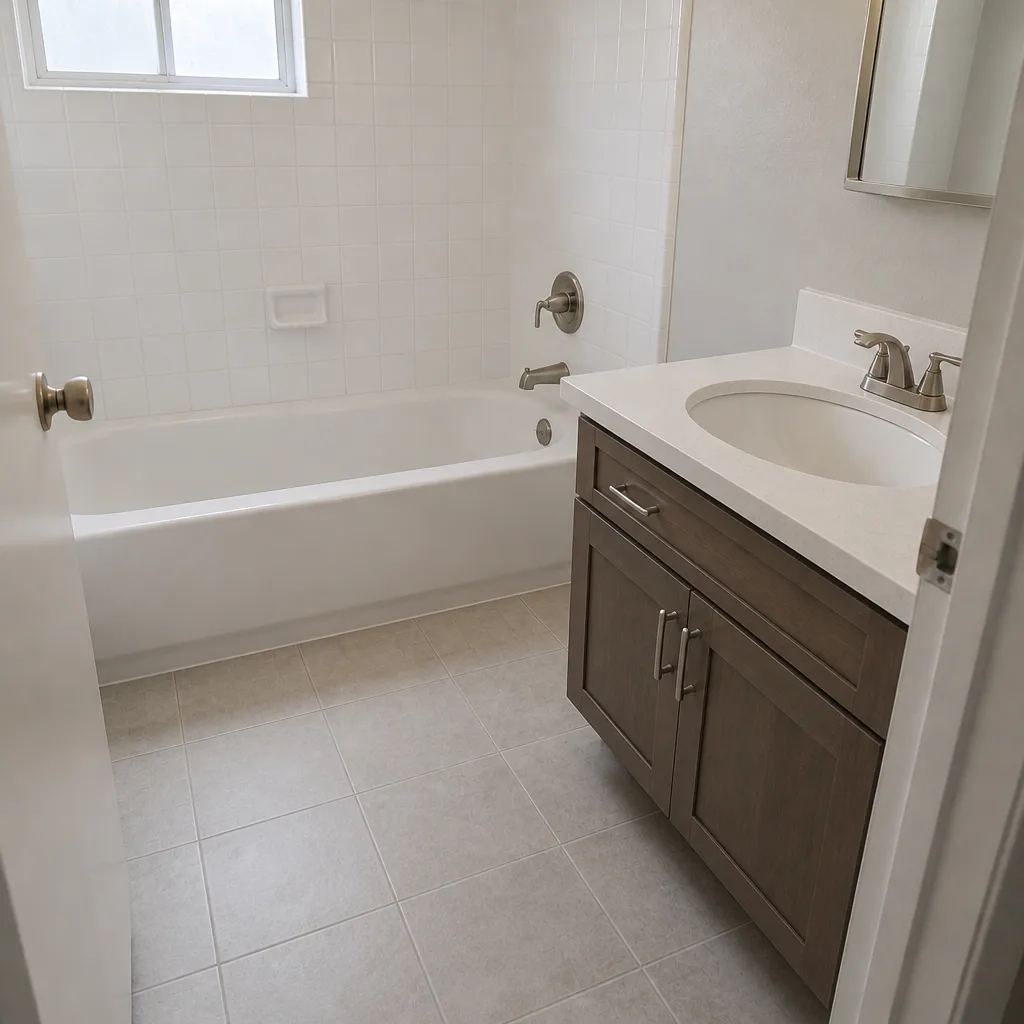 After
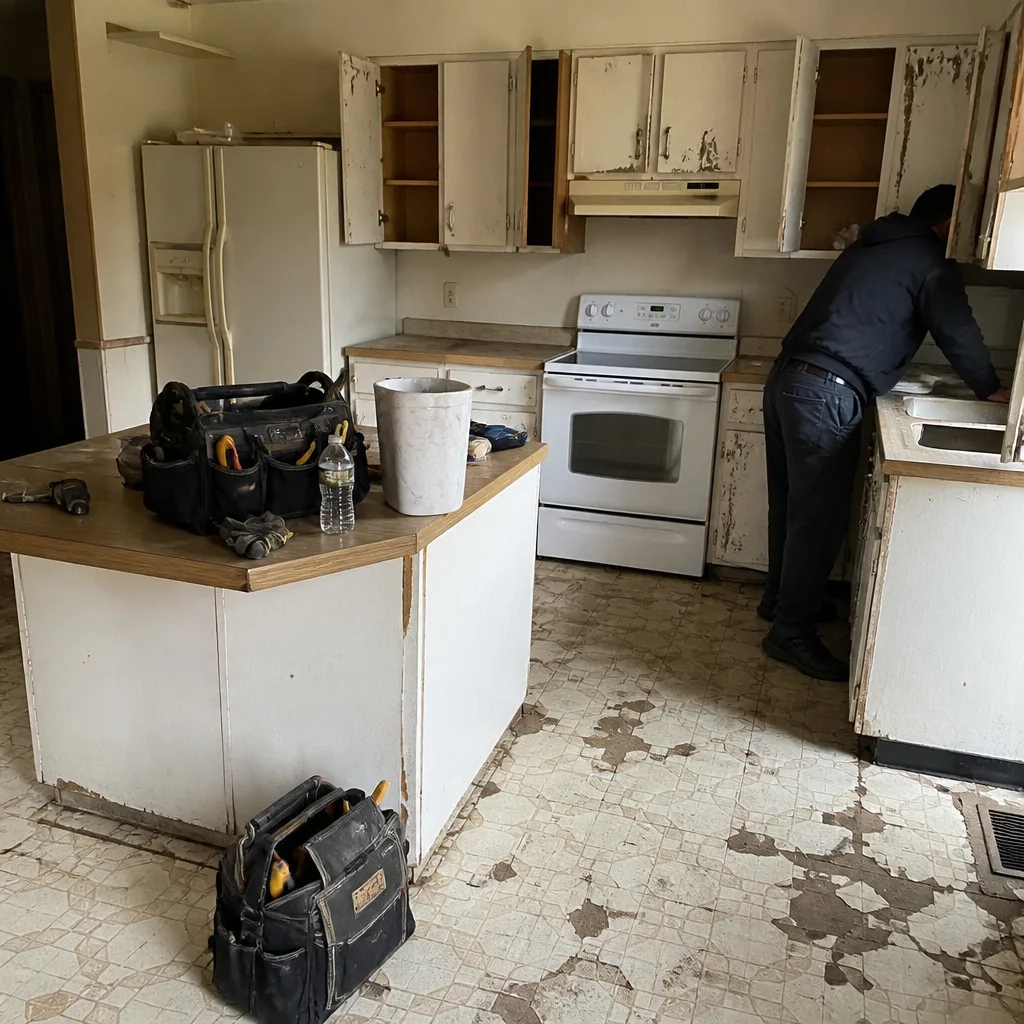 Before
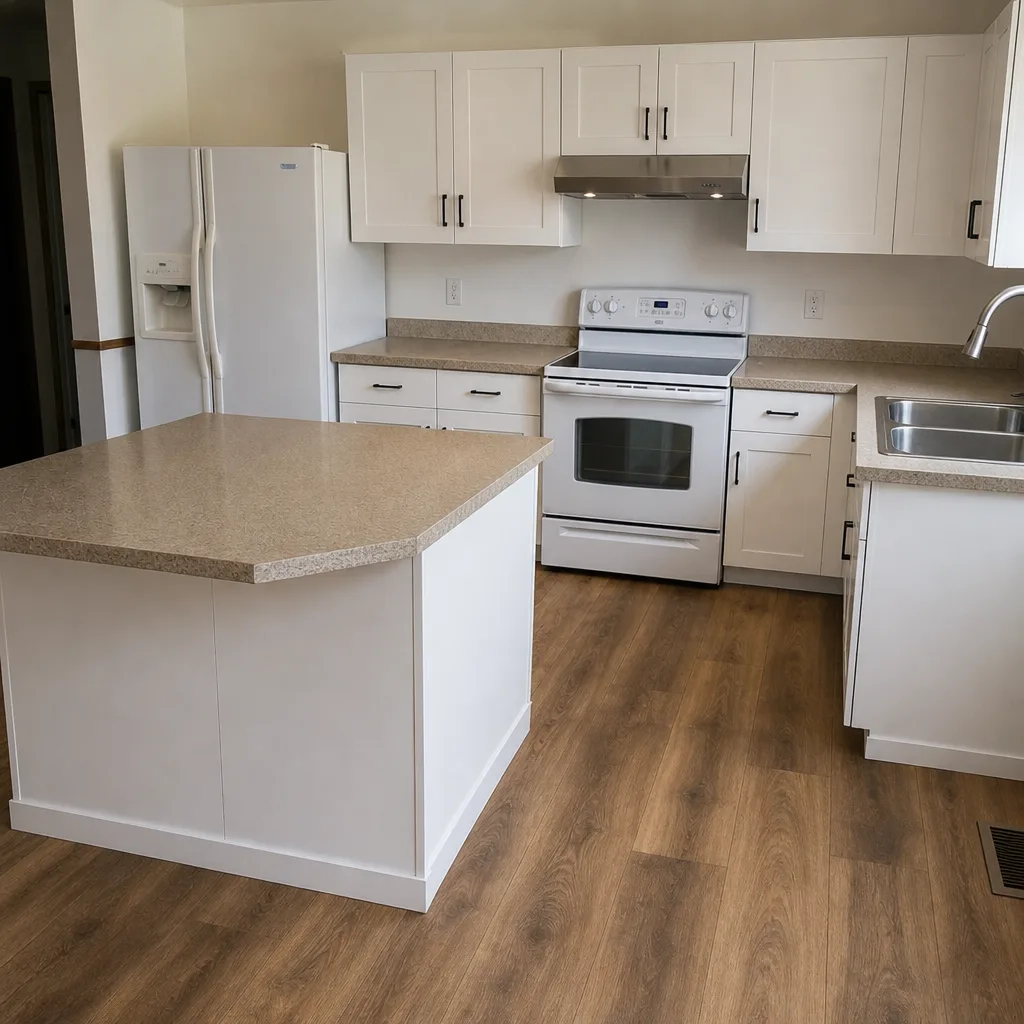 After
When to Call a Professional
Call a professional contractor before you sign anything, before demo starts, and before you commit to a design that hasn’t been priced. Call sooner if the contractor you’re considering can’t produce a Nevada license number, if the written price is vague, if the scope of work is verbal, if no permits are mentioned, or if any pressure exists to sign today. Also call a professional before you list your house if a prior contractor left unpermitted work behind. That’s a specific situation we see in Winchester more often than it should happen.
Penhallow Remodeling Winchester offers free estimates in Winchester. Call (844) 797-9439 and a live person answers – not a voicemail prompt, not a callback window. We’ll walk through your project, write down the price before any work starts, and put the 365-Day Done Right Promise in writing alongside it. You can also see what we do on the kitchen remodeling in Winchester page, or start with our Penhallow Remodeling Winchester home page if you’d like to see the full range of our work.
Frequently Asked Questions
The biggest red flag is a price given as a range instead of a written number. A range is a hedge. It gives the contractor room to move toward the top of the range once demo reveals “surprises,” and those surprises are rarely surprises to the contractor. A written number with a detailed scope, named materials, and a written schedule is what a real estimate looks like. Call (844) 797-9439 for a free written estimate in Winchester.
Ask for the license number in writing, then look it up on the Nevada State Contractors Board website. Confirm three things: the license is active, the classification covers kitchen remodeling, and the bond and insurance are current. The full step-by-step process is in the section above. If a contractor won’t provide the license number, that’s the whole answer. Call (844) 797-9439 if you’d like a licensed, background-checked team for your Winchester kitchen.
Under a written-price contract, the price doesn’t change unless you sign a written change order for additional work. The specific protection is a clause that says every additional cost is documented in writing, priced, and approved by you before any work proceeds. If your contractor’s contract doesn’t contain that clause, ask for it. A legitimate contractor will include it without argument. Call (844) 797-9439 to see a written price before any work starts on your kitchen.
Yes, the contractor on your project pulls the required building, electrical, plumbing, and mechanical permits, and the inspections are passed before the project closes out. Skipping permits is a liability on your house and a safety risk on the gas and electrical work, and it’s not something we do. Call (844) 797-9439 to talk through the permit scope for your specific kitchen.
A cosmetic refresh runs two to four weeks. A full kitchen remodel with layout changes, new cabinets, and new countertops typically runs six to ten weeks, depending on cabinet lead times and inspection schedules. The written schedule should name the start date and completion date before you sign. Call (844) 797-9439 for a realistic schedule on your Winchester project.
A guarantee covers workmanship and, through the manufacturer, the materials. Our 365-Day Done Right Promise covers workmanship for a full year after project close, and covers a return visit at no charge if something fails. The product brands behind the job – KraftMaid cabinetry, Cambria quartz countertops – each carry their own manufacturer warranties that stack on top of ours. Ask any contractor to put their guarantee in writing next to their price. If they won’t, that tells you what the guarantee is worth. Call (844) 797-9439 for a written guarantee on your Winchester kitchen remodel.
The Bottom Line
The project you get is the project you choose in the first conversation. A written price, a written scope, a written schedule, a written guarantee, and a verified Nevada license number are what separate a kitchen remodel from an expensive lesson. The five warning signs – vague scope, “we’ll figure it out,” no permits, no written guarantee, and same-day pressure – are all visible before you sign. Trust the pattern. Verify the license. Ask for the written price. And if you’d like a free estimate from a team that puts all five in writing before any work starts, a general contractor in Winchester is ready to walk through your kitchen. Our technicians bring up to 22 years of experience to every project, arrive in uniform, and are background-checked before they step into your home. Learn more about our bathroom remodeling in Winchester work alongside our kitchen projects, since the same standard applies to both. Call (844) 797-9439 for a free estimate and a live person who answers the phone.
Written by the team at Penhallow Remodeling Winchester.