Last updated November 18, 2026




Free written scope consultation - allowances, timeline, and change-order rules on paper before a single trade is scheduled
DIY vs Professional Kitchen Remodeling: What’s Safe to Do Yourself
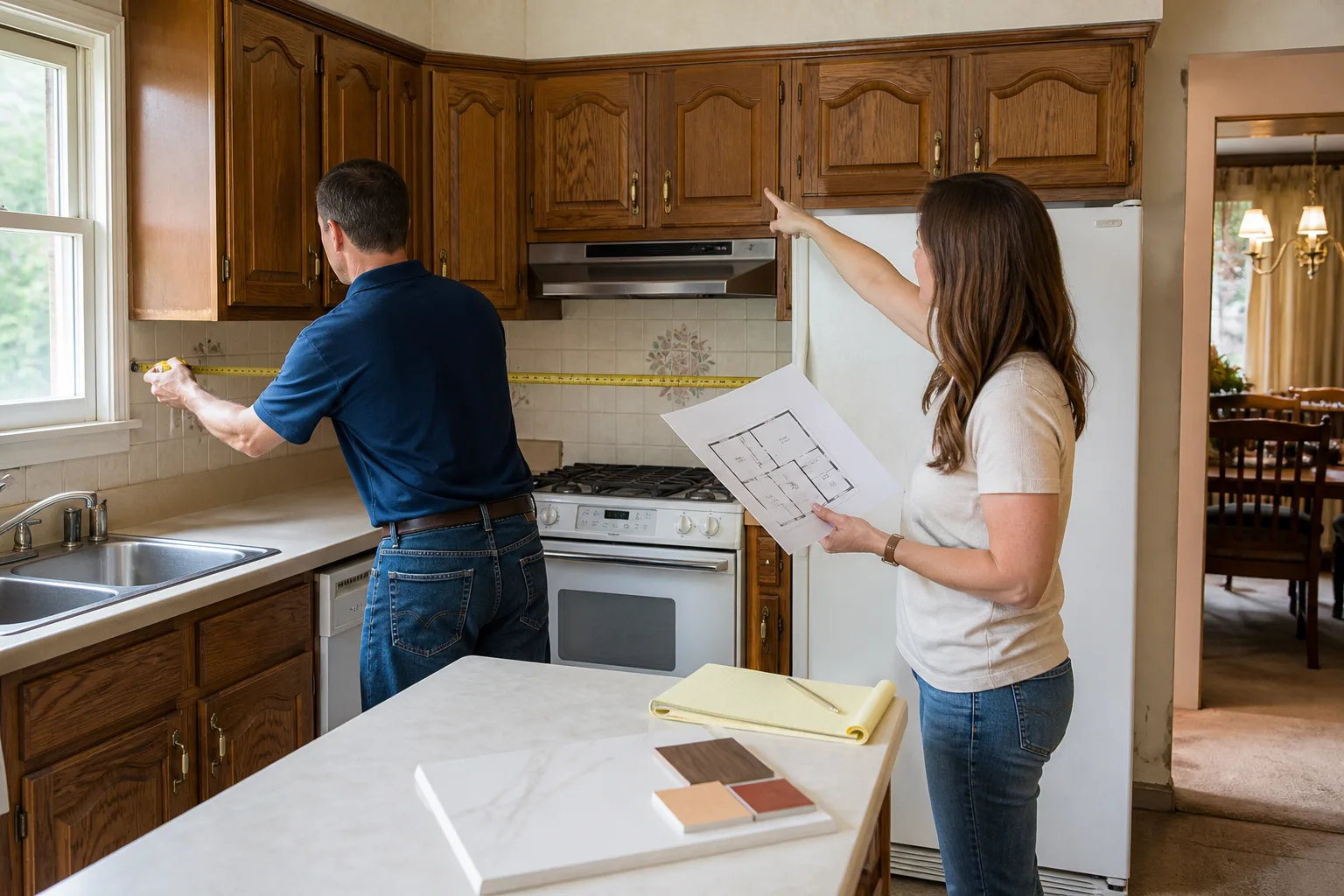
Here’s something most homeowners don’t know until it’s too late. In Nevada, you can legally perform your own electrical work on a home you live in. No license required. But if you sell that house within a year and the buyer’s inspector flags an unpermitted panel upgrade, that discovery can unwind the entire sale – or force you to eat the cost of tearing it out and doing it correctly. We’ve watched that exact scenario play out in Winchester, and it’s the reason this guide exists. The DIY-or-hire question usually gets framed as a skill test. It isn’t. It’s a question about which tasks carry permit requirements, legal liability, and insurance exposure. Here’s how to find that line.
Quick Answer
Tasks that don’t touch permits, plumbing, gas, structural walls, or the electrical panel are generally safe to do yourself – painting, cabinet pulls, backsplash tile over existing substrate, demo of non-load-bearing elements. Tasks that require a licensed contractor in Nevada include moving gas lines, relocating or adding electrical circuits, and any modification to a load-bearing wall. Everything between those two poles is where homeowners get hurt financially.
Styles & brands we work with
- Kitchen remodeling
- Bathroom remodeling
- Home additions & ADU
- Roofing
- Windows & doors
- Driveway & pavers
- Fence
Table of Contents
- Where the Permit Line Falls in Nevada
- What You Can Genuinely Do Yourself
- The Real Cost Math: Where DIY Saves and Where It Costs
- The Insurance Gap Nobody Explains Before Demo Day
- The Hybrid Approach: Cut Labor Costs Without Touching Permitted Work
- Why a Fixed Written Price Kills the DIY Temptation
- Common Mistakes to Avoid
- When to Call a Professional
Where the Permit Line Falls in Nevada
Nevada’s contractor licensing rules are stricter than many states, and the line between “you can” and “you can’t” is clearer than most homeowners assume. Clark County enforces those rules at inspection, and Winchester falls under the same framework.
Here’s the practical breakdown for a kitchen remodel.
Requires a licensed contractor:
- Any electrical work beyond swapping a light fixture or outlet faceplate
- Gas line relocation or extension (moving your range, adding a gas cooktop hookup)
- Any modification to a load-bearing wall, including cutting a pass-through
- Adding or relocating plumbing supply or drain lines
- Electrical panel upgrades or new circuit installation
Does not require a licensed contractor (owner-occupied, single-family home):
- Painting walls, trim, and cabinets
- Cabinet hardware, pulls, and knobs
- Cosmetic tile work over sound existing substrate
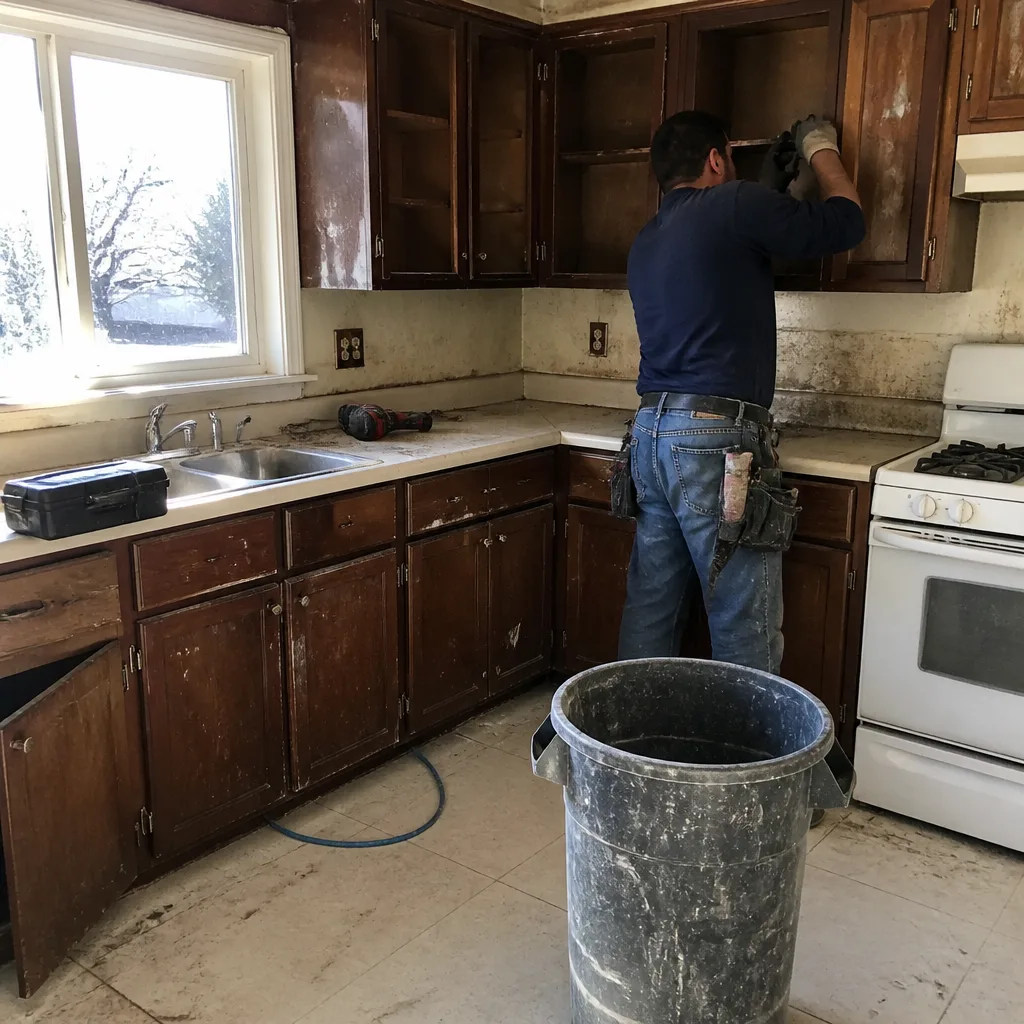
- Removing old cabinetry and countertops you’re replacing
- Installing a new faucet on an existing supply line
The gray zone matters most. Replacing a dishwasher on the same circuit? Usually fine. Adding a dedicated circuit for a new double oven? That’s permitted work. In our experience, homeowners in Winchester’s older neighborhoods – where kitchens often run on one overloaded circuit – hit this wall faster than they expect. If you’re planning to upgrade appliances, budget for the electrical work before you buy anything.
What You Can Genuinely Do Yourself
Let’s be concrete. These are the tasks where a careful homeowner with the right tools produces a result indistinguishable from a professional’s.
- Demo and haul-away. Pulling cabinets, removing old countertops, scraping flooring adhesive. It’s hard, dusty work – but it requires no license and saves real money. Expect to save $800 to $2,500 in labor on a typical kitchen.
- Painting. Walls, ceilings, trim, and even cabinet boxes if you prep properly. The failure point is nearly always prep, not paint quality. Degrease, sand, prime with a bonding primer, then coat.
- Cabinet hardware and pulls. Fifty dollars in drill bits and a template will save you $300 to $600 in installation labor.
- Backsplash installation over existing drywall. If your substrate is sound, tile over drywall in a dry zone is a legitimate weekend project. The skill is in layout and grout, not in the work itself.
- Cabinet refacing and painting. Replacing doors and drawer fronts on sound boxes is a genuine middle path. Do this yourself and you avoid the cabinet-line cost entirely.
- Faucet swap on existing supply lines. Fifteen minutes, one wrench, and a bucket. Just verify the shutoff valves hold before you start.
- Site cleanup. Daily cleanup keeps a kitchen project livable. It’s also the one thing contractors charge for that you can absolutely do yourself.
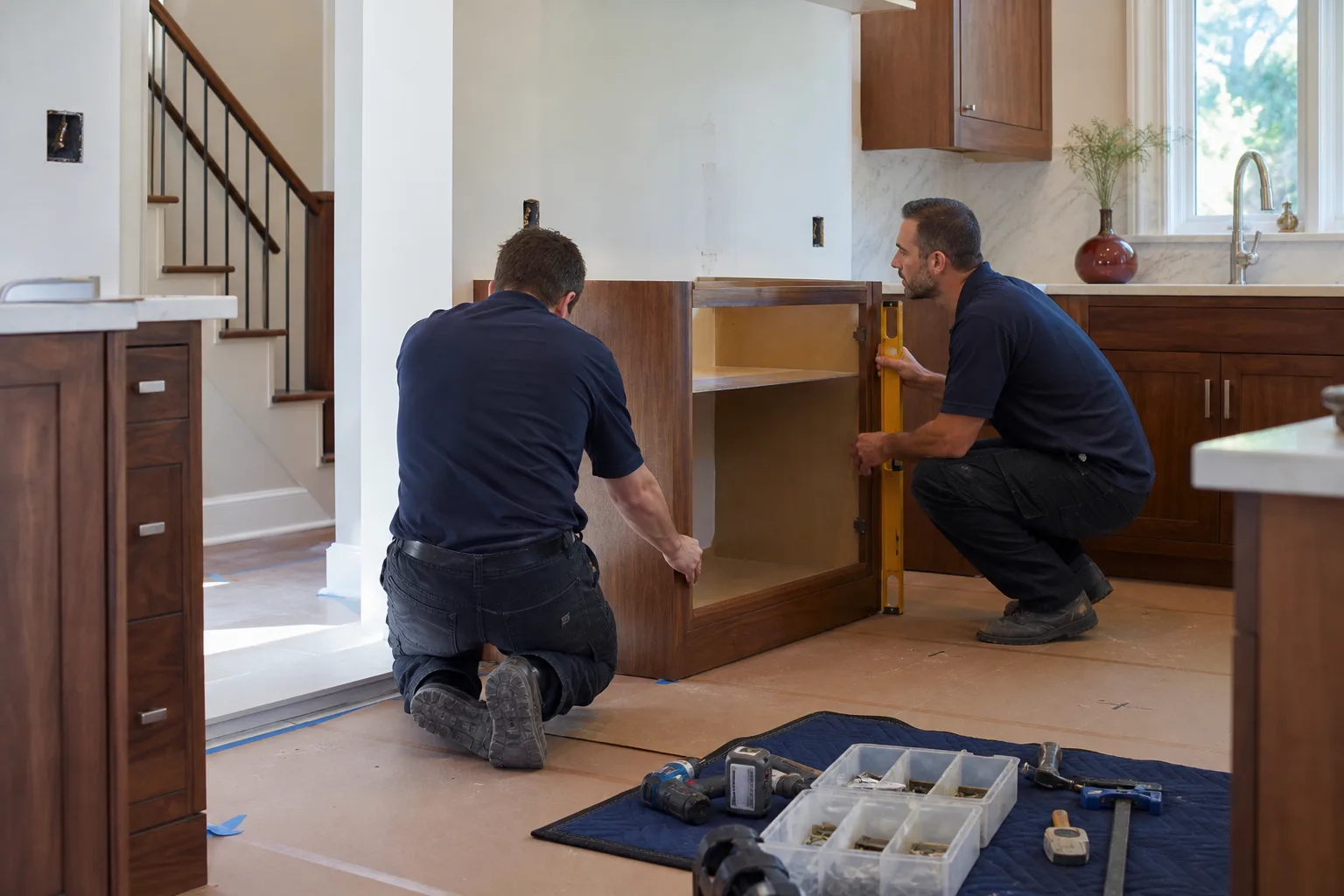
If your kitchen needs cabinet replacement rather than refacing, that’s where the decision gets more interesting. Cabinet installation isn’t legally restricted, but it’s unforgiving: a plumb-and-level mistake shows up in every door gap for the next ten years. We install KraftMaid and Wellborn cabinetry, and the difference between a clean install and a wavy one is nearly always in the shimming and leveling, not the boxes.
If you’re comparing cabinets, countertops, and fixtures side-by-side before committing, our guide to kitchen remodeling in Winchester walks through how material choices drive the total price.
The Real Cost Math: Where DIY Saves and Where It Costs
Here’s a rough breakdown of a Winchester kitchen remodel in the $22,000 to $48,000 range, and where the DIY labor savings actually live.
- Demo and haul-away: $800 to $2,500 in labor savings if you do it. Real savings.
- Painting: $1,200 to $2,800 in savings. Real savings.
- Cabinet hardware and pulls: $300 to $600 in savings. Real savings.
- Backsplash installation: $600 to $1,800 in savings if you get the layout right. Real savings, with a caveat – a bad grout job costs $2,400 to redo.
- Cabinet installation: $1,500 to $3,500 in savings. Not real savings. Cabinets installed out of level cost more to fix than to have installed correctly.
- Countertop templating and installation: No savings permitted. Cambria, Silestone, and Caesarstone all require a certified fabricator. Fabrication is not a homeowner task.
- Electrical work: $1,800 to $5,500 in “savings” – and roughly the same amount in liability. See the next section.
The pattern is clear. DIY savings are real when the work is reversible and cosmetic. They disappear the moment the work is structural, wet, or inspected.
The Insurance Gap Nobody Explains Before Demo Day
Most homeowners carry a standard HO-3 policy and assume it covers everything that happens in their kitchen. It doesn’t. Standard policies typically exclude damage caused by faulty workmanship – and if the work was unpermitted, the exclusion is broader than you think.
The practical scenario: you move a gas line yourself without a permit. Six months later, a slow leak causes water damage and a small fire. You file a claim. The insurer investigates, finds unpermitted work, and denies the claim on the grounds of an excluded cause. You’re on the hook for $30,000 to $60,000 in damage, plus the cost of bringing the work into compliance, plus whatever the city charges for retroactive permitting.
The second scenario: you do a permitted, inspected job yourself and something fails anyway. Now you have no warranty to call. The inspection says the work was done to code on the day it was inspected. That’s the extent of your protection.
Third scenario: the work you hired a contractor to do isn’t covered. That’s why our projects are covered by the 365-Day Done Right Promise – if something fails within the guarantee period, we return and fix it at no charge. That’s a contractual obligation, not an insurance claim, and it doesn’t rely on your policy paying out.
If your kitchen project includes electrical or plumbing scope, it’s worth checking with your insurance carrier about what they’d exclude for unpermitted work before you pick up a tool.
The Hybrid Approach: Cut Labor Costs Without Touching Permitted Work
The best kitchen remodel is rarely all-DIY or all-contractor. In our experience, the homeowners who save the most money are the ones who do the permitted work through a licensed contractor and everything else themselves. Here’s a workable split.
- Handle all demo yourself. Don’t hire a separate demo crew. You save $800 to $2,500 and you own a clean slate before the contractor arrives.
- Source your own cabinet and countertop brands if you want, but let the contractor install them. You’ll save the markup and still get the warranty, because Cambria, KraftMaid, and Wellborn all warrant their product against manufacturing defects regardless of who installs.
- Hire for electrical, plumbing, and structural – always. No exceptions.
- Do paint, hardware, and cleanup yourself after the contractor leaves. These are the last 5% of the job and 10% of the budget.
- Get a written line-item estimate that separates labor from materials. You can then remove whichever labor line items you’re doing yourself and see exactly what you’re saving.
This hybrid approach also gives you the insurance protection you’re buying by hiring: the licensed work is permitted, inspected, and guaranteed, and the cosmetic work you do yourself is reversible and low-risk.
Why a Fixed Written Price Kills the DIY Temptation
Here’s a pattern from years of conversations in Winchester. Most homeowners start considering DIY not because they want to, but because they’re afraid of what the contractor’s number will be – and afraid that number will grow. A verbal estimate that says “roughly $30,000” and a lump-sum invoice that arrives at $52,000 is the nightmare that pushes people toward a sledgehammer and YouTube.
The fix isn’t more YouTube. It’s a written price before any work starts. The Kingswell Way is built on four commitments: say the price before the work, show up in the window we gave, leave the place cleaner than we found it, and stand behind the work in writing. Every Penhallow Remodeling Winchester project gets a written, line-item price – not a range, not a verbal ballpark – before demo begins. The number on day one is the number on the invoice. If something in the scope changes, you see a new written number before the change happens.
Once the financial uncertainty is gone, the DIY decision becomes rational. You can look at a written price of $32,000 for a Winchester kitchen with KraftMaid cabinets and Cambria countertops and decide, calmly, which tasks you want to do yourself and which you’re happy to pay for. That’s a better decision than the one made out of fear.
If your project also includes a bathroom, our team handles bathroom remodeling in Winchester under the same written-estimate and 365-day guarantee standard. And if the scope is larger than a kitchen, our general contractor in Winchester page covers whole-home work.
Common Mistakes to Avoid
- Starting demo before the estimate is written. Once the cabinets are out, you’ve lost leverage on the price. Get the written number first, then demo.
- Assuming DIY electrical saves money. It doesn’t. Unpermitted electrical is a deal-killer at resale in Winchester and a claim-denial trigger with your insurer.
- Doing drywall and tile yourself to “save the finish work.” These are the two tasks where a DIY mistake costs more to fix than to have hired correctly. Bad grout, wavy drywall, and off-layout tile are all tear-out-and-redo situations.
- Buying cabinets before templating. Countertops are templated to the installed cabinets. If you order countertops and cabinets at the same time, you’ll have a mismatch on install day. Order cabinets first, install them, then template.
- Not asking whether the previous work was permitted. In older Winchester homes, an unpermitted addition or electrical upgrade from a prior owner can sit on your title and become your problem at inspection.
- Assuming your homeowner’s policy covers DIY damage. It usually doesn’t. Check the exclusions in your policy before you pick up the wire strippers.
- Treating every contractor estimate as if it will grow. Some contractors do inflate prices after demo. Ask for the written price up front, and if you don’t get one, that’s your answer.
When to Call a Professional
Call a licensed contractor when your kitchen project involves any of the following: gas line work, electrical panel changes or new circuits, moving or removing a load-bearing wall, plumbing relocation, countertop fabrication, or cabinet installation in a kitchen that isn’t perfectly square (which is most Winchester kitchens). If the work requires a permit, it should require a licensed contractor – and if a contractor tells you a permit isn’t needed, get a second opinion before you sign anything.
For homeowners who want to do the demo, painting, and finish work themselves, that’s a legitimate and cost-effective split. Penhallow Remodeling Winchester offers free written estimates in Winchester – call (844) 797-9439 to schedule yours. Our technicians have up to 22 years of experience, are background-checked, and arrive in uniform.
See the difference
 Before
 After
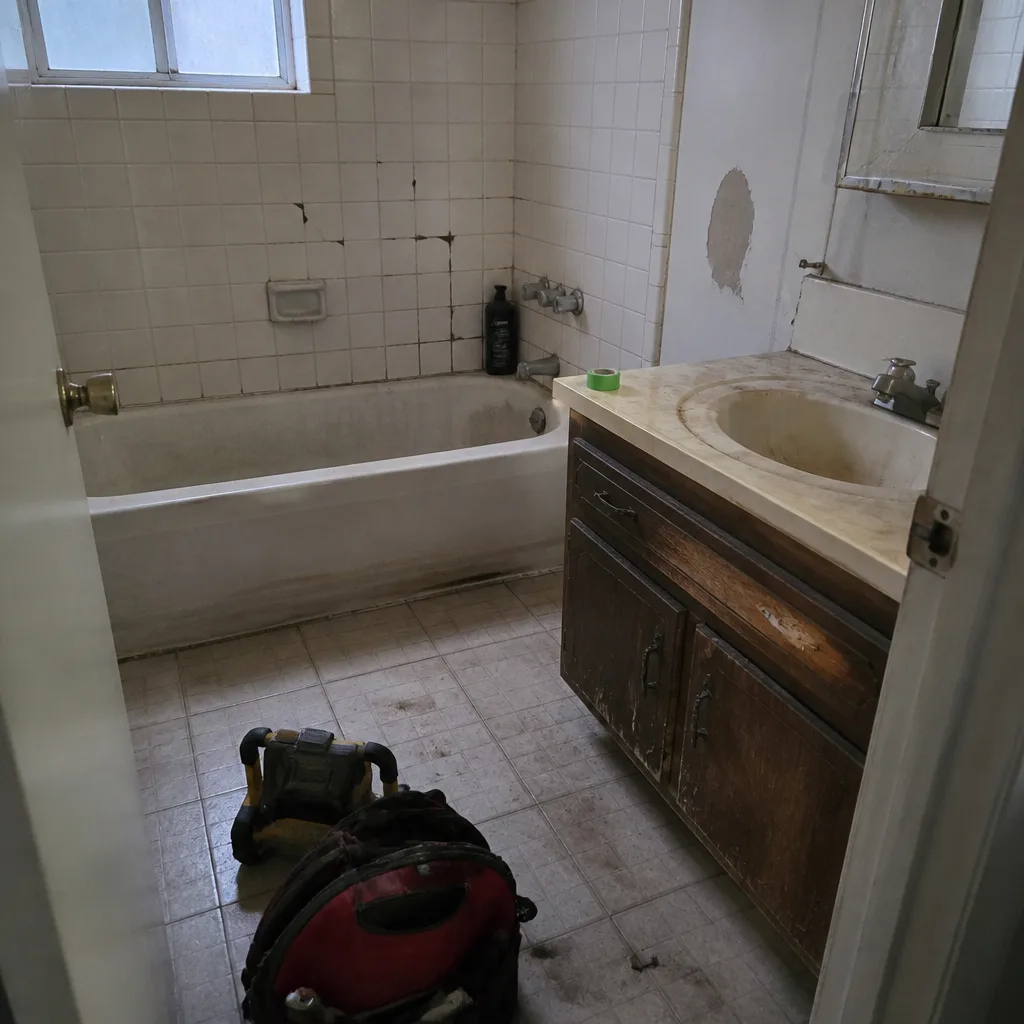 Before
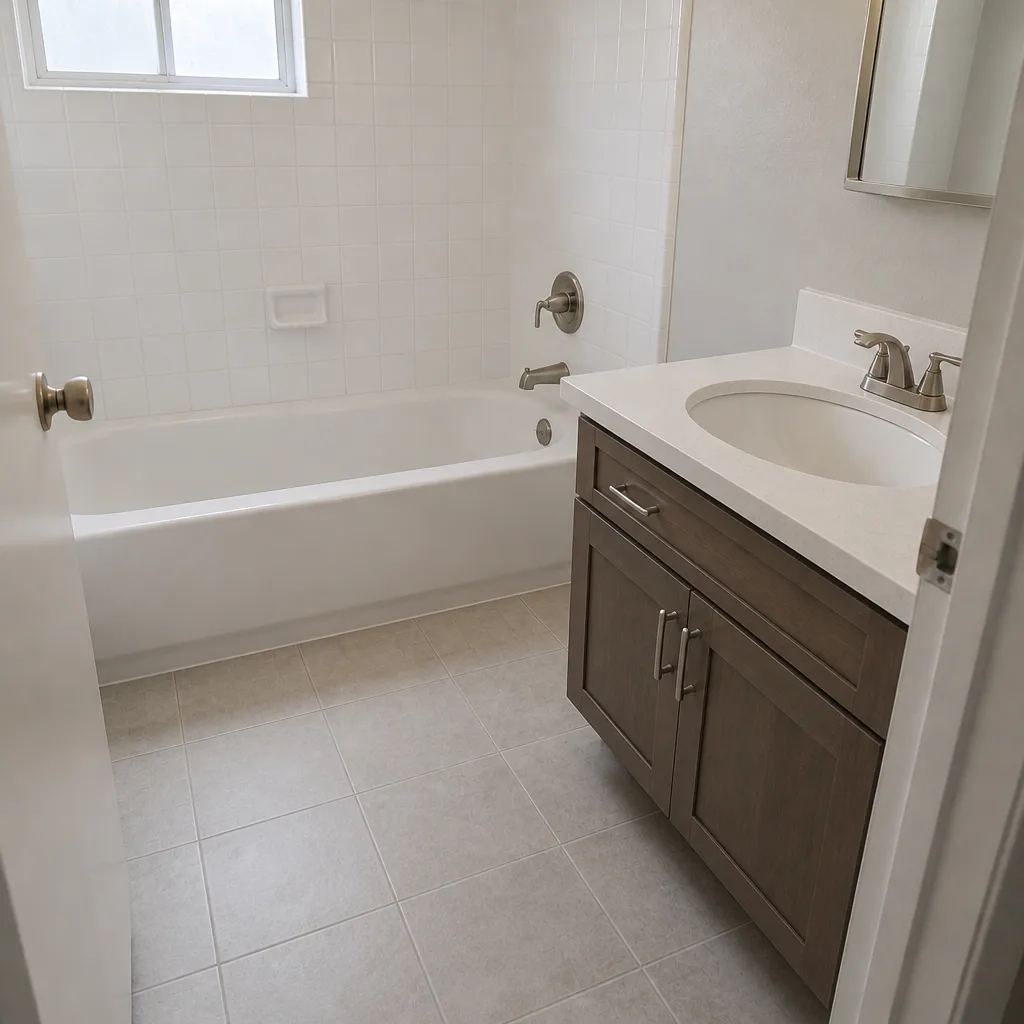 After
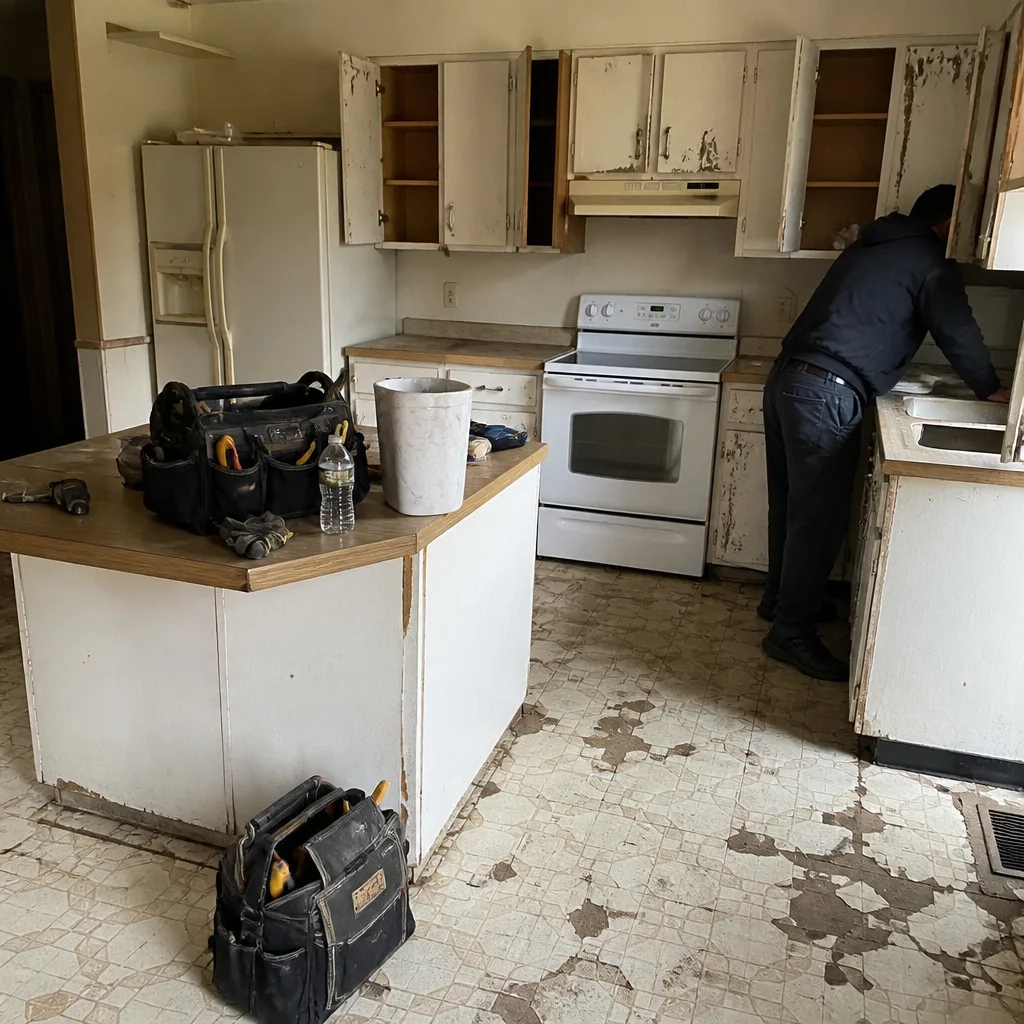 Before
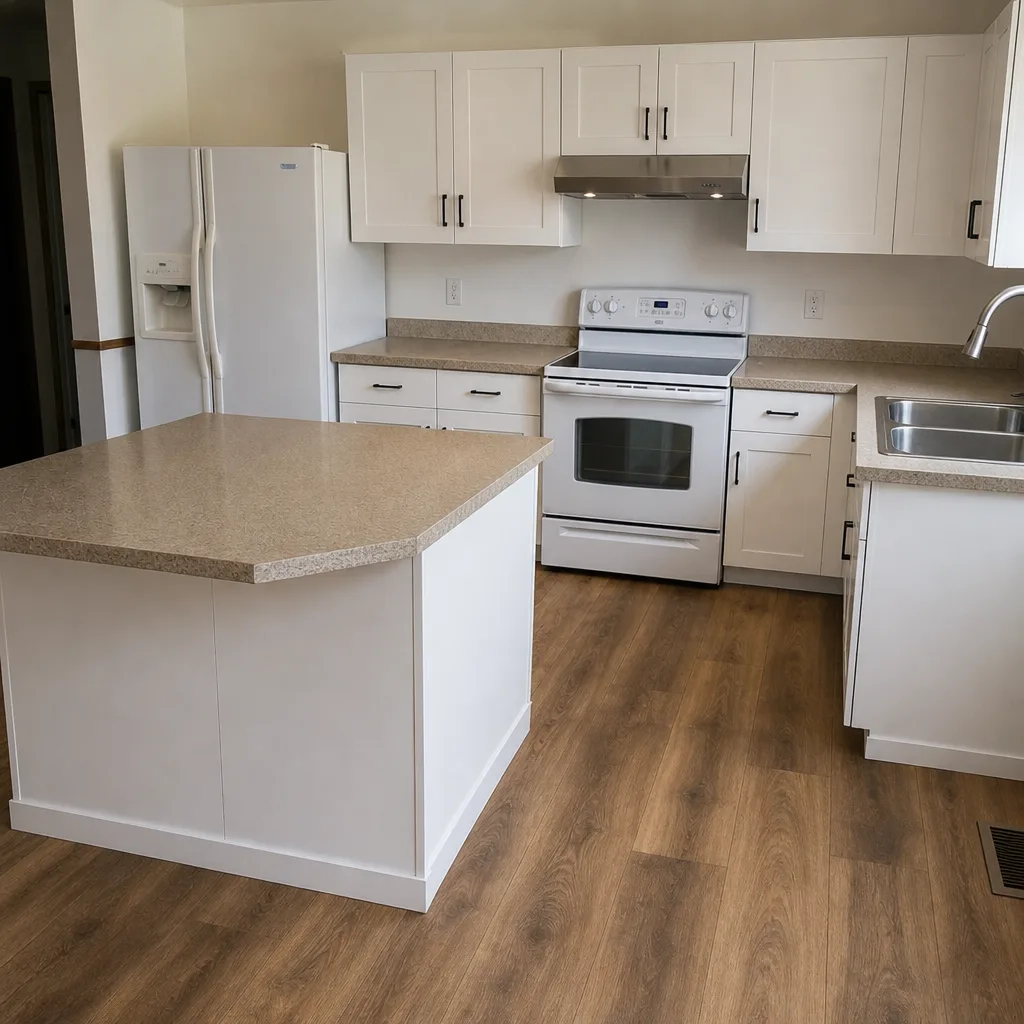 After
Frequently Asked Questions
Yes, on an owner-occupied single-family home, Nevada allows homeowners to perform their own electrical work without a license. But the work still requires a permit and inspection, and unpermitted electrical work can void your homeowner’s insurance and complicate a future sale. If you’re selling within a year, get it permitted and inspected. If you’re not sure, call a licensed electrician – the inspection process protects you either way.
It saves real money on cosmetic and reversible work – demo, painting, hardware, and cleanup – where savings typically run $2,500 to $6,000 on a mid-range kitchen. It does not save money on electrical, plumbing, structural, or countertop fabrication. Attempting those yourself usually costs more than hiring, once you account for fixing mistakes and unpermitted work at resale. Call (844) 797-9439 for a written estimate so you can see exactly where the labor dollars are going.
The buyer’s inspector will flag it, and the buyer will typically either walk or ask for a credit. In some cases the title company will require the work be brought into compliance before closing. With unpermitted electrical panel work, the whole transaction can unwind. Fixing it after the fact costs more than permitting it correctly the first time. Call (844) 797-9439 to talk through what your current kitchen actually needs.
Usually not. Most standard policies exclude damage caused by faulty workmanship, and unpermitted work is a common basis for denial. Water damage from a badly installed supply line or fire damage from an amateur electrical splice are the two most common denial scenarios. Read your exclusions before starting demo – the answer lives in your specific policy, not in general advice.
Roughly $1,500 to $3,500 in labor, and the difference often shows up in door gaps, drawer alignment, and how the cabinets sit against an un-square wall. Cabinet installation is not legally restricted – it’s a skill-and-equipment question. The failure mode is that wrong installation is invisible at first and obvious a year later. If you’re confident in your level and shim work, DIY cabinets are possible. Most homeowners regret it.
Ask any contractor for a line-item written estimate that separates labor from materials, with a scope of work included. Any contractor who won’t provide one is telling you something. Penhallow Remodeling Winchester provides written pricing before any work starts on every project, covered by the Kingswell Guarantee and a 365-Day Done Right Promise. Call (844) 797-9439 to schedule a free estimate.
The Bottom Line
The DIY-vs-hire question isn’t really about whether you can tile a backsplash. It’s about which tasks carry permit requirements, legal liability, and insurance exposure – and knowing that line. If you stick to painting, hardware, demo, cleanup, and tile over sound substrate, DIY is a legitimate $2,500 to $6,000 savings on a typical Winchester kitchen. If you’re touching gas, electrical, structural walls, or plumbing, hire. Get a written price before demo starts so the decision is rational, not fear-driven. The best kitchen remodel in Winchester is the one where you know exactly what you’re paying for, and exactly what you’re taking on yourself.
Call Penhallow Remodeling Winchester at (844) 797-9439 to schedule your free estimate. Every project gets a written price up front, background-checked technicians in uniform, and the 365-Day Done Right Promise – if it’s not done right, we make it right. Start with a look at our Penhallow Remodeling Winchester home page, then tell us where your kitchen stands today.
Written by the team at Penhallow Remodeling Winchester.