
Last updated November 18, 2026








Free written scope consultation - allowances, timeline, and change-order rules on paper before a single trade is scheduled
Kitchen Remodeling Maintenance Schedule: What to Do and When
Here’s something almost nobody tells you at the final walk-through: the grout sealer your tile installer applied has a lifespan of roughly 12 months in a working kitchen. Skip resealing, and a year of grease, steam and hard water can work into the joints, and in some cases that’s enough for a contractor to question a tile warranty claim. Your remodeled kitchen’s maintenance clock starts the day the crew leaves. The first task is due within 30 days, not 30 years. This guide lays out a literal month-by-month calendar for year one, explains which tasks protect your warranty and which ones can quietly void it, and shows you the ten-minute fixes you can handle yourself. We’ve watched Winchester homeowners protect five-figure kitchens with a few hours of well-timed care each season.
Quick Answer
After a kitchen remodel, plan on a 30-day check-in (tighten hardware, inspect caulk lines, adjust cabinet doors), quarterly tasks (clean and condition, check seals), and annual resealing of grout and natural stone. The tasks that most affect your workmanship guarantee are resealing tile, keeping cabinet joints and hinges adjusted, and reporting any leak or moisture issue early, because delayed reporting is the most common reason a claim gets denied.
Styles & brands we work with
- Kitchen remodeling
- Bathroom remodeling
- Home additions & ADU
- Roofing
- Windows & doors
- Driveway & pavers
- Fence
Table of Contents
- The First 30 Days: Your Punch-List Window
- The Month-by-Month Calendar for Year One
- Which Maintenance Tasks Protect Your Warranty
- Cabinet Hinge and Drawer Slide Adjustment
- Nevada Wear Factors: Hard Water and Low Humidity
- Homeowner Tasks vs. When to Call Back the Contractor
- Seasonal Maintenance for Winchester Kitchens
- The Long-Term View: Year Two and Beyond
The First 30 Days: Your Punch-List Window
The month after your remodel is the most important one for your guarantee. This is the window when minor settling, hardware break-in and small caulk gaps show up, and when it’s easiest to get them corrected. Getting this right depends on knowing who to call, which is why we walk every homeowner through it before we hand over the kitchen.
Here’s your 30-day punch list, in order:
- Open and close every cabinet door and drawer at least ten times. New hinges and slides break in, and a door that closed flush on day one can drift a few millimeters. Note any that rub or don’t sit level.
- Check every caulk and silicone line. Look along the backsplash, around the sink, and where the counter meets the wall. Hairline gaps are normal as materials settle; big gaps are not.
- Run every fixture and appliance once. Turn on the disposal, run the dishwasher through a full cycle, test the range hood fan on each speed. Catch a slow drain or a loose connection now.
- Look under the sink for moisture. A few drops after the first week of use is worth a call. Water under a new cabinet is the one thing you never wait on.
- Test cabinet doors for soft-close alignment. If a door slams or a drawer catches, it’s an adjustment, not a defect, and it’s covered in the first month.
Write down anything that looks off and send it as one list. A contractor can schedule a single visit to handle a batch of small items. In Winchester, we’ve found the 30-day window catches about nine out of ten minor issues before they become anything bigger.
The Month-by-Month Calendar for Year One
Here’s the calendar, laid out plainly. Print it, stick it inside a cabinet door, and follow it. None of these tasks takes more than an afternoon, and most take minutes. The point is timing.
- Month 1: Full punch-list inspection (see above). Tighten cabinet hardware. Note any settling.
- Month 2: First deep clean of new surfaces. Use cleaners matched to your countertop material (see the countertop section below). Check that the range hood filter is seated correctly.
- Month 3: Inspect grout lines for cracking or hazing. Condition any wood cabinets with a quality furniture oil if the finish calls for it. Check door and drawer alignment again after break-in.
- Month 4: Clean and descale fixtures. In Winchester’s water, mineral buildup starts early, so this is a monthly habit from here on.
- Month 6: Mid-year check. Look behind and under the fridge and range for moisture or debris. Re-tighten any loose handles. Check the seal around the sink.
- Month 9: Inspect caulk at the backsplash and counter edges again. Re-caulk any line that has pulled away. Check under-sink cabinet floor for any sign of dampness.
- Month 12: Annual reseal of grout and natural stone. Full cabinet hardware tighten. Deep clean behind appliances. Review your warranty terms and schedule any covered fixes before the year closes.
If you remodeled through a company that offers a written workmanship guarantee, month 12 is also your checkpoint to raise anything that isn’t holding up. The whole point of a schedule like this is to catch problems while they’re still small and while you’re still covered.
Which Maintenance Tasks Protect Your Warranty
Not every maintenance task affects your warranty, but the ones that do matter more than the rest. A workmanship guarantee covers defects in how the work was done. It does not cover damage from skipped care. The line between those two is exactly where homeowners get surprised.
These tasks directly protect your coverage:
- Resealing grout and natural stone. Most tile and stone warranties require periodic sealing. Skip it for a year and a stain that won’t come out can be ruled owner-caused rather than a product or installation defect.
- Reporting leaks and moisture promptly. If you see water under the sink in month two and mention it in month eight, a contractor has fair grounds to argue the damage grew from your delay. Report it the day you notice.
- Keeping cabinet hardware adjusted. A door that’s been dragging for months can wear the hinge and the door edge. A worn hinge from neglect isn’t in the same category as a hinge that failed on its own.
- Using the right cleaners. Abrasive or acidic cleaners on quartz, natural stone or sealed tile can etch and dull the surface. Manufacturer care instructions are part of the product warranty, and using the wrong product can void it.
- Maintaining ventilation. A range hood filter clogged with grease reduces airflow and shortens the life of the finish on nearby cabinets. Keep it clean.
The pattern here is simple: do the periodic care your materials call for, and report anything that looks wrong while it’s fresh. Do those two things and a genuine workmanship failure will be honored. A 365-day Done Right Promise, like the one we back every project with, is written to cover exactly that kind of failure, and it depends on you keeping to the basics.
Cabinet Hinge and Drawer Slide Adjustment
This is the single most common post-remodel complaint, and almost always the easiest to fix. Doors drift out of alignment as hinges settle and as the wood expands and contracts. A door that looked perfect at the walk-through can start rubbing within a few months, especially in a dry climate. You can fix most of it in under ten minutes with a Phillips screwdriver.
Here’s how to adjust a cabinet door that rubs, sits crooked or won’t stay closed:
- Find the adjustment screws. Most European-style concealed hinges (the kind used in KraftMaid and Wellborn cabinets and most others) have two or three small screws on the hinge cup. One adjusts the door side to side, one adjusts it up and down, and one adjusts how far the door sits from the frame.
- Identify the problem first. Does the door rub at the top, the bottom, or along one edge? A door rubbing at the bottom simply needs to move up.
- Make a quarter turn at a time. Small adjustments go a long way. Turn, close the door, check, repeat. Don’t loosen a screw more than a turn or two.
- For drawers that catch, check the slides. A drawer that sticks or pulls unevenly often has a slide that needs the mounting screws snugged, or debris in the track. Vacuum the track and tighten the screws.
- For soft-close doors that slam, look at the soft-close damper. Many hinges have a small adjustment wheel on the damper. Turn it to dial in how gently the door closes.
If a hinge is actually broken (the door sags and won’t stay adjusted), that’s a hardware failure and worth a call. If it’s just out of alignment, ten minutes and a screwdriver get you back to flush. This is the single most useful skill for keeping a new Winchester kitchen feeling new.
Nevada Wear Factors: Hard Water and Low Humidity
Southern Nevada puts a specific kind of wear on a kitchen, and it’s different from what you’d find in a humid climate. Two factors do most of the damage here: hard water and low humidity. Both are manageable, but only if you know what they’re doing.
Hard water. Winchester’s water carries a high mineral content, and that chalky white film that builds on faucets, sink edges and glass is calcium and magnesium. Left alone, it etches glass and dulls fixtures. It also works into grout. Here’s how to handle it:
- Wipe fixtures dry after use, which is the cheapest defense you have.
- Descale weekly with a mild white-vinegar solution on metal fixtures (not on natural stone, which vinegar can etch).
- Run a water softener or a whole-home filter if you’re seeing heavy buildup, which preserves fixtures and the inside of your plumbing.
- Use a squeegee on glass shower surrounds and a soft cloth on the backsplash tile.
Low humidity. Our dry air pulls moisture from wood, and cabinet joints, especially where doors meet the frame, can open a hairline as the seasons turn. That’s normal. What you don’t want is a joint that keeps opening after you’ve had it closed. Keep indoor humidity in a comfortable range, use a humidifier in winter if your home runs dry, and address a persistently opening joint with the original contractor before the gap gets big enough to trap moisture or dirt.
We’ve seen these two factors catch homeowners off guard after a remodel. A quick monthly habit of wiping fixtures and keeping an eye on cabinet joints goes a long way in Winchester.
Homeowner Tasks vs. When to Call Back the Contractor
Not everything belongs on your to-do list. Some tasks are yours, and some should go straight back to the contractor under the workmanship guarantee. Getting the split right saves you money and protects your coverage. We install Kohler and Moen fixtures and Grohe fittings that carry their own manufacturer warranties, and those warranties work alongside your workmanship coverage, but only if failures are reported correctly.
Tasks that are yours to handle:
- Cleaning all surfaces with the correct cleaners
- Resealing grout and natural stone annually
- Adjusting cabinet hinges and drawer slides
- Descaling fixtures and wiping dry
- Replacing range hood filters, light bulbs and small consumables
- Keeping cabinet and countertop joints clean and dry
Tasks that should trigger a call back:
- Any moisture or leak under the sink, behind the fridge or around the dishwasher
- A cabinet door or drawer that won’t stay adjusted after two attempts
- Tile that has cracked, popped or come loose from the substrate
- Grout that continues to crack after a re-seal
- Countertop seams that are spreading or showing gaps
- Any plumbing fixture that drips or runs at the base
When something is wrong, call the contractor who did the work, not a handyman. In our experience, homeowners who bring a failed repair to an outside technician can invalidate the original guarantee. We also offer a free second visit if a repair fails, with no service call and no re-inspection fee, because a repair that fails isn’t a new problem, it’s an unfinished one.
Seasonal Maintenance for Winchester Kitchens
Seasonal care in southern Nevada looks different from what you might expect from a four-season climate. We don’t have a harsh winter to prep for, but we do have a hot, dry summer and a mild winter, and each puts its own strain on a kitchen. Here’s the seasonal schedule that works here.
Spring (March to May): The dry season and the wind. Dust gets into every cabinet seam. Deep clean cabinet exteriors and vacuum drawer tracks. Check caulk at the backsplash and counter edges, which can dry and crack as humidity drops. This is the best time to reseal grout, before the dry summer dries it further. If you remodeled during the winter, this is also a good moment to do a fresh alignment check.
Summer (June to August): The heat months. Watch the fridge and freezer more closely, since the compressor works harder. Clean the fridge coils once. Check under the sink for condensation. Keep an eye on cabinet doors near the range, which can swell or dry depending on how close they are to heat.
Fall (September to November): Best time for the annual reseal if you skipped spring. Check weatherstripping on exterior doors, and clean the range hood filter thoroughly before holiday cooking season.
Winter (December to February): Cooler and drier. Check cabinet joints for opening as humidity drops. Run a humidifier if the indoor air is very dry. Clean and check all appliances before the holidays.
This is routine maintenance, not emergency work. If you’re planning a new or additional remodel, the kitchen remodeling in Winchester page walks through what a full project involves, and the general contractor in Winchester page covers the broader scope if you’re also considering a bath or an addition.
The Long-Term View: Year Two and Beyond
The first year is the busiest for maintenance. After that, the schedule settles into a rhythm. Year two, you’ll likely reseal grout, adjust a hinge or two, and get on with your life. The point of the busy first year is to break the kitchen in and to know its habits. Once you’ve done that, the long-term care is mostly repetition.
A few markers to keep on your radar:
- Every year: reseal grout and natural stone, descale fixtures, deep clean behind appliances.
- Every two to three years: have cabinet hardware checked as a batch. Replace worn bumpers and soft-close dampers.
- Every five years: refresh caulk lines throughout, and check the finish on wood cabinets for re-oiling or touching up where wear shows.
- As needed: repaint or refinish any surface that’s showing wear, and replace small hardware like handles and knobs if you want a refresh.
If you’re considering work on another room and want a sense of what a contractor relationship looks like from the start, our bathroom remodeling in Winchester page explains how a written price and a written guarantee work together on a full remodel. The same standard runs through every project we take on.
Common Mistakes to Avoid
- Skipping the 30-day punch-list. The first month is when settling shows up, and it’s the easiest time to get it fixed. Waiting six months means more effort and, in some cases, less coverage.
- Resealing grout too late or not at all. Grout sealer lasts about a year in a kitchen. In our dry Winchester climate, waiting longer than a year means minerals get into the joints, and once they’re set in, resealing doesn’t lift out stains.
- Using abrasive or acidic cleaners on quartz and natural stone. Cambria, Silestone and Caesarstone surfaces are durable, but the wrong cleaner can etch and dull them, and using the wrong product can void the manufacturer warranty.
- Letting cabinet doors drag. A door rubbing for months wears the hinge and the door frame. A ten-minute adjustment saves a hardware replacement later.
- Calling a handyman for a covered repair. If a repair is under a workmanship guarantee, using an outsider can void the original coverage. Call the contractor who did the work first.
- Ignoring slow drips under the sink. A single drip can warp a cabinet floor in weeks. Report it the day you see it, even if it looks minor.
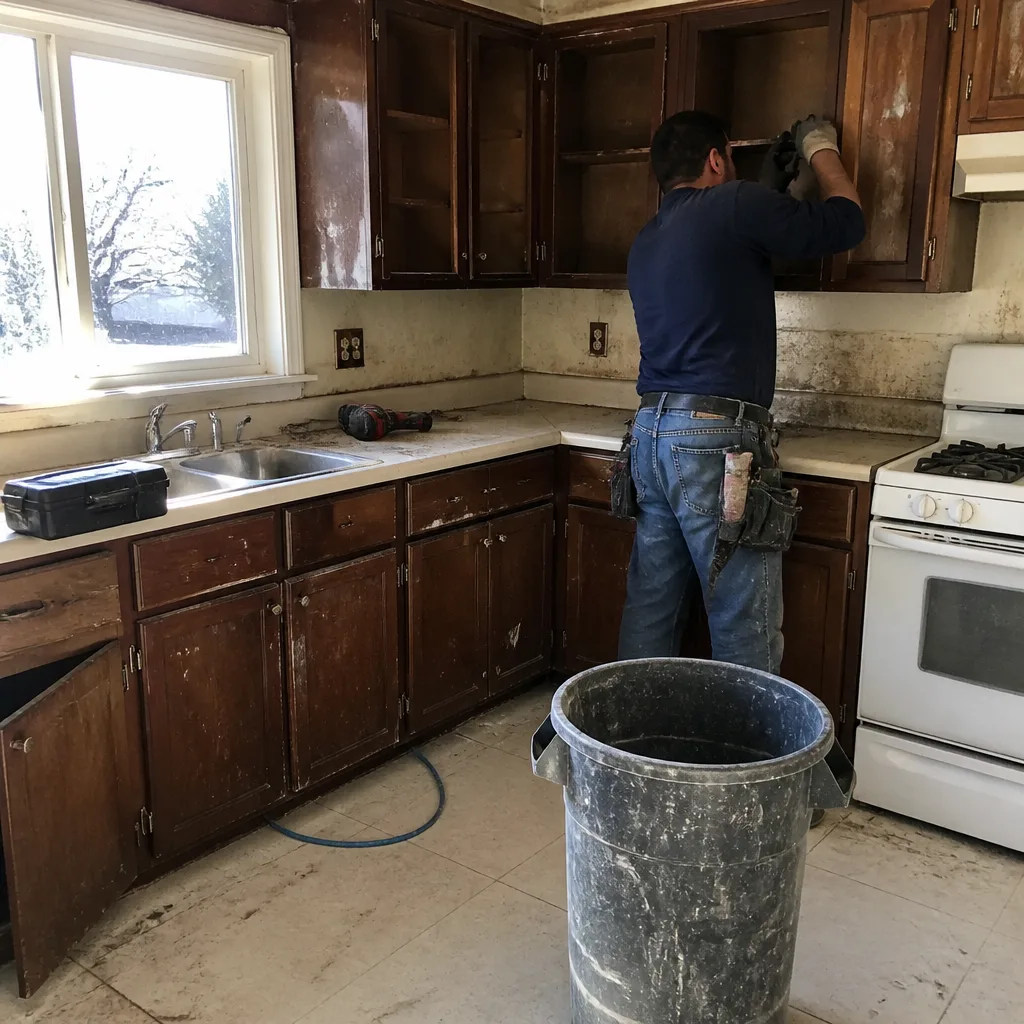
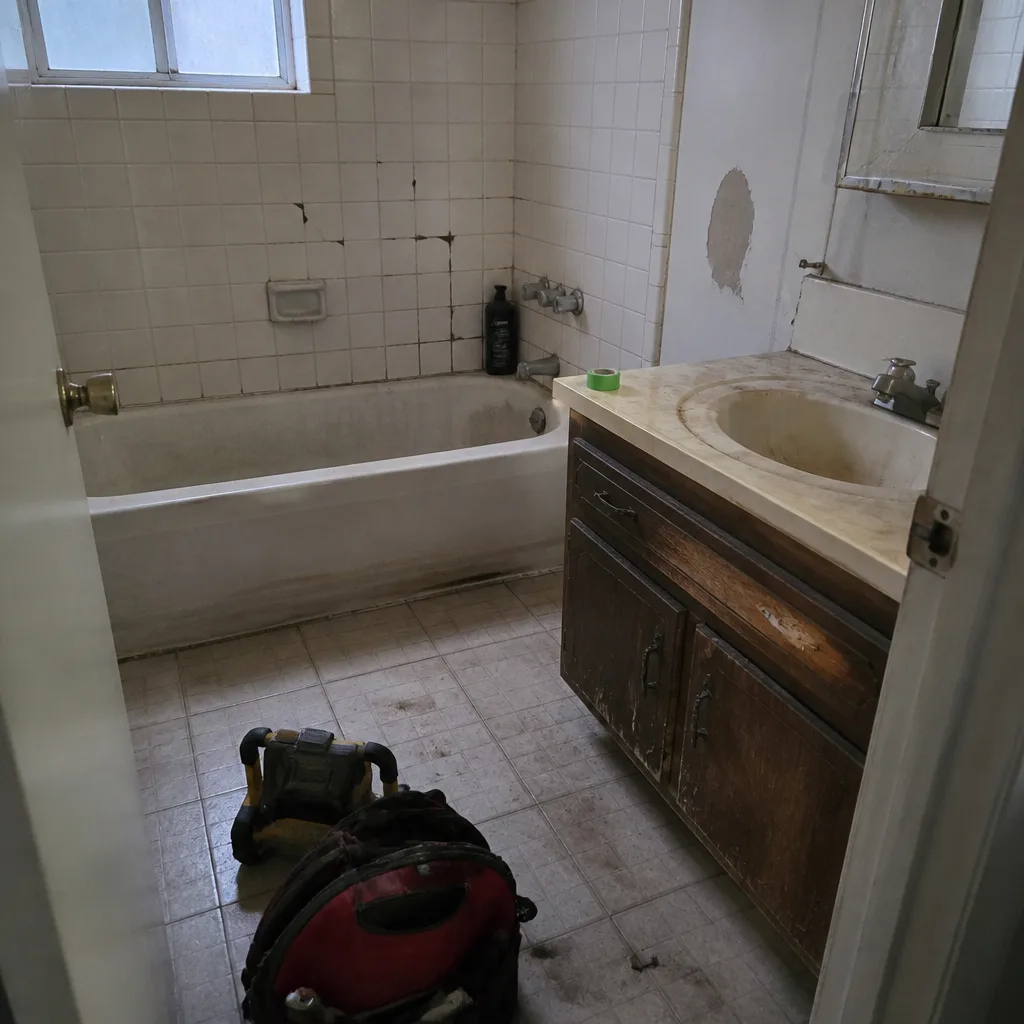
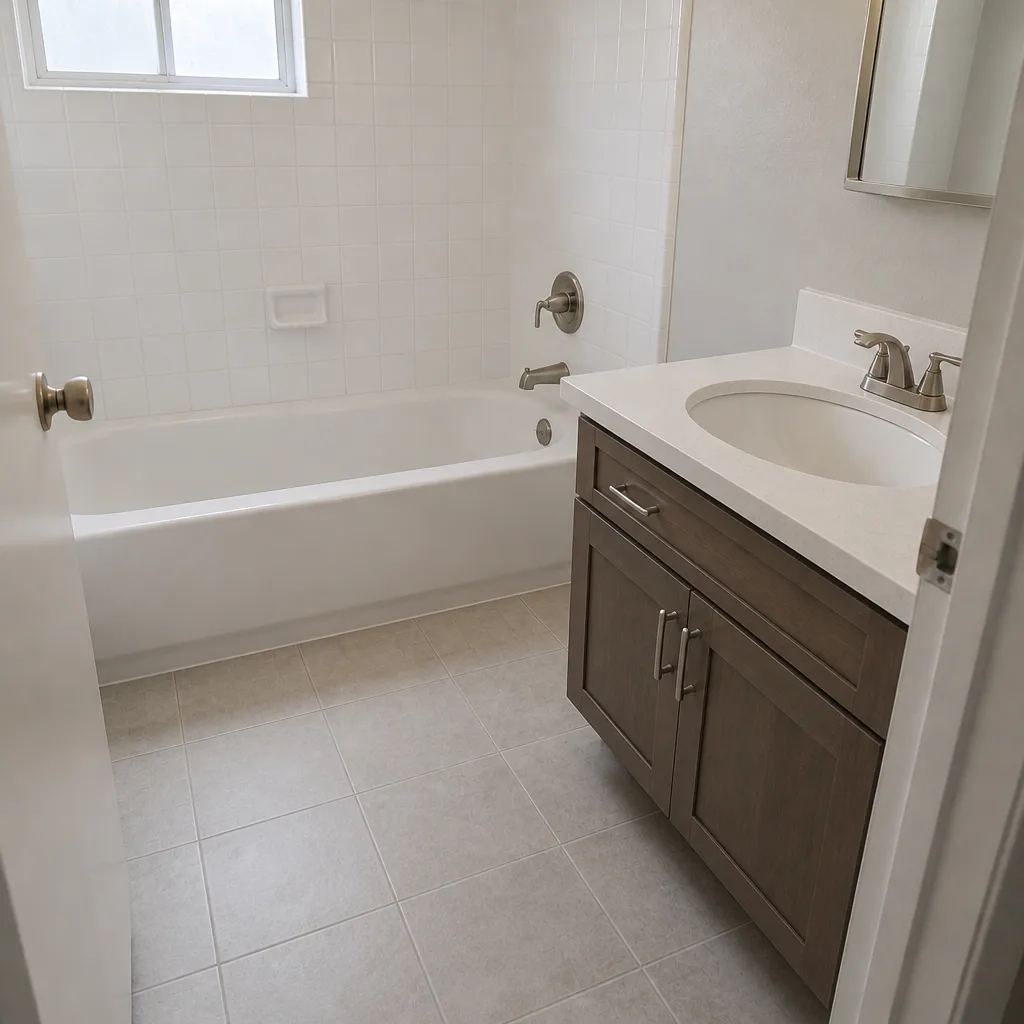
See the difference
 Before
 After
 Before
 After
 Before
 After
When to Call a Professional
Most kitchen maintenance is something you can handle in an afternoon. But a few things should go to a professional, and they should go promptly. Call a pro if you see water in or under a cabinet, if a plumbing fixture leaks at its base, if tile has cracked or come loose, if a countertop seam is spreading, or if you’ve adjusted a cabinet door twice and it still won’t sit right. Those are signs of a workmanship or material issue that a warranty is meant to cover, not something to patch over. For a homeowner considering a full project, understanding the scope first matters. Penhallow Remodeling Winchester offers free estimates in Winchester, with a written price before any work starts, so the number on day one is the number on the invoice. Call (844) 797-9439 to schedule yours.
Frequently Asked Questions

Within 30 days. That’s when settling, cabinet hinge break-in, and small caulk gaps show up, and it’s the easiest window to get them corrected under a workmanship guarantee. Do a full punch-list inspection and send any issues to your contractor as one list.
Once a year. Grout sealer lasts roughly 12 months in a working kitchen, and Winchester’s dry climate and hard water make annual resealing important. Spring is the best time here, before the dry summer pulls more moisture from the joints. Call (844) 797-9439 if you need help finding the right sealer or want a recommendation on care for your specific tile.
Yes, in most cases. Most European-style hinges have small adjustment screws that let you move a door up, down or side to side, and a quarter turn at a time fixes most alignment issues. If a door won’t stay adjusted after two attempts, that’s worth a call to the contractor.
Some tasks can affect your coverage. Resealing grout, reporting leaks promptly, keeping cabinet hardware adjusted, and using the correct cleaners all protect your guarantee. Using the wrong cleaners or letting a leak go unreported can give a contractor grounds to deny a claim. Penhallow Remodeling Winchester home customers get a written guarantee on every project, and every project is backed by our 365-Day Done Right Promise.
Low humidity pulls moisture from wood, and cabinet joints can open slightly as the seasons turn. That’s normal. If a joint keeps opening after you’ve had it closed, that’s worth reporting to your contractor, and it’s the kind of thing our technicians, who bring up to 22 years of experience, see often in southern Nevada.
Call the contractor who did the work, not a handyman. Using an outside technician can void your original guarantee. We offer a free second visit if a repair fails, with no service call and no re-inspection fee, and a live person answers our phone 24/7. Call (844) 797-9439 for a free estimate or to schedule a service visit.
The Bottom Line
A remodeled kitchen starts a maintenance clock the day your contractor leaves, and the first task is due within 30 days. The schedule that protects your investment is simple: a 30-day punch-list, quarterly cleaning and checks, annual grout and natural stone resealing, and a monthly habit of wiping fixtures and keeping cabinet hardware adjusted. In Winchester, hard water and dry air make two things especially important: descaling fixtures and watching cabinet joints. We’ve seen homeowners protect a five-figure kitchen with a few hours of care a season. Get the maintenance right, and a workmanship guarantee is there if something fails. Get it wrong, and coverage can quietly slip away. Penhallow Remodeling Winchester offers written prices and written guarantees on every project, so call (844) 797-9439 for your free estimate today.
Written by the team at Penhallow Remodeling Winchester.