
Last updated November 18, 2026








Free written scope consultation - allowances, timeline, and change-order rules on paper before a single trade is scheduled
Kitchen Remodeling Troubleshooting: Common Problems and How to Fix Them
Here’s a number that surprises most homeowners: the top complaint after a kitchen remodel isn’t cracked tile or a cabinet door hanging crooked. It’s “the final cost was nothing like the original estimate.” That’s a paperwork problem, not a trades problem. Which means most of the disasters we get called out to fix in Winchester started weeks before anyone picked up a pry bar. In this guide we’ll separate the four kinds of remodeling problems by where they actually come from, show you which ones can be fixed mid-job and which mean starting over, and hand you the walk-through checklist that catches trouble while the contractor is still on-site and obligated to fix it.
Quick Answer
Most kitchen remodeling problems fall into four buckets: design errors, material defects, installation mistakes, and scope-creep disputes. Design and scope problems are cheap to fix on paper and brutally expensive to fix after demolition, so they should be settled before work starts. Physical defects like cabinet doors that won’t hang true, cracked grout, or gapped countertop seams are usually fixable through the installer’s workmanship guarantee, provided you document them in writing during the final walk-through and not six months later.
Styles & brands we work with
- Kitchen remodeling
- Bathroom remodeling
- Home additions & ADU
- Roofing
- Windows & doors
- Driveway & pavers
- Fence
Table of Contents
- The Four Origins of Every Kitchen Problem
- Change Orders: What They Are and How Nevada Handles Them
- Problem 1: Cabinet Doors That Won’t Hang True
- Problem 2: Grout That Cracks Within Months
- Problem 3: Countertop Seams That Gap
- What a 365-Day Workmanship Guarantee Should Actually Cover
- The Final Walk-Through Checklist
- What Can Be Fixed Mid-Job vs. What Means Starting Over
The Four Origins of Every Kitchen Problem
Before you can fix a problem, you have to know where it came from, because each origin has a different resolution path and a different person holding the bag. Sort your issue into one of these four categories and the fix usually becomes obvious.
- Design errors. The layout doesn’t work, the clearances are wrong, or the appliance doesn’t fit the opening. These are decided in the planning stage and cost the most to change later. A dishwasher that blocks a drawer from opening is a design error, not a manufacturing defect.
- Material defects. The cabinet box arrived warped, the tile run has shade variation, or the countertop slab has a fissure. These are the manufacturer’s or supplier’s responsibility, and they’re covered by that product’s own warranty. Cambria quartz, for instance, carries a transferable lifetime warranty on top of anything your installer offers.
- Installation mistakes. The materials were fine but the workmanship wasn’t. Grout mixed too wet, cabinets set out of level, seams not properly clamped. This is squarely a workmanship issue and belongs to your contractor’s guarantee.
- Scope-creep disputes. Nobody agreed, in writing, on what was included. This is the expensive one, and it’s the one that produces the “final cost was nothing like the estimate” complaint.
In our experience across Winchester, roughly half the angry phone calls we get about other contractors’ jobs turn out to be category four: a scope dispute dressed up as a workmanship complaint. The fix for a scope dispute isn’t a repair crew. It’s a written contract, and if you don’t have one, that’s the lesson worth more than the repair.
Change Orders: What They Are and How Nevada Handles Them
A change order is a written amendment to the original contract that lists exactly what’s changing, why it’s changing, and what it costs, signed by both you and the contractor before the changed work begins. It’s the single most important piece of paper in a remodel, and the lack of one is where budgets die.
Here’s the regulation homeowners in Winchester should know. Nevada law requires contractors to be licensed through the Nevada State Contractors Board, and for residential work the board requires a written contract once the job exceeds a set dollar threshold, along with specific disclosures. Any change to the scope, price, or schedule is supposed to be documented in writing and agreed to before the work proceeds. A contractor who shows up on demo day and tells you the cabinet line you picked is back-ordered and “we’ll just use these instead, it’s about the same” is asking you to accept an unauthorized change order verbally. Don’t. Ask for it in writing with a number attached.
If a contractor performs work you never authorized and then bills you for it, that’s a dispute you can take to the Nevada State Contractors Board, which has a complaint process and a residential recovery fund for certain licensed-contractor failures. The cleanest defense, though, is prevention: a written price before any work starts, and a written change order for every single deviation from that price.
Red flags in a change order
- No dollar figure, just “additional cost to be determined.”
- A signature line that appeared after the work was already done.
- Charges for items that were clearly in the original scope (moving an outlet that was on the plan).
- Verbal approval requested because “we need to order today.”
Penhallow Remodeling Winchester hands you a written price before work starts, so the number on day one is the number on the invoice, and if the scope genuinely changes, you’ll see a signed change order before anyone touches a tool.
Problem 1: Cabinet Doors That Won’t Hang True
Cabinet doors that rub, sit crooked, or drift out of alignment within the first year almost always come down to one of three causes: the cabinet box wasn’t set level, the hinges weren’t adjusted properly, or the doors themselves warped from moisture. In Winchester’s dry desert air, the third cause is less common than in humid climates, but the swings between an air-conditioned kitchen and a 105-degree garage where doors cure before install can still move wood.
The good news is that most alignment problems are a hinge adjustment, not a rebuild. Here’s the order a technician works through:
- Check the box. Run a level across the cabinet frame. If the box itself is out of level, adjusting hinges won’t fix it and the install is the culprit.
- Adjust the hinges. Most quality hinges (KraftMaid and Wellborn cabinets use adjustable European-style hinges) let you move the door up, down, in, and out with a screwdriver.
- Check the reveal. The uniform gap between door edges should be even all the way around. Uneven reveals point to a twist in the door or a hinge plate that’s mis-set.
- Let it settle, then re-check. Wood moves in the first heating and cooling cycle. A door that was perfect on install day and off two weeks later is normal and should be covered by a free alignment visit.
If the door itself is warped and out of the manufacturer’s flatness tolerance, that’s a material defect and the door gets replaced under the cabinet line’s warranty. This is exactly why we specify recognized trade brands like KraftMaid and Wellborn, so there’s a real warranty backing the cabinet and not just a handshake.
Problem 2: Grout That Cracks Within Months
Grout cracking within the first six to twelve months isn’t normal wear. It’s usually one of four things: the wrong grout for the application, movement in the substrate, a missing or failed backer board, or too much water in the mix. In kitchen backsplashes, the most common cause we see in Winchester is tile set directly over drywall with no cement board substrate (the moisture-resistant layer behind your tile) and no crack-isolation membrane, so any minor structural movement telegraphs straight through the grout lines.
What you can do:
- Hairline cracks in a few joints: usually cosmetic. A grout repair (regrouting those joints) handles it, and it should be part of any workmanship guarantee.
- Cracks running along a straight line across multiple tiles: that’s a substrate or movement problem. Regrouting will crack again. The fix is more involved and worth diagnosing before you pay for a cosmetic patch.
- Grout that crumbles or washes out: wrong grout type or a bad mix. It’ll keep failing until it’s removed and redone correctly.
- Discoloration along the countertop edge: moisture getting behind the tile. Check the caulk joint at the counter-to-backsplash seam, which should be flexible caulk, not grout.
Here’s the thing most homeowners don’t know: grout is supposed to be flexible-adjacent at every change of plane (corners, countertop seams). Grout in those joints cracks, period. If your contractor grouted the inside corner where the backsplash meets the counter, expect it to fail. That’s an installation decision, and it should be redone with caulk at no charge.
Problem 3: Countertop Seams That Gap
A countertop seam that opens up, even by a millimeter, is usually a clamping problem. Stone fabricators join two slabs with an epoxy or polyester adhesive and mechanical seam clamps or a suction-cup system, holding them tight while the adhesive cures. If the clamps slip, the adhesive goes in too thick, or the seam was set on an uneven cabinet base, the joint fails and a gap appears. It can also happen if the substrate under the seam is uneven, which points back to cabinet installation.
Seam repair is one of the more satisfying fixes because it’s usually invisible when done correctly:
- Identify the cause first. If the cabinets under the seam are out of level, repairing the seam without fixing the base means it gaps again.
- Clean out the old adhesive. A technician rakes the seam back to clean stone.
- Re-glue and clamp. Color-matched adhesive goes back in, and the seam is clamped tight until it cures.
- Finish and polish. The seam is sanded flush and polished to match the surrounding surface.
Cambria and Caesarstone both specify seam standards in their fabrication guidelines, and a competent fabricator can hit them. If the seam gaps twice in the same spot, that’s a signal to look underneath, not just at the joint.
What a 365-Day Workmanship Guarantee Should Actually Cover
A workmanship guarantee and a product warranty are two different things, and homeowners often confuse them. A product warranty covers the material (the cabinet, the countertop slab, the faucet). A workmanship guarantee covers how it was installed. You need both, and you need to know which one your problem falls under before you call.
A 365-Day Done Right Promise should cover, at minimum:
- Anything related to how something was installed: alignment, leveling, sealing, caulking, grouting, and seam adhesion.
- The labor to fix a covered defect, not just a discount on future work.
- A free return visit if the repair fails, with no service call or re-inspection fee.
- Clear language on what it does not cover, usually damage from misuse, water intrusion from a plumbing leak you didn’t fix, or normal wear.
What it should not be is a verbal promise. A guarantee is only worth what’s written down, and it should be handed to you in writing before work starts, on every project. The best guarantee in the industry is worthless if you can’t find the paperwork when the grout cracks in month nine.
The Final Walk-Through Checklist
The final walk-through is your one window where the contractor is still on-site and obligated to fix things before final payment. Treat it like an inspection, not a tour. Bring this list and mark every item in writing.
- Open and close every cabinet and drawer. They should close flush, with even reveals and no rubbing.
- Check all hinges and drawer glides. No wobble, no binding, soft-close working.
- Run water in every sink and check under it. Look for drips at the supply lines and the drain, and check the disposal connection.
- Test every outlet and switch, and check GFCI outlets trip. Nevada code requires GFCI protection near sinks.
- Inspect every grout line and caulk joint. No cracks, no gaps, and caulk (not grout) at every change of plane.
- Run your hand along every countertop seam. It should feel smooth, not catch a fingernail.
- Check the range hood and any vented appliances for proper airflow and secure mounting.
- Read the written guarantee and confirm the contact number for reporting a covered defect.
Photograph anything that fails before you sign off. A photo taken on walk-through day with a timestamp is the single best piece of evidence you’ll ever have if a dispute arises later.
What Can Be Fixed Mid-Job vs. What Means Starting Over
Homeowners often ask us whether a problem is fixable without tearing everything out. The honest answer depends on the category.
Easy to fix mid-job, no tear-out: hinge and drawer adjustments, re-caulking joints, regrouting isolated cracks, resurfacing a seamed joint, swapping a defective cabinet door, replacing a warped cabinet box if it hasn’t been integrated into the countertop yet.
Fixable but disruptive: a mis-set cabinet run that’s already carrying a countertop (the counter may need to come off), a failed grout job caused by a missing substrate (tile comes up), a seam gap caused by an out-of-level cabinet base (cabinets get shimmed, seam gets redone).
Start over: a layout error you signed off on that makes the kitchen genuinely unusable (a range that can’t open a drawer next to it), a countertop cut to the wrong dimensions, or a cabinet configuration that can’t accommodate the appliances you actually own. These need a redesign and a new scope, which is why the planning stage is where Winchester homeowners should spend the most scrutiny.
If you’re at the point where a job has stalled or failed, our General Contractor in Winchester team can assess what’s salvageable before you commit to a rebuild, and our Kitchen Remodeling in Winchester page walks through how a proper plan prevents these problems in the first place.
Common Mistakes to Avoid
- Accepting a verbal estimate. The “final cost was nothing like the original” complaint starts with a number given over the phone with no written scope behind it. Get it in writing before anyone picks up a tool.
- Signing a change order after the work is done. A change order is a pre-approval, not a receipt. If you’re asked to sign something after demo day, read every line and confirm it wasn’t in the original scope.
- Grouting inside corners. Grout in a change-of-plane joint will crack in Winchester’s dry, temperature-swinging climate. Caulk belongs there. This is an installation error if your contractor grouted it.
- Skipping the final walk-through photos. A verbal “we’ll take care of it” is worth nothing. Time-stamped photos taken during the walk-through are the proof you need if a defect reappears.
- Confusing a product warranty with a workmanship guarantee. If the tile is defective, that’s the tile’s warranty. If it was set wrong, that’s the installer’s problem. Know which one you’re holding.
- Letting scope creep in without a written change. “While we’re in there, can you also…” is how a $22,000 kitchen becomes a $34,000 kitchen. Every addition gets a written change order or it doesn’t happen.
- Hiring without a verified Nevada license. Check the contractor’s license through the Nevada State Contractors Board before work starts, and confirm the written contract includes the required disclosures.
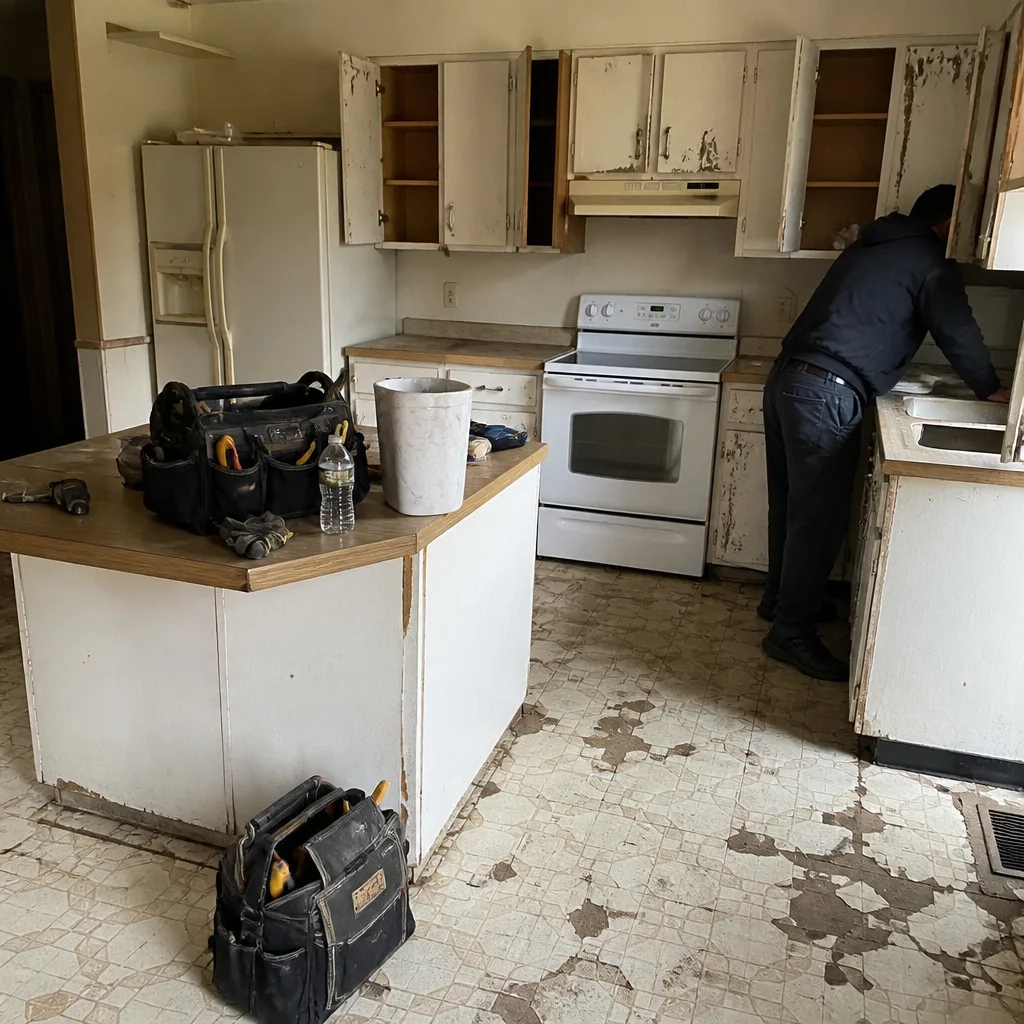
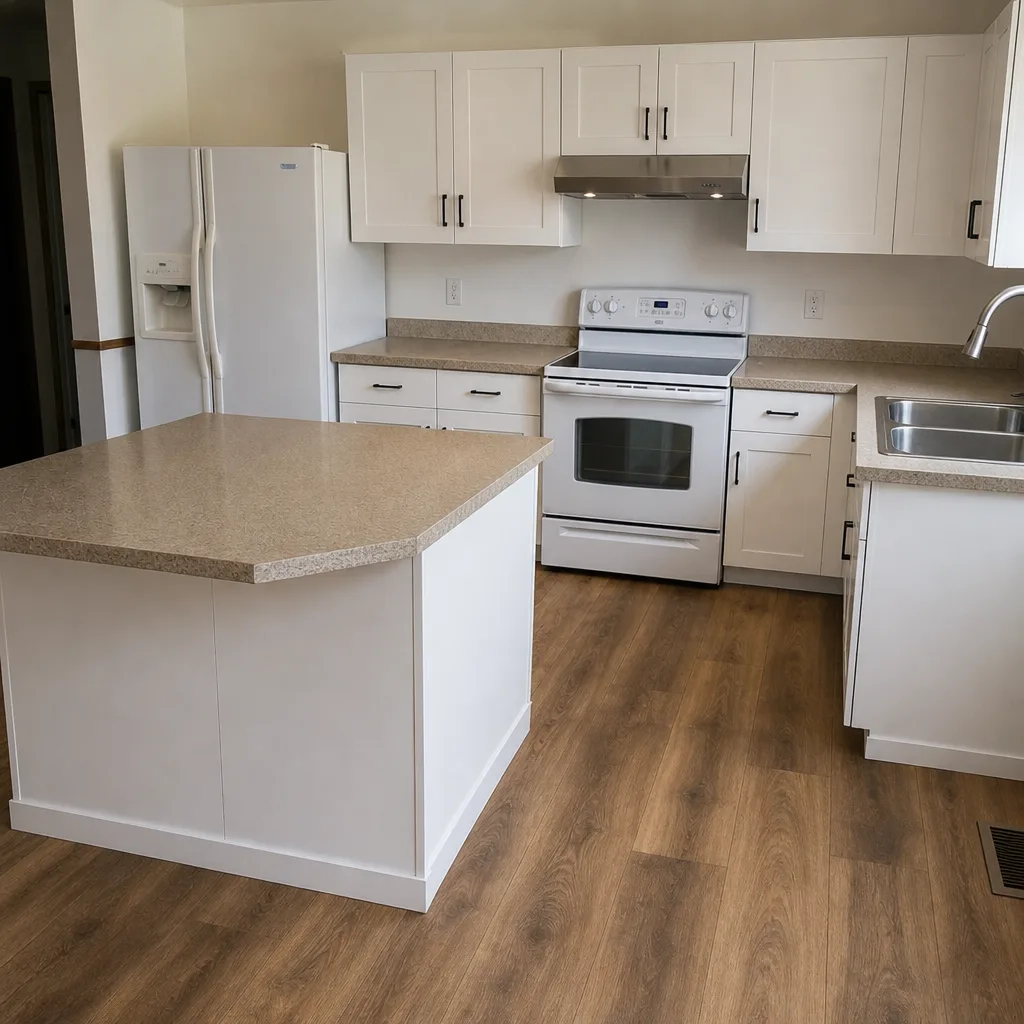
See the difference
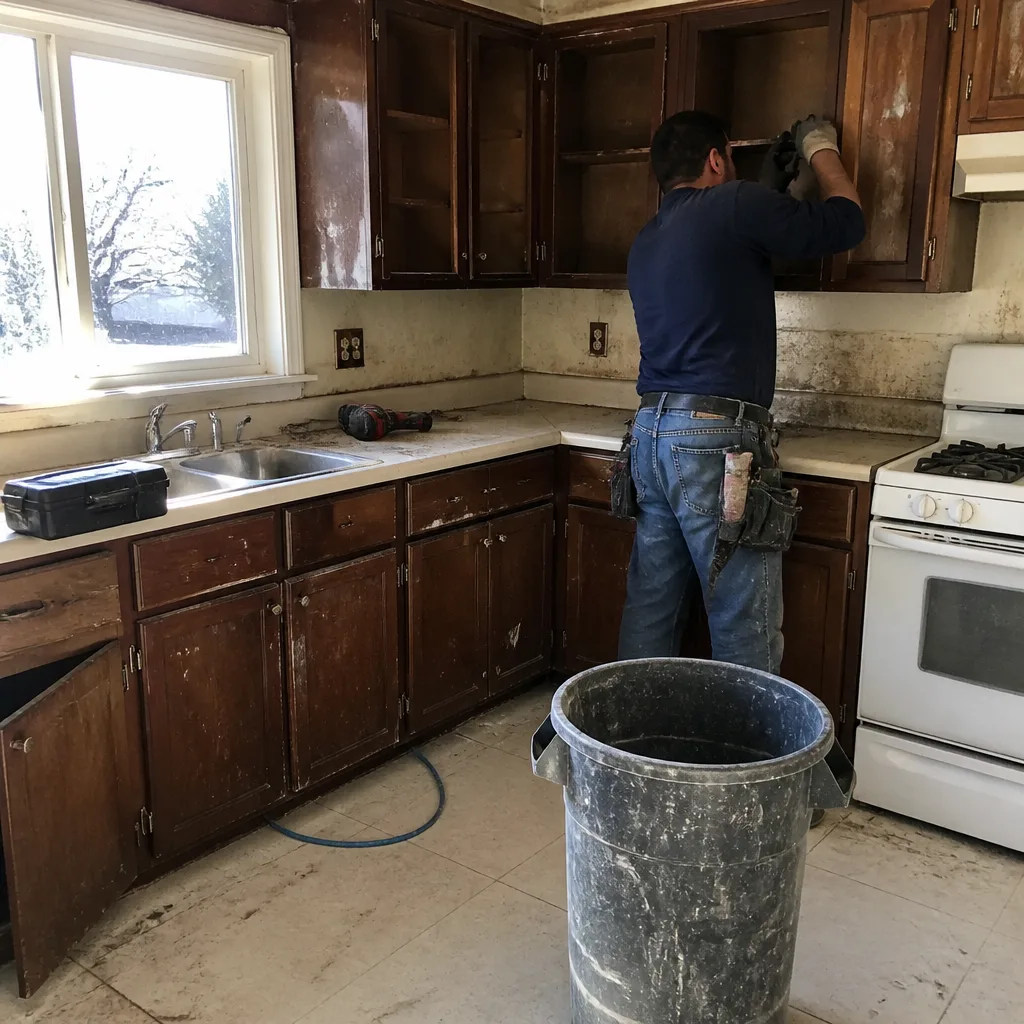 Before
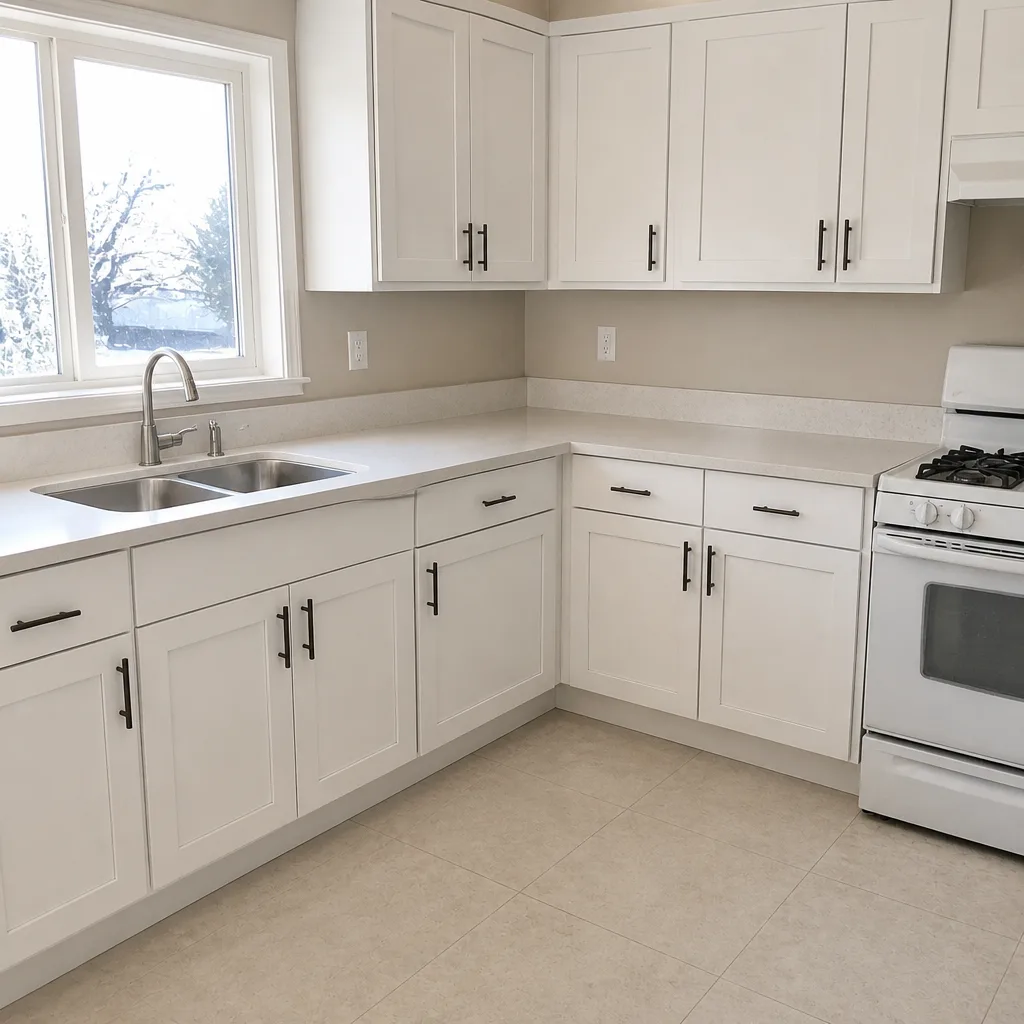 After
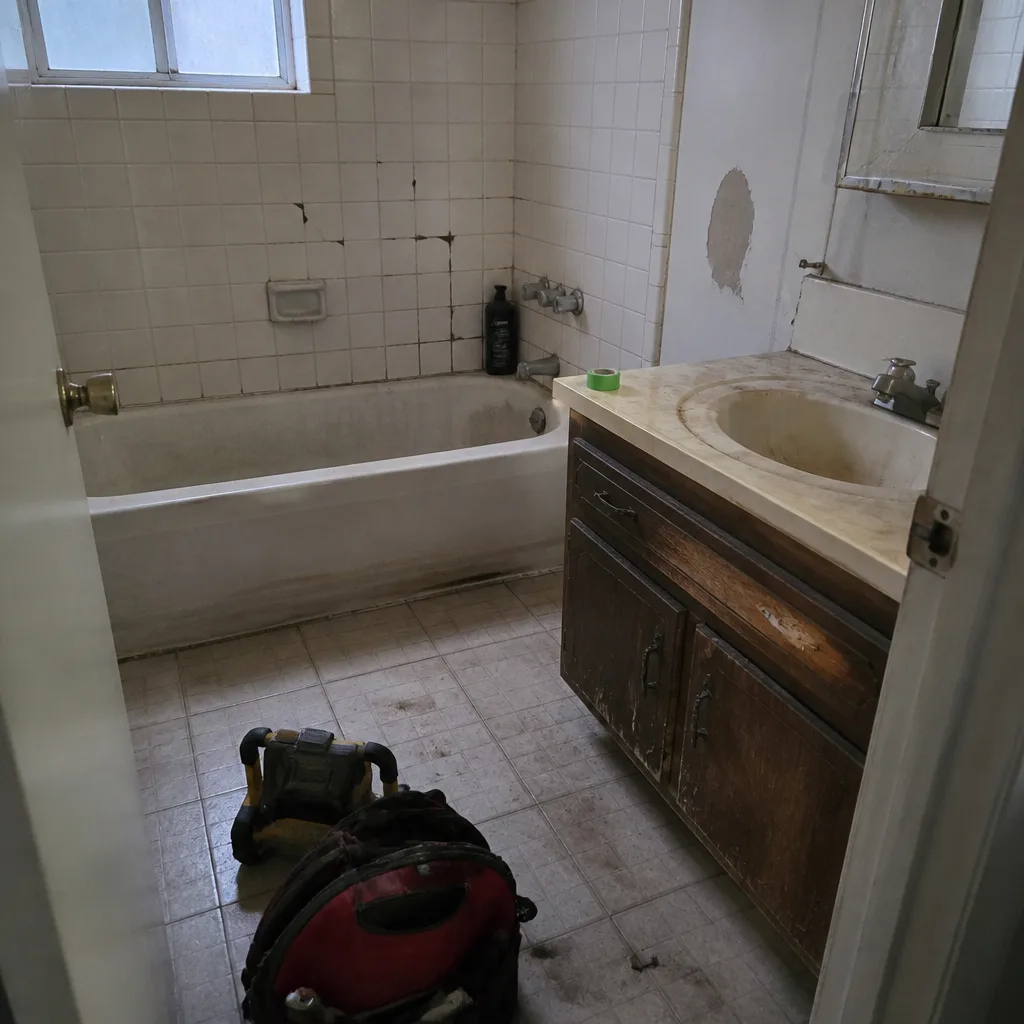 Before
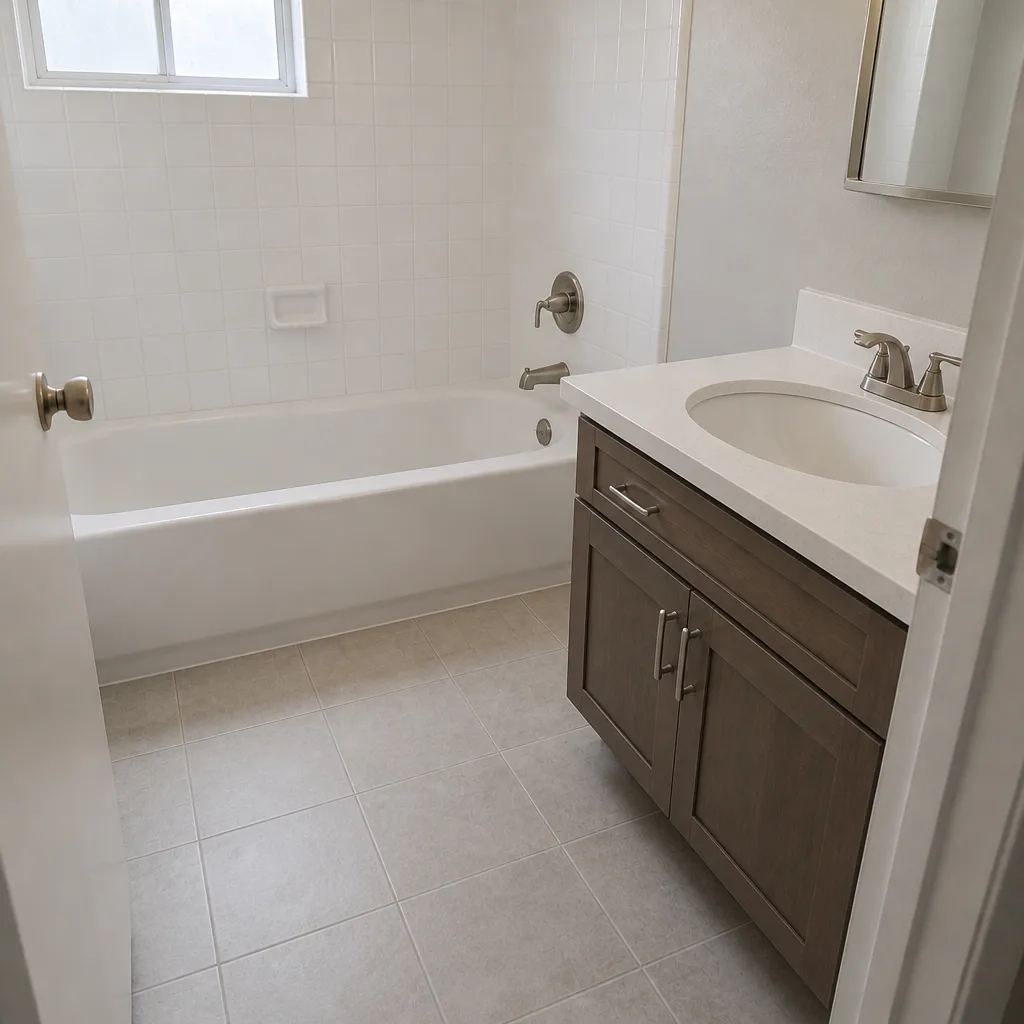 After
 Before
 After
When to Call a Professional
Some kitchen problems are hinge adjustments and caulk lines you can handle without a call. Others need a trained eye, and honestly, some need a second opinion on work that’s already failed. Call us when a grout crack keeps returning after a patch, when a countertop seam has gapped twice, when cabinet doors won’t stay true after an adjustment, or when you’re mid-remodel and a contractor has stopped showing up. We also get calls from Winchester homeowners who want a written second opinion on a quote before signing, and that’s a smart move. Penhallow Remodeling Winchester offers free estimates in Winchester. Call (844) 797-9439 and a real person answers, any hour, and we’ll give you a straight answer about whether your problem is a repair, a rework, or a redesign. Every quote comes with a written price and a written 365-Day Done Right Promise before any work starts.
Frequently Asked Questions

Repair costs depend entirely on the category of failure. A hinge adjustment or regrouting a few cracked joints typically runs $150 – $450 if it’s out of warranty. A countertop seam repair runs $250 – $600. A failed tile job caused by a missing substrate that requires tear-out and re-set runs $1,800 – $5,000 depending on square footage. If the work is still under a workmanship guarantee, the repair should cost you nothing. Call (844) 797-9439 for an exact look at your situation; estimates are free.
It shouldn’t, if you have a written scope and a written price. The only legitimate reason for a price change is a signed change order you approved before the extra work began. If a contractor asks for more money mid-job without a written change order in hand, that’s a dispute, not a bill. Penhallow Remodeling Winchester gives every homeowner a written price before work starts, and the number on day one holds.
Yes, permitted work requires permits, and a kitchen remodel typically needs them for electrical, plumbing, and any structural changes. The permit process in Winchester runs through the city’s building department, and inspections happen at defined stages: rough-in before drywall goes up and final inspection after completion. A contractor who suggests skipping permits is telling you something important about how the rest of the job will go. Call (844) 797-9439 to talk through what your specific project needs.
A straightforward kitchen remodel typically runs 5 – 8 weeks, and a larger job with layout changes and custom cabinetry runs 8 – 12 weeks. The schedule is where a lot of “problems” actually originate, because a contractor who overbooks delays demo day and then rushes the trades. A real arrival window and a written schedule are as important as the price. Call (844) 797-9439 for a free estimate that includes a realistic timeline.
It covers workmanship defects for a full year after completion: cabinet alignment, grout and caulk failure, countertop seam failure, and anything else tied to how the work was installed. If something covered fails, we come back and fix it at no charge, and if a repair fails, the return visit is free. Product defects are handled under the product’s own warranty, and we’ll help you file it. The guarantee is in writing on every project before work starts.
A single hairline crack in a grout joint can often be patched with a matching grout or caulk, but if the crack returns after one patch, or runs in a straight line across multiple tiles, there’s a substrate or movement problem that a patch won’t solve. Keep in mind that repairs attempted by the homeowner can void a workmanship guarantee on that area, so if the job is still under warranty, call the contractor first. Call (844) 797-9439 and we’ll tell you honestly whether it’s a DIY patch or a call-out.
The Bottom Line
Most kitchen remodeling problems aren’t mysteries. They’re paperwork failures, installation shortcuts, or material defects, and each one has a different fix and a different party responsible. The written price, the written change order, the written guarantee, and the final walk-through checklist are what separate a kitchen that holds up from one that generates a year of phone calls. In Winchester, where dry air and temperature swings stress grout and caulk, getting the substrate and the caulk joints right on installation day pays you back every season after. If you’re facing a problem now, or want a second set of eyes before you sign, we’re glad to help. We’ve seen just about all of it, and our technicians have up to 22 years of experience to draw on. Start with a call to our Penhallow Remodeling Winchester home team, and if your project touches the bathroom too, our Bathroom Remodeling in Winchester guide covers the same troubleshooting from the wet side.
Ready to get a written price and a written guarantee before work starts? Call Penhallow Remodeling Winchester at (844) 797-9439 for a free estimate. A live person answers 24/7, and every project comes with background-checked, uniformed technicians, materials from brands like KraftMaid, Cambria and James Hardie, and our 365-Day Done Right Promise in writing from day one.
Written by the team at Penhallow Remodeling Winchester.