Last updated November 18, 2026
Free written scope consultation - allowances, timeline, and change-order rules on paper before a single trade is scheduled
DIY vs Professional Construction: The Winchester Homeowner’s Decision Guide
Nevada requires a licensed contractor for any construction job over $1,000 in combined labor and materials. Read that again, because it changes the math on almost every weekend project in Winchester. The tile bathroom floor you budgeted at $1,200 in materials? By state law, that’s licensed-contractor territory. Enforcement varies, and plenty of homeowners roll the dice. But knowing where the actual lines sit, and which mistakes cost more to fix than the job cost to hire, is what separates a smart DIY decision from an expensive lesson. This guide walks through the real thresholds: licensing, permits, desert-climate failure modes, insurance gaps, and how to use a professional estimate as an honest cost benchmark.
Quick Answer
In Winchester, DIY makes sense for cosmetic, low-risk work: interior painting, swapping a faucet or light fixture, patching drywall, replacing a toilet. Anything over $1,000 in combined labor and materials legally requires a licensed Nevada contractor, and anything touching structure, electrical, plumbing rough-in, or permitted work is a professional job. The decision isn’t about your skill. It’s about whether the cost of a mistake, legal, financial, or safety, exceeds the cost of hiring right the first time.
Styles & brands we work with
- Kitchen remodeling
- Bathroom remodeling
- Home additions & ADU
- Roofing
- Windows & doors
- Driveway & pavers
- Fence
Table of Contents
- What Nevada Law Actually Says About DIY Work
- Where DIY Is Genuinely Lower Risk in a Desert Climate
- Where Desert Conditions Create Hidden Failure Modes
- How to Calculate the True Cost of DIY
- The Insurance Gap Nobody Talks About
- Using a Professional Estimate as an Honest Benchmark
- The Winchester Permit Map: What Needs One
- A Step-by-Step Decision Framework
What Nevada Law Actually Says About DIY Work
Nevada’s contractor licensing threshold is $1,000 in combined labor and materials for a single construction project. Above that line, the person doing the work is supposed to hold a valid state contractor license. This applies to remodeling, repairs, and additions. It does not apply to a homeowner working on their own primary residence in most cases, but the moment you hire anyone, licensed or not, the threshold matters. And if you sell the home within a certain window, unpermitted work can surface in a disclosure or an inspection and stall the sale.
What this means practically for a Winchester homeowner:
- Under $1,000 combined: Generally fine to handle yourself. A faucet swap, a painted bedroom, a replaced outlet cover.
- Over $1,000 combined: Legally requires a licensed contractor if anyone other than you is doing the work. If you’re doing it yourself on your own home, the license rule doesn’t bind you, but the permit rule might.
- Structural, electrical, plumbing, gas: Licensed trades, permits, and inspections apply regardless of dollar amount in most cases. This is where DIY stops being a cost question and becomes a safety and legal one.
- Anything that will be inspected or appraised: Unpermitted work discovered at resale is a negotiation problem at best, a tear-out at worst.
We’ve watched Winchester homeowners get tripped up by the $1,000 line without realizing how fast materials add up. A single bathroom tile job with cement board substrate (the moisture-resistant layer behind your tile), thinset, waterproofing membrane, and tile can clear $1,200 before you’ve rented a wet saw. The number sneaks past the threshold on materials alone. If you’re weighing a bigger project, our guide to working with a General Contractor in Winchester lays out what a licensed scope actually covers.
Where DIY Is Genuinely Lower Risk in a Desert Climate
Some projects in a Winchester home are honestly fine to do yourself. The desert climate actually helps here: low humidity means paint cures predictably, and there’s no freeze-thaw cycle chewing at exterior trim the way it does in colder states. The risk profile is lower for surface work because moisture isn’t fighting you the way it does in coastal climates.
Projects where DIY is reasonable:
- Interior painting. Low humidity in Winchester means even cure and fewer blistering issues. Prep is 80% of the job. Sand, prime, two coats.
- Fixture swaps. Replacing a faucet, showerhead, or light fixture on an existing, correctly wired or plumbed connection. Same-size swap, no rough-in changes.
- Minor drywall patches. Nail pops, small holes, hairline cracks. The dry air actually makes compound dry fast, which speeds the job.
- Toilet replacement. A straight swap on an existing flange is a genuine weekend project. Moving the flange is not.
- Cosmetic updates. Cabinet hardware, caulking, swapping a vanity top on the existing cabinet base, painting trim.
The line sits at “same size, same location, same connection.” The moment you’re moving a drain, adding a circuit, or opening a wall, you’ve crossed from cosmetic into scope that carries permit, inspection, and safety consequences. If a bathroom project is growing past a fixture swap, it’s worth pricing the real thing. Our Bathroom Remodeling in Winchester page covers what a permitted scope involves, including the waterproofing details that matter most in a dry climate where homeowners assume water intrusion isn’t a concern (it still is, just from the inside).
Where Desert Conditions Create Hidden Failure Modes
Here’s the counterintuitive part: Winchester’s dry climate lulls homeowners into skipping moisture protection they’d never skip in a wetter state. That’s exactly backwards. Interior moisture from showers, sinks, and slabs doesn’t evaporate the way you’d expect once it’s trapped behind tile or under a cabinet. The desert dries the air, not the wall cavity.
Common hidden failure modes for amateur work in Winchester:
- Skipped waterproofing in wet areas. Tile set directly on drywall in a shower fails within a few years regardless of climate. The substrate has to be cement board with a waterproofing membrane. This is the single most common amateur error we see.
- Exterior paint and stucco cracks. Desert sun and temperature swings (Winchester can swing 30-plus degrees between day and night) stress exterior surfaces. Amateur patching that doesn’t address the underlying crack pattern fails fast.
- Improperly flashed windows and doors. One good monsoon season finds every flashing shortcut. Water intrusion at a poorly flashed window shows up as interior drywall damage long after the installer has moved on.
- Slab and foundation cracks. Clay-heavy soils in parts of the valley expand and contract with moisture. Cosmetic crack filling without addressing the cause is a bandage.
- Improperly vented range hoods or bath fans. Venting into an attic instead of outdoors traps moisture in a place with no airflow. In a desert home, that’s a slow-motion problem.
These aren’t skill failures so much as knowledge failures. A licensed contractor has seen the failure mode before. A homeowner watching a video hasn’t. The cost of the mistake, in tear-out and redo, usually exceeds what the professional would have charged to do it right the first time.
How to Calculate the True Cost of DIY
The honest DIY cost is never just the materials. Here’s the calculation most homeowners skip, and it changes the comparison more often than people expect.
- Materials, including waste. Add 10-15% for cuts, breaks, and misorders. Tile and paint waste is real.
- Tool rental or purchase. A wet saw, a tile snapper, a rotary hammer, a drywall lift. Add it up before you start.
- Your time at a real hourly value. Not $0. If your time is worth $50 an hour and the job takes 30 hours, that’s $1,500 of value on the table before you’ve bought a single tile.
- Permit and inspection fees, if applicable. These apply to DIY work too when the scope requires them.
- The correction cost if it fails inspection or fails in service. This is the number that flips the decision. Tear-out and redo on a failed tile shower can run two to three times the original material cost.
Run the comparison on a mid-size bathroom tile job. Materials at $1,200, tools at $200, 40 hours of your time at $50 (=$2,000), and a 20% chance of a $2,500 correction if the waterproofing fails. The expected cost of DIY lands near $3,900. A professional quote for the same scope, with a written price and a guarantee, often comes in lower than the true DIY number once the time value and correction risk are counted. That’s the honest comparison, and it’s the one a professional estimate lets you make. A kitchen project has the same math at a bigger scale: our Kitchen Remodeling in Winchester page breaks down where the real cost drivers sit.
The Insurance Gap Nobody Talks About
Your homeowner’s policy covers your home. It does not cover the cost of a contractor’s mistake, because you didn’t hire one. That distinction matters more than most Winchester homeowners realize until something goes wrong.
What’s covered and what isn’t:
- DIY work gone wrong: Your policy may cover resulting damage (a burst pipe from a bad fitting, fire from miswired work), but it typically does not cover the defective work itself. And your deductible applies.
- DIY work causing injury to a helper: If a friend or neighbor helps and gets hurt on your property, your liability coverage is the question. A licensed contractor carries their own workers’ compensation and liability coverage.
- Licensed contractor work gone wrong: The contractor’s liability insurance and bond stand behind the work, plus the written guarantee. That’s a layer of protection you can’t replicate on your own.
- Unpermitted work discovered at resale: Insurers and buyers both ask about it. Disclosure requirements in Nevada make this a genuine transaction risk.
The insurance gap is the quiet reason “I’ll just do it myself” can be a more expensive choice than the surface math suggests. A $3,000 bathroom job that floods the room below is a $15,000 insurance conversation where the deductible and the excluded defective work both land on you.
Using a Professional Estimate as an Honest Benchmark
A professional estimate isn’t a sales document. Used correctly, it’s the cheapest piece of information you’ll get in this whole decision. At Penhallow Remodeling Winchester, every homeowner receives a written price before any work starts, and that written number is the benchmark you should hold any DIY plan against. The number on day one is the number on the invoice, and it’s spelled out line by line.
What to ask for in an estimate to make the comparison honest:
- Line-item breakdown: Labor, materials, permits, and disposal, each on its own line. A lump-sum number hides the comparison.
- Brands and product lines: KraftMaid or Wellborn cabinetry, Cambria or Silestone countertops, Kohler or Moen fixtures. Materials from recognized trade brands carry their own warranties alongside the contractor’s guarantee.
- The guarantee, in writing: How long it runs, what it covers, and exactly what happens if something fails. Ours is the 365-Day Done Right Promise: if the work fails inside the year, we come back and fix it at no charge. That’s a cost line DIY doesn’t have and therefore can’t match, but it should still be priced into your decision.
- Permit responsibility: Who pulls the permit and who handles inspection. A professional estimate states this plainly.
- Scope-of-work exclusions: What’s explicitly not included, so you’re not comparing your DIY version of the full scope to a professional quote for half of it.
If you want a benchmark on a specific project type, our Penhallow Remodeling Winchester home page lists the scopes we work in. And when the estimate includes product brands like James Hardie exterior siding, you can price those materials independently and see exactly what the labor and guarantee portion is worth. That’s an honest comparison. A lump sum you can’t break down isn’t.
The Winchester Permit Map: What Needs One
Permit requirements in Winchester and Clark County follow the scope, not the dollar amount in every case. Here’s the practical map for common projects.
- Interior paint, flooring (over existing subfloor), cosmetic finish work: No permit.
- Same-size fixture swaps on existing connections: Typically no permit.
- Bathroom remodel involving plumbing relocation, new electrical, or shower replacement with new waterproofing: Permit required. This is the most common project homeowners try to skip, and the most likely to be discovered at resale.
- Kitchen remodel with any plumbing, electrical, or gas changes: Permit required. Cosmetic-only cabinet refacing without plumbing or electrical changes is usually no permit.
- Any structural change (moving a wall, removing a header, opening a load-bearing line): Permit and engineered drawings in most cases. Not DIY territory regardless of skill.
- Exterior additions, patio covers, or anything attached to the structure: Permit required.
The permit question isn’t a bureaucratic one. It’s a resale and safety question. A permitted job is inspected, which means a third party has checked the work before you’re committed to it. For a whole-home scope that touches multiple systems, that inspection chain is part of the value. Our general contractor page covers how the permit and inspection process runs on a full project.
A Step-by-Step Decision Framework
When you’re staring at a project and can’t decide, run it through these steps in order. Each one is a hard stop or a green light.
- Is the combined labor and materials over $1,000? If yes and anyone other than you is doing the work, it’s a licensed-contractor job. Full stop.
- Does the scope touch structure, electrical, plumbing rough-in, gas, or load-bearing anything? If yes, it’s a professional job regardless of dollar amount. These are safety and permit scopes.
- Does the work require a permit under Clark County rules? If yes, the inspection chain matters more than the labor you save. A professional job with permits and inspections is the honest path.
- Would a failure in this scope cause water damage, electrical damage, or structural damage? If yes, the correction cost likely exceeds the professional quote. Hire it.
- Is the work cosmetic, same-size, same-location, and on existing connections? If yes, DIY is genuinely on the table. Paint the bedroom. Swap the faucet.
- Can you get a written professional estimate as a benchmark? Always worth it, even when you plan to DIY. It’s a free piece of information that either confirms your plan or changes it.
Run a Winchester bathroom through this list: over $1,000, likely a permit if you’re replacing the shower, water-damage risk if waterproofing is wrong, professional job. Run a bedroom paint job through it: under $1,000, no permit, no structural risk, cosmetic. DIY. The framework removes the guesswork.
Common Mistakes to Avoid
- Assuming the $1,000 threshold is per project, not per phase. Homeowners split a $2,500 bathroom into “phases” to stay under the line. The law measures the project, and a phased unpermitted remodel is still an unpermitted remodel.
- Skipping waterproofing in wet areas because Winchester is dry. The desert dries the air, not the wall cavity behind a shower. Tile on drywall fails everywhere, just more slowly here.
- Using a lump-sum verbal estimate as the benchmark. If you can’t break down the professional number into labor, materials, permits, and guarantee, you can’t compare it honestly against your DIY cost.
- Forgetting the correction cost when doing the DIY math. The 20% chance of a $2,500 tear-out belongs in the calculation. Most homeowners leave it out.
- Venting a bath fan into the attic to “save a step.” In a desert attic with no airflow, that trapped moisture causes problems for years before you find them.
- Ignoring the insurance gap. Your policy typically won’t cover the cost of defective work you did yourself, only some resulting damage, minus your deductible. That’s a real number.
- Not pulling a permit because “the neighbors didn’t.” Unpermitted work surfaces at resale, and Winchester buyers are asking about it. A stalled sale costs more than the permit.
See the difference
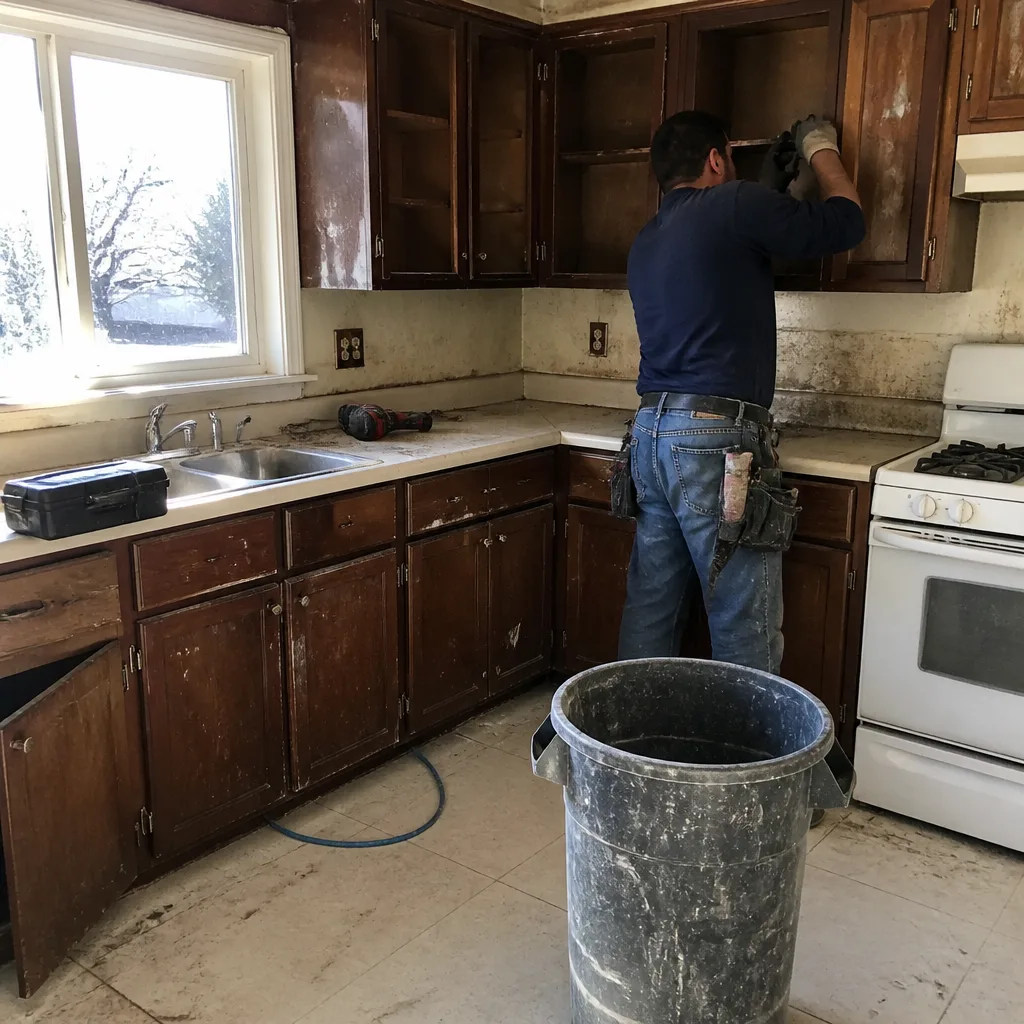 Before
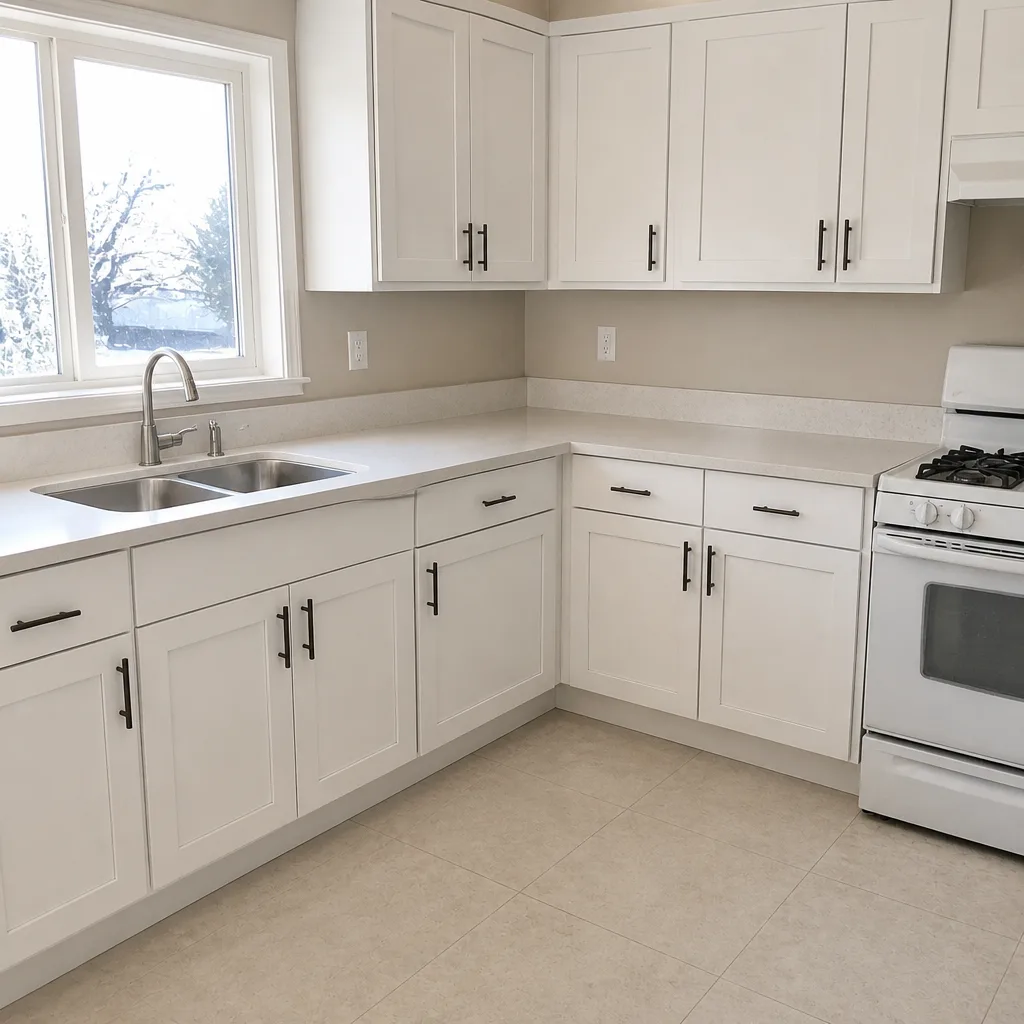 After
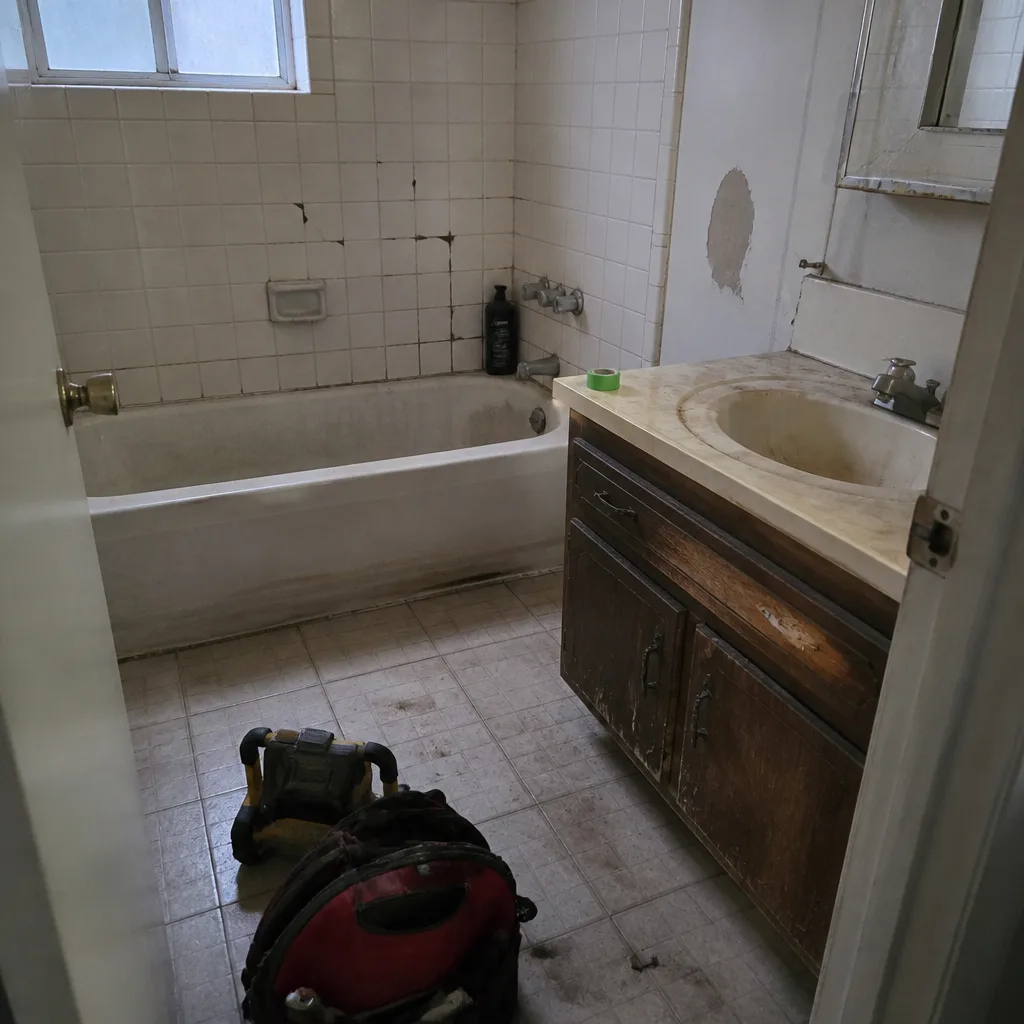 Before
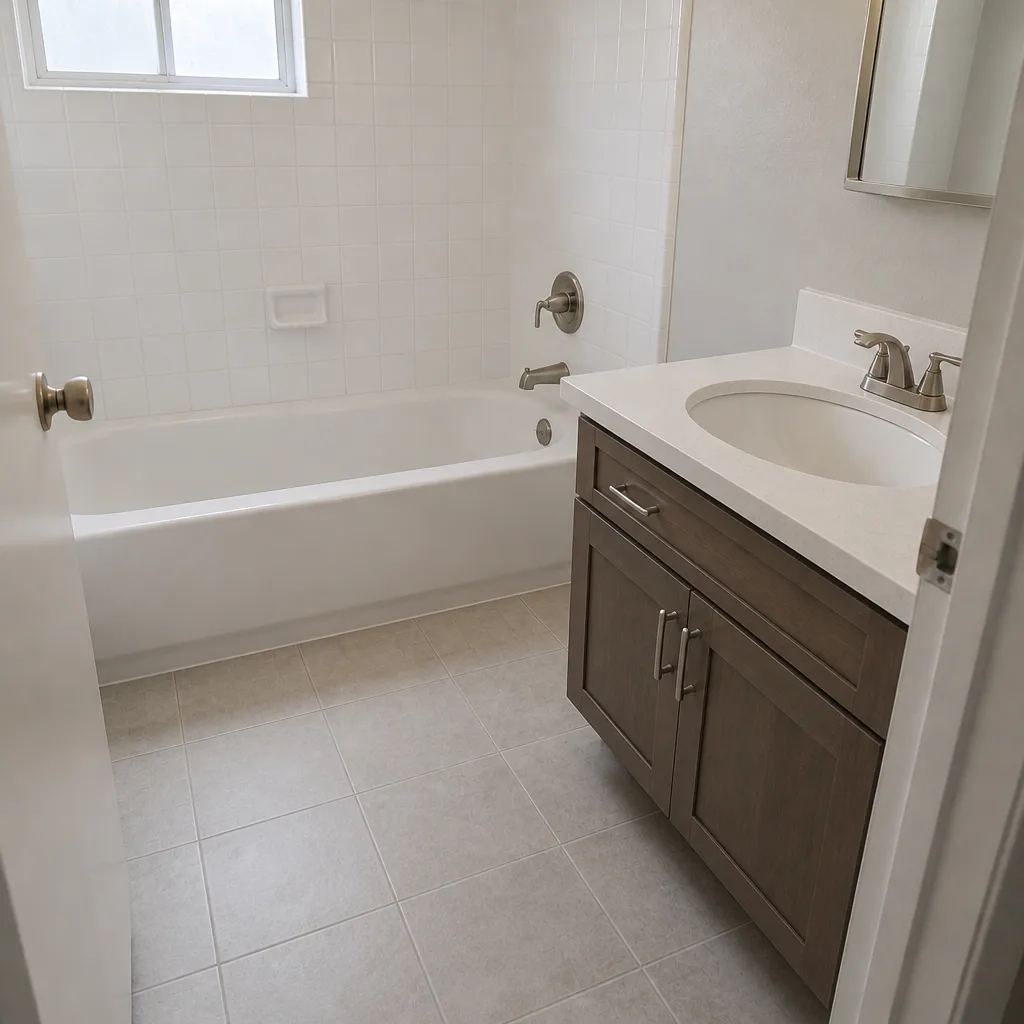 After
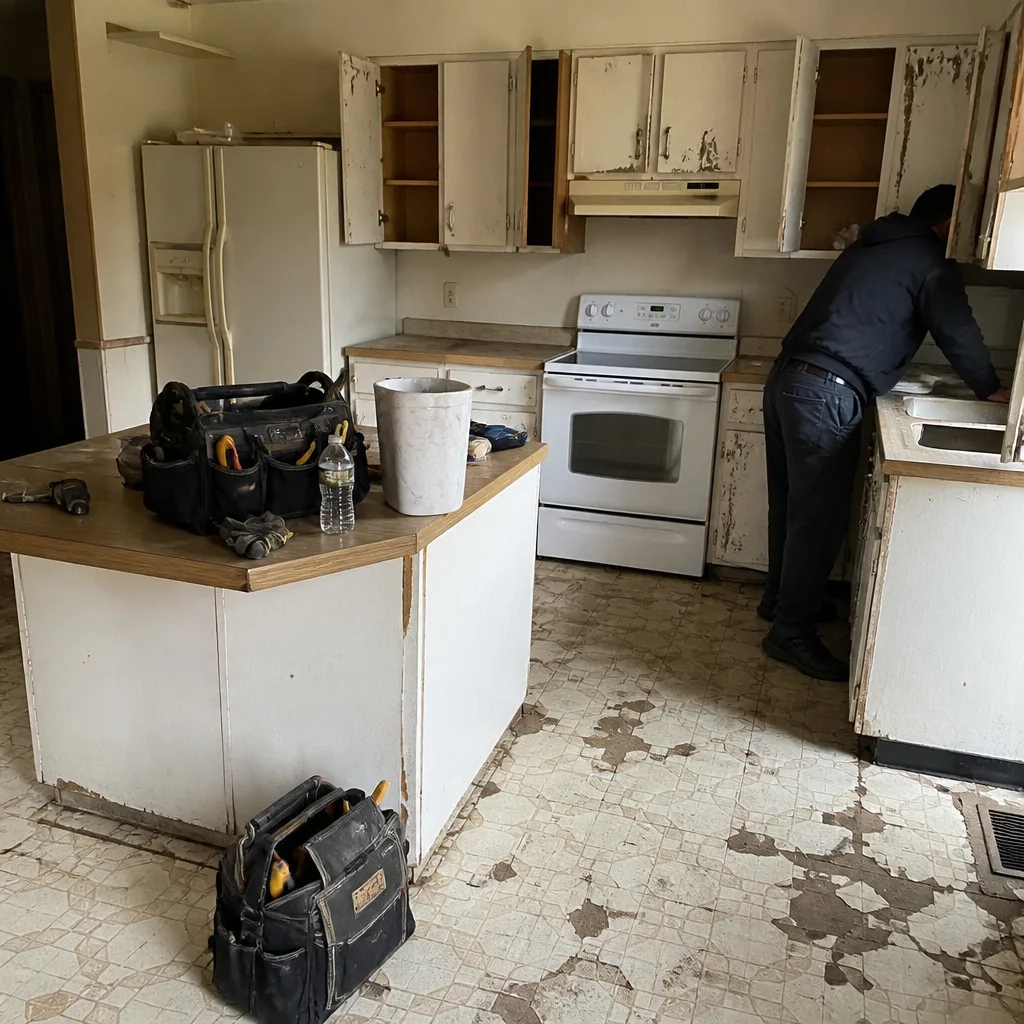 Before
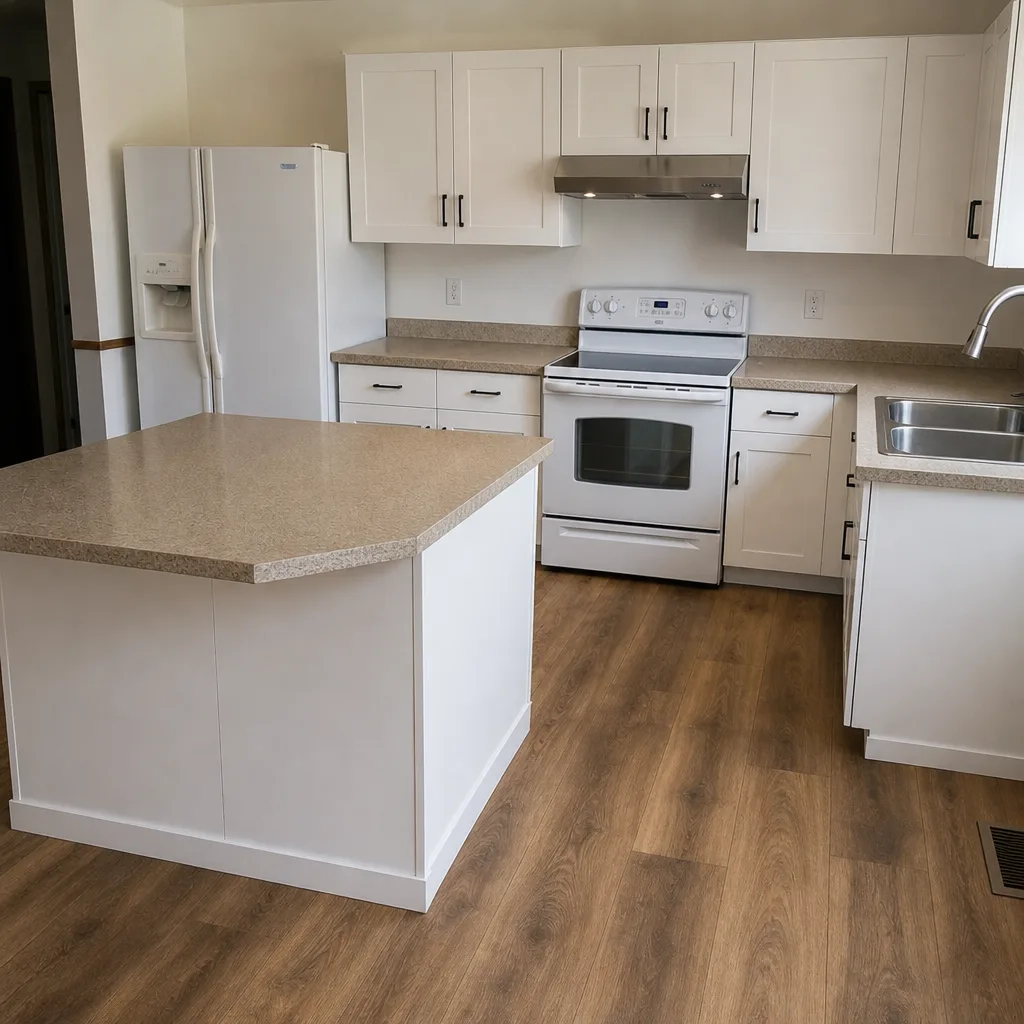 After
When to Call a Professional
Call a professional when the scope crosses any of these lines: over $1,000 with someone other than you doing the work, touching structure or major systems, requiring a permit, or carrying a failure mode with damage potential beyond the job itself. In Winchester, that covers most bathroom and kitchen projects, anything with new plumbing or electrical, and every structural change. The honest answer is that the projects where DIY is genuinely lower risk are also the projects where the decision is easy. The projects where you’re genuinely unsure are almost always the professional scope. Penhallow Remodeling Winchester offers free estimates in Winchester. Call (844) 797-9439 and get a written number to benchmark against.
Frequently Asked Questions
Nevada requires a licensed contractor for construction work over $1,000 in combined labor and materials when someone other than the homeowner is doing the work. A homeowner working on their own primary residence is generally exempt from the license rule, but not from permit and inspection requirements when the scope triggers them. Call (844) 797-9439 for a free estimate if you want a benchmark on a project you’re weighing.
A mid-range bathroom remodel in Winchester typically runs $12,000-$28,000 depending on size, whether the shower is a full replacement, and the fixture and tile lines you choose. A cosmetic refresh with a vanity swap and new paint runs less. The professional number includes permits, inspections, and a written guarantee that DIY doesn’t. Call (844) 797-9439 for an exact written quote on your scope, and estimates are free.
It shouldn’t. At Penhallow Remodeling Winchester, every homeowner gets a written price before any work starts, and the number on day one is the number on the invoice. Change orders only apply if you change the scope mid-project. Any professional estimate that can’t hold its number should be a warning sign. Call (844) 797-9439 to schedule a free written estimate.
Yes, if the scope involves plumbing relocation, new electrical, or a shower replacement with new waterproofing. Cosmetic-only work like paint, a vanity top swap on the existing base, or a same-size fixture swap usually doesn’t require one. Permits and inspections are part of the value of a licensed job, not just a fee. Call (844) 797-9439 to confirm whether your scope triggers a permit.
Sometimes, and often not. Once you add materials with waste, tool rental, your time at a real hourly value, and the correction cost if the work fails inspection or fails in service, DIY frequently lands above a professional quote on anything beyond cosmetic scope. A professional estimate is the honest benchmark. Call (844) 797-9439 for a free written number to compare against.
Under our written guarantee, we come back and fix it at no charge inside the coverage period. The 365-Day Done Right Promise means if the work fails within a year, we return and make it right, and there’s a free second visit if a repair fails, with no service call or re-inspection fee. DIY has no equivalent layer. Call (844) 797-9439 if you want to talk through a failed repair you inherited.
The Bottom Line
The DIY-versus-professional question in Winchester is a risk question, not a skill question. The $1,000 Nevada licensing threshold, the Clark County permit map, and the desert failure modes (skipped waterproofing, bad flashing, misvented fans) make the decision for you once you run a project through the framework. Paint the bedroom. Swap the faucet. But anything touching structure, systems, permits, or water damage potential is a licensed job, and the correction cost usually exceeds the professional quote. Get a written estimate as a benchmark before you decide, and let the number tell you the truth.
Penhallow Remodeling Winchester brings a written price before any work starts, a defined arrival window, and the 365-Day Done Right Promise on every project. Background-checked, uniformed technicians on every job. A live person answers the phone 24/7. Call (844) 797-9439 for a free estimate and a written number you can hold us to.
Written by the team at Penhallow Remodeling Winchester.