
Last updated November 18, 2026







Free written scope consultation - allowances, timeline, and change-order rules on paper before a single trade is scheduled
Construction Warning Signs: A Winchester Homeowner’s Reference Guide
A diagonal crack running from the corner of a window or door frame is not settling. It’s a shear stress indicator, and in a desert slab home it usually points to movement at the foundation that has nothing to do with normal seasonal shifting. It’s also one of the most common things Winchester homeowners are told is “just cosmetic” by contractors who don’t want to price the real repair. Most of the warnings in this guide aren’t hidden. They’re familiar enough that people shrug them off as cosmetic, settling, or no big deal. This reference explains which familiar signs are genuinely harmless and which are early evidence of a failed remodel or a structural problem building under your floor. We’ll walk crack types, moisture clues specific to Winchester’s dry climate, the post-remodel signs that mean corners were cut, and how to document what you’re seeing before anyone quotes you a number.
Quick Answer
The warning signs that matter most are diagonal and stair-step cracks at window and door corners, horizontal cracks in foundation walls, moisture staining in a house where rainfall is low, and post-remodel failures inside the first year like cracking grout, cabinet doors that stop closing, and paint that peels before twelve months. Hairline vertical cracks in drywall are usually harmless. The difference between fine and serious comes down to direction, location, and whether the movement is ongoing. When in doubt, get it looked at in writing rather than taking a quick “it’s cosmetic” for an answer.
Styles & brands we work with
- Kitchen remodeling
- Bathroom remodeling
- Home additions & ADU
- Roofing
- Windows & doors
- Driveway & pavers
- Fence
Table of Contents
- A Visual Dictionary of Crack Types
- Moisture Warnings in a Low-Rainfall Climate
- Post-Remodel Signs a Contractor Cut Corners
- What a 365-Day Guarantee Covers vs. Small Claims
- How to Photograph and Document Warning Signs
- Why Slab Homes in Winchester Behave Differently
- Common Mistakes to Avoid
- When to Call a Professional
A Visual Dictionary of Crack Types
Not every line on a wall means the same thing. Direction and location tell you more than width. Here’s how we read the four types you’re most likely to see in a Winchester home.
- Hairline cracks (vertical, thin, in drywall or paint): Usually harmless. These follow seams between drywall panels as the house expands and contracts with temperature swings. Winchester summers push interior framing through big heat cycles, and a hairline vertical line above a doorway is rarely structural. Repaint and monitor.
- Stair-step cracks (following mortar joints up brick or block): These track the mortar lines in a zigzag pattern. On an exterior wall, they usually mean differential settlement, where one part of the foundation has dropped more than another. They’re worth a professional look, especially if they’ve widened over a season.
- Diagonal cracks (running from a corner of a window or door frame): A diagonal line angling out from the top or bottom of an opening is a shear stress indicator. Corners are where stress concentrates, and a diagonal crack there is the house telling you it’s moving. This is the one homeowners are most often told is cosmetic. It usually isn’t.
- Horizontal cracks (in foundation walls or block): The one to take seriously. Horizontal cracking in a foundation or retaining wall often means soil pressure is bowing the wall inward. That’s a structural conversation, not a paint touch-up.
Width matters too. A crack you can slide a credit card into is a different category from one you can fit a dime into. But direction and location come first. If you’re seeing several of these together, that’s a pattern rather than a fluke, and patterns are what a General Contractor in Winchester should be evaluating before any interior work moves forward.
Moisture Warnings in a Low-Rainfall Climate
Here’s the trap of living somewhere dry. Because Winchester gets so little annual rain, homeowners dismiss moisture clues as impossible. “It can’t be water damage, we live in the desert.” That reasoning costs people real money, because the moisture that ruins a bathroom almost never comes from rain. It comes from inside: a slow supply line leak, a shower pan that wasn’t sealed, a poorly sloped drain, condensation on a cold pipe. In a slab home the water has nowhere to escape, so it sits and feeds whatever’s behind the tile.
What to watch for in a Winchester home that gets plenty of dry days:
- A musty, damp smell in a bathroom or closet with no obvious source. That smell is often the first sign, and it shows up weeks before a visible stain.
- Grout or caulk that stays dark and won’t dry out after a shower, when the rest of the room dries fine.
- Soft or spongy spots in a floor near a toilet, tub, or sink. Toe-test the area with a screwdriver handle; if it gives, there’s moisture under it.
- Paint or drywall bubbling on the opposite side of a shower wall or below a bathroom. That’s water traveling where you can’t see it.
- Any stain with a tide-line edge on a ceiling or wall. Water recedes and leaves a ring; the ring tells you where the leak has been.
By the time mold is visible behind tile, the damage has usually been growing for months. If you suspect a hidden leak, don’t wait for it to announce itself. A licensed, insured plumber or remodeler can confirm it before it turns into a gut process. The moisture-resistant layer behind your tile, called the substrate, is only as good as the waterproofing above and around it, and if that layer was skipped or punctured, the desert climate offers no rescue. It keeps the problem hidden instead of drying it out.
Post-Remodel Signs a Contractor Cut Corners
Most remodeling problems reveal themselves within the first year. The house is essentially a test, and if the test starts failing at 60 days, that’s information. We’ve seen these timelines play out on jobs we were called in to correct. Here’s what to look for and the window in which it shows up.
- Grout cracking within 90 days. Fresh grout that cracks that fast usually means the substrate flexed, or the tile was set directly on an unstable surface without proper cement board or a movement joint. It isn’t “normal settling.”
- Cabinet doors that won’t close after 60 days. In a kitchen remodel, doors that swing open or rub against each other a couple months in point to cabinets hung out of level or a frame that wasn’t shimmed square. Good cabinetry from brands like KraftMaid or Wellborn still needs a straight install. The product isn’t the problem; the hung frame is.
- Paint peeling inside 12 months. Paint that lifts on an interior wall within a year usually means it went over an unprepared or greasy surface, or the wrong primer was used. Exterior peeling on a James Hardie siding install can signal it was caulked and painted before the material had settled into place.
- Caulk lines failing at seams. Shower and tub caulk that cracks or pulls away in a few months often means the joint wasn’t cleaned or dried before sealing, or the wrong caulk was used on a wet surface.
- Windows that stick or won’t latch after installation. A door or window from a reputable line like Therma-Tru that doesn’t close cleanly a few weeks after install is almost always a framing or leveling error, not a defective unit.
One failure is a fluke. Two in a year is a pattern. If you’re watching a pattern, document it and get it in front of someone who can look at the underlying install, not just the surface. This is exactly where a written guarantee separates a real contractor from a phantom.
What a 365-Day Guarantee Covers vs. Small Claims
This is the part most homeowners only learn after something goes wrong. A written guarantee, like the 365-Day Done Right Promise we put on every project, covers workmanship that fails inside the guarantee period. If the grout cracks or a cabinet door drops inside that year, we come back and fix it at no charge. It’s a free return visit if the repair fails, with no service call and no re-inspection fee, spelled out in writing. The coverage isn’t a verbal promise; it’s a document with terms. That distinction is the whole ballgame.
Compare that to the alternative. Without a written guarantee, your fix for a failed remodel is a Nevada small claims case, and small claims doesn’t fix what’s broken. It asks a judge to award money, and you have to prove three things to get there:
- That a defect exists.
- That the defect was the contractor’s fault and not normal wear or something you caused.
- That you gave the contractor a fair chance to correct it.
That means photos, dates, receipts, an expert opinion, a filing fee, and a court date. Weeks turn into months. Meanwhile your bathroom or kitchen sits half-finished. A guarantee collapses all of that into a phone call. If you’re pricing a remodel in Winchester, ask for the guarantee in writing before you sign, because the terms you can hold in your hand are worth far more than the verbal reassurance you’ll get without one. The point isn’t that you’ll need to use it. It’s that you know exactly what happens if you do.
How to Photograph and Document Warning Signs
Before you call anyone, take a real record of what you’re seeing. This is the single best way to get an accurate written estimate instead of a site-visit upsell that prices to your panic. A clear, dated record lets you and the contractor see the same thing. Here’s a sequence that works.
- Take one wide shot and one close-up of each sign. The wide shot shows location in the room; the close-up shows the crack, stain, or failure in detail. Put a coin or ruler beside it for scale. A crack you can’t measure is a crack you can’t track.
- Measure and record. Note the length and width in inches, and photograph a tape measure in the frame. Do the same for any crack, stain, or gap.
- Date everything. Name the photo files by date, and keep a simple log: what you saw, where, and when. Movement you can show over weeks is far more persuasive than a single snapshot.
- Note the conditions. Record recent weather, any recent work, or changes in the house. Winchester’s dry heat and seasonal temperature swings matter to the diagnosis.
- Bring the record to the estimate. Hand it over when you ask for a written, line-item price. A contractor who is willing to give you a written number is a contractor you can hold to it.
When we quote a homeowner, we want to quote the real scope, not the visible surface. Photos and a dated record help with that. So does knowing the crack pattern. That’s why a Penhallow Remodeling Winchester home visit starts with a look at the whole job and a conversation about what you’re watching, before anyone puts a number on paper.
Why Slab Homes in Winchester Behave Differently
Most homes in Winchester sit on a slab-on-grade foundation rather than a raised perimeter. Slab homes are common in desert construction, and they change what you should watch for. There’s no crawlspace to inspect, so signs of movement or moisture surface at the walls, the floor edges, and the corners of openings, not underneath. The slab itself is only as stable as the soil beneath it, and desert soils can expand and contract with moisture and temperature in ways that grass-covered ground won’t. That’s why the edges of a slab, the corners of a home, and the perimeter walls carry the real early warnings.
Practical implications for Winchester homeowners:
- Anchor your crack-watching at wall corners, window frames, and exterior wall ends. That’s where a slab home shows movement.
- Watch the gap between baseboard and floor along an exterior wall. A widening gap can mean the slab or framing is moving.
- Look at the exterior perimeter after a rare rain. Ponding water or a wall that stays wet is worth a look before it finds the slab edge.
- Notice any door that starts to bind. A door that swings freely then sticks six months later is the house moving, and slab homes show this early.
Knowing whether a home is slab-on-grade or pier-and-beam is step one in any diagnosis. If you’re remodeling a bathroom on a slab, for example, the waterproofing and shower pan detail matter even more, because a leak has no basement to run off to. A Bathroom Remodeling in Winchester project should account for that, and so should the estimate.
Common Mistakes to Avoid
- Accepting “just cosmetic” without a second set of eyes. The phrase is easy to say and hard to disprove. A diagonal crack at a window corner deserves a real diagnosis, and a contractor who shrugs it off is telling you how they price real repairs.
- Ignoring moisture because “it’s a desert.” Winchester’s low rainfall makes people dismiss water signs until mold shows behind tile. The leaks that matter most come from plumbing and wet areas, not the sky.
- Paying before a written price exists. The number on day one should be on paper before any demo. A verbal ballpark that grows at the door is one of the oldest problems in the trade.
- Signing without asking what the guarantee covers. If a contractor can’t tell you plainly what happens if a repair fails in six months, the guarantee is decoration. Get it in writing.
- Photographing after the repair starts. Once a crew is moving, you lose the baseline. Document the signs first, so the estimate is based on evidence rather than a sales visit.
- Choosing the cheapest bid for a real repair. When the work involves substrate, waterproofing, or structural movement, a low number usually means a step was skipped. The repair cost that matters is the one after the cheap fix fails.
- Waiting on a horizontal crack. Horizontal cracks in foundation walls are the one category where time makes it worse and more expensive. Don’t watch it for a season.
When to Call a Professional
Some signs are watch-and-wait. Others are call-now. If you’re seeing a diagonal crack from a window corner, a horizontal crack in a foundation wall, or a stair-step crack that has widened since you first noticed it, get a professional look rather than waiting for the next season. The same goes for any moisture stain that won’t dry, a soft floor near a bathroom fixture, or a cluster of post-remodel failures inside the first year. That’s a pattern, not bad luck. When you call, ask for a written, line-item price tied to what’s actually wrong, not a verbal range. Penhallow Remodeling Winchester offers free estimates in Winchester, with a written number before any work starts. Call (844) 797-9439 to schedule yours, and a live person will answer.
See the difference
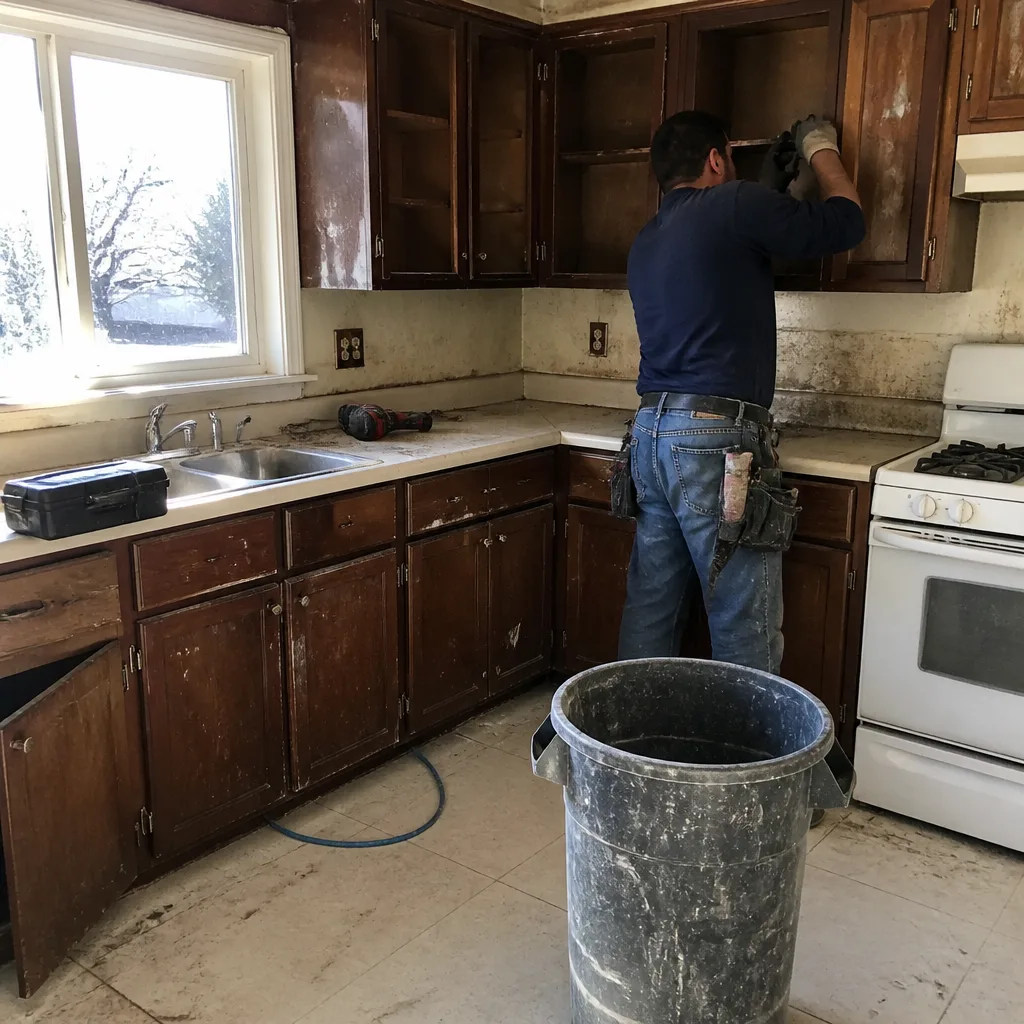 Before
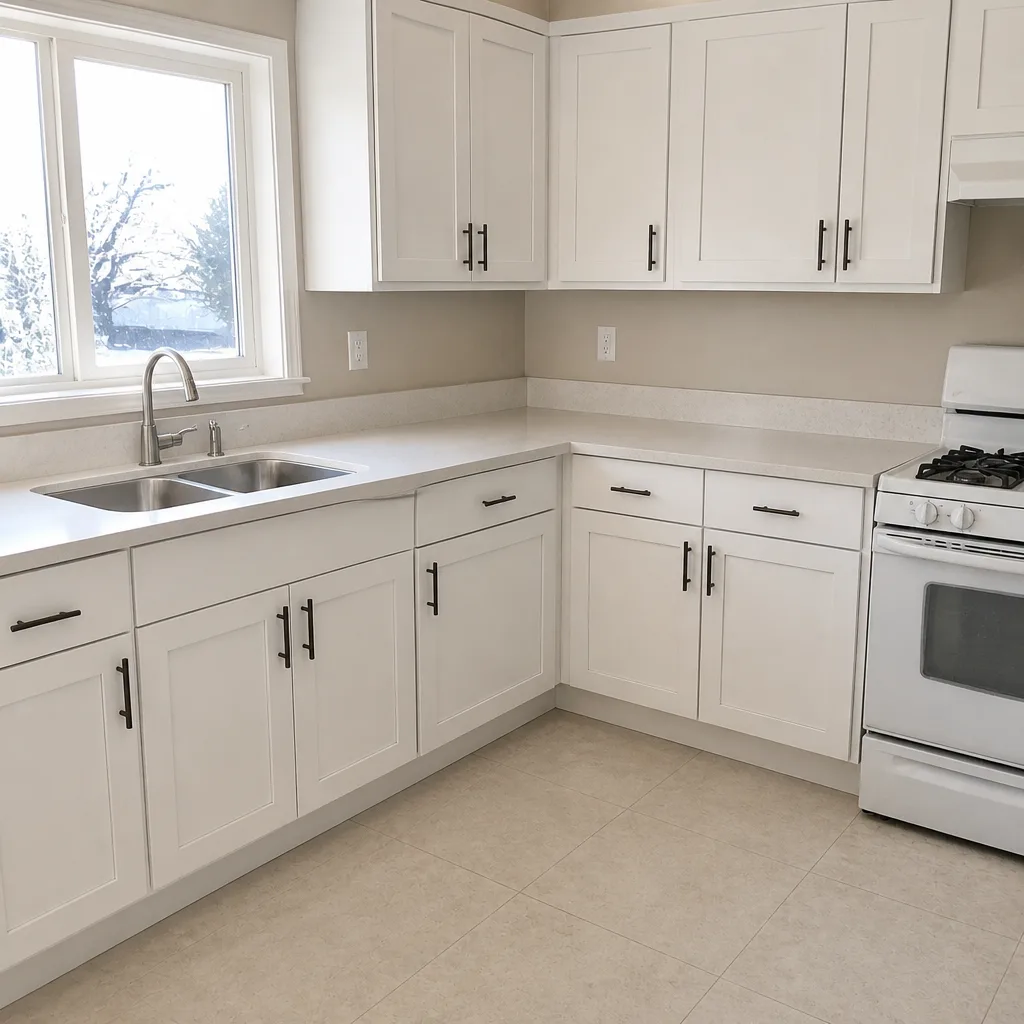 After
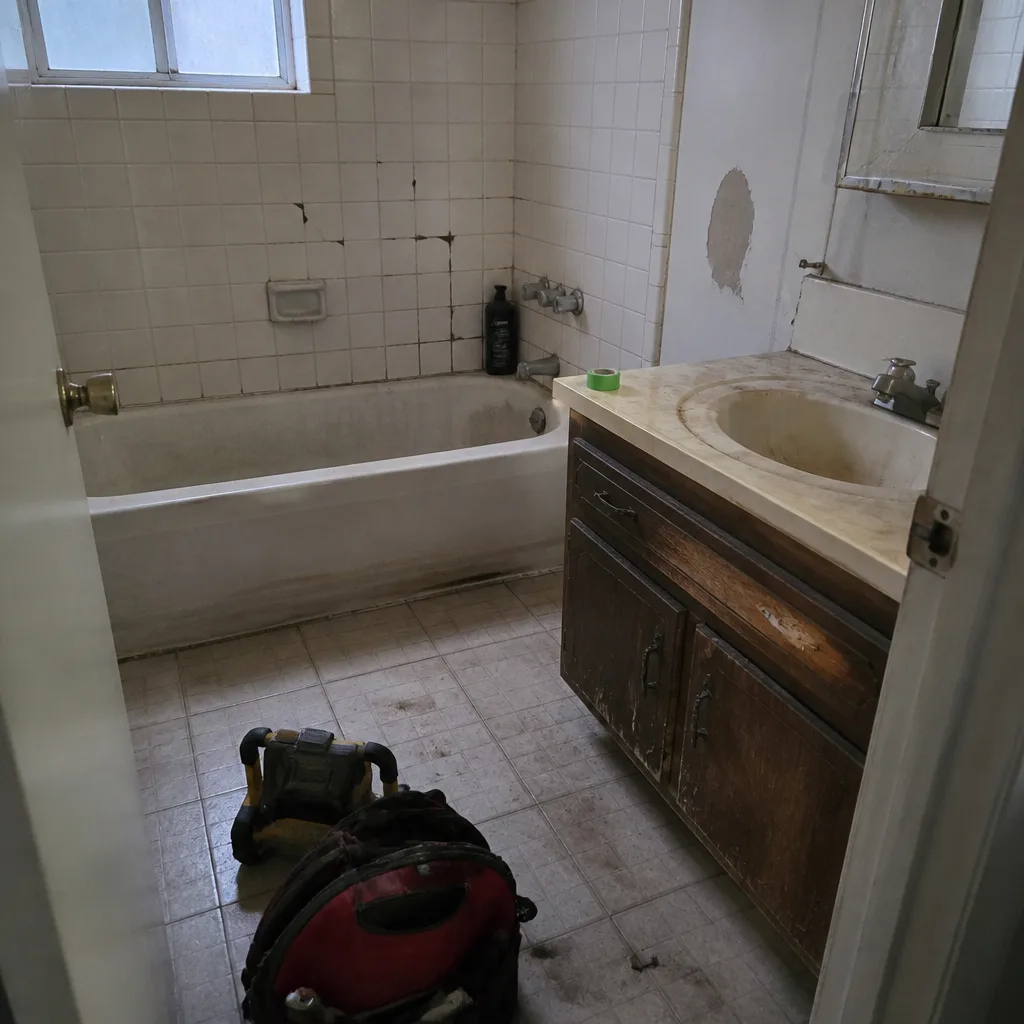 Before
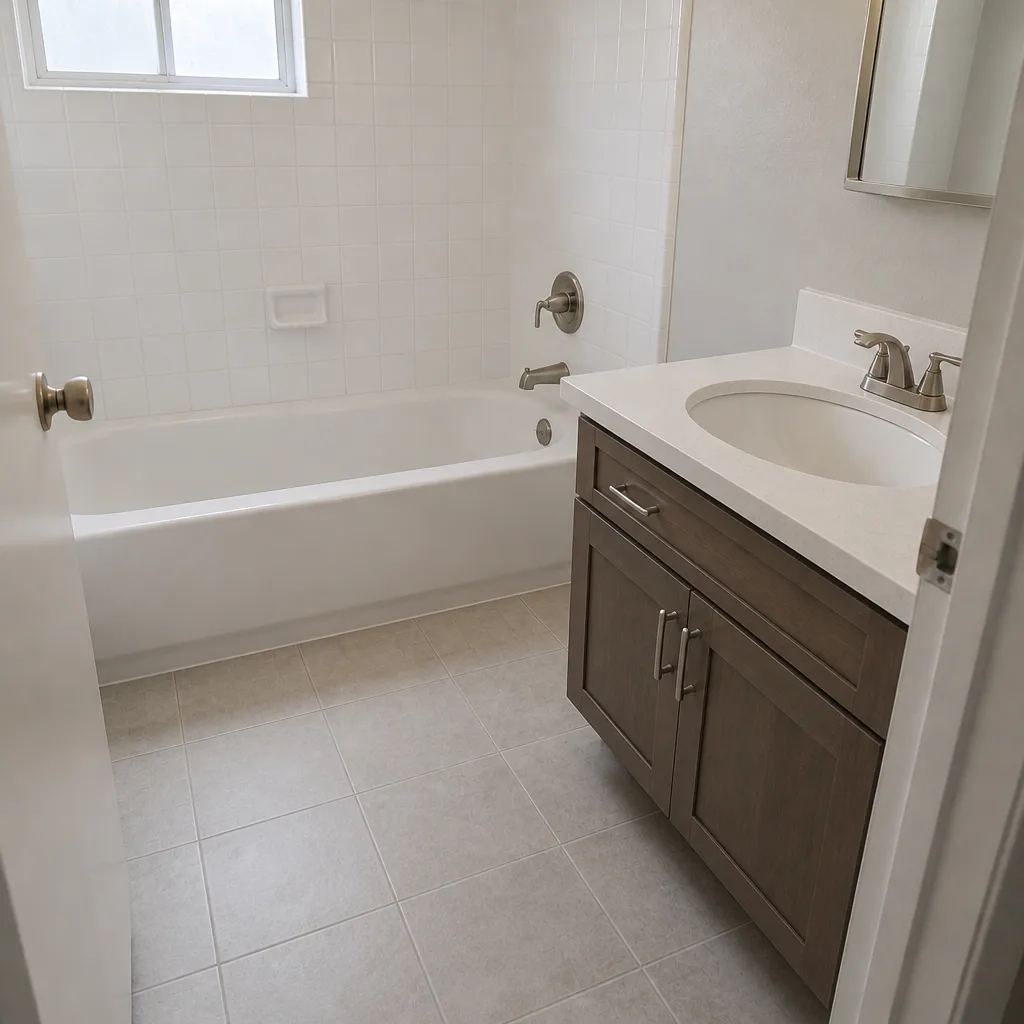 After
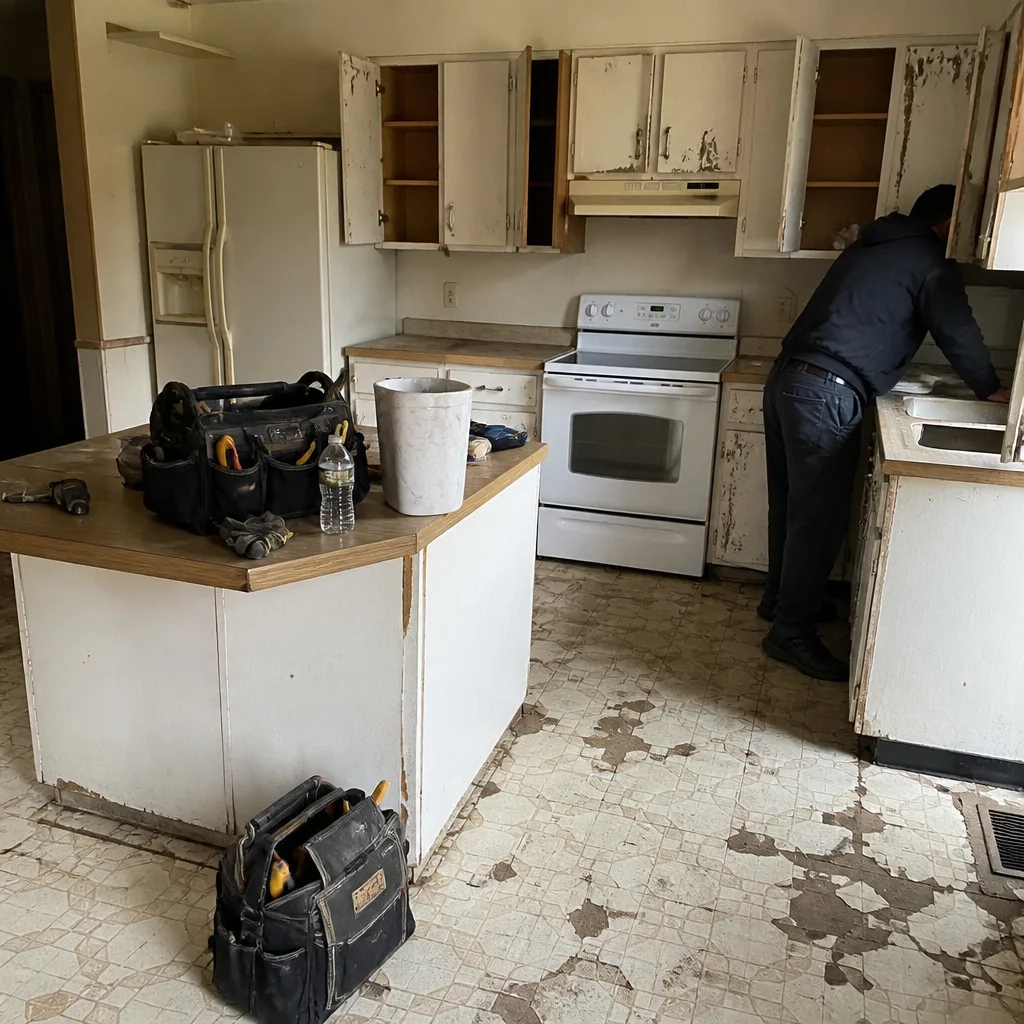 Before
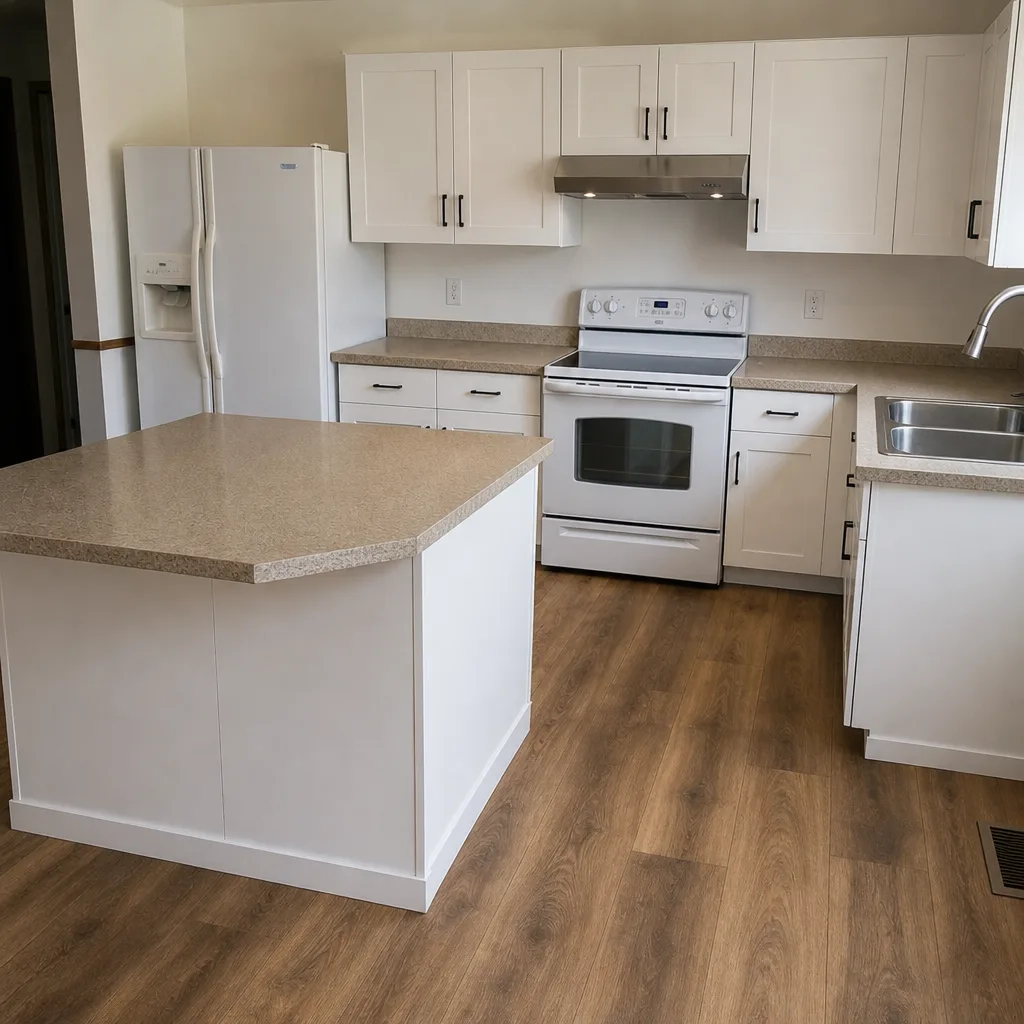 After
Frequently Asked Questions
A diagonal crack running out from the corner of a window or door frame is a shear stress indicator, meaning the structure around the opening is moving rather than settling. In a desert slab home like most in Winchester, it can point to differential movement at the slab or framing. It is not typically cosmetic. Have it looked at before you paint over it.
Usually not. A thin vertical hairline crack, especially above a doorway or along a drywall seam, is normally harmless expansion and contraction. The cracks that matter are diagonal, stair-step, or horizontal. When a hairline crack widens over time or turns diagonal, that’s when it deserves a closer look.
Yes. Mold behind tile comes from plumbing leaks, an unsealed shower pan, or poor drainage, not from rainfall. In a dry climate the moisture has nowhere to escape and stays trapped behind the substrate, which is the moisture-resistant layer behind your tile. A musty smell or grout that stays dark is an early sign. Call (844) 797-9439 if you’re unsure whether it’s a leak.
It shouldn’t crack within the first 90 days on a properly built job. Grout cracking that fast usually indicates the substrate flexed or the tile was set over an unstable surface. That’s a workmanship issue, not normal settling. It’s exactly the kind of failure a written guarantee should cover.
It covers workmanship that fails inside the one-year guarantee period. If the work fails in that window, we come back and fix it at no charge, with a free return visit and no service call or re-inspection fee. The terms are written and included with the project, so you know what’s covered before any work starts.
It depends on the scope. Structural repairs, foundation work, and bathroom remodels that move plumbing almost always need a permit and an inspection. Simple cosmetic fixes often don’t. Ask the contractor to pull the permit and pass the inspection, and get it written into the scope. If a bid doesn’t mention permits for structural work, ask why.
The Bottom Line
Most construction warning signs in a Winchester home are not subtle. They’re simply familiar enough that people talk themselves out of them. A diagonal crack from a window corner, a stair-step crack on a block wall, a bathroom that smells damp in the desert, or a cluster of failures in the first year are signals worth taking seriously. The difference between a fix and a bigger repair comes down to what you documented and what was in writing. Get a record, get a written price, and get a written guarantee. Free estimates are available in Winchester; call (844) 797-9439 to schedule yours and put the number on paper before any work starts.
Related Winchester Guides
If you’re moving from diagnosis to planning, these pages cover the next steps in more detail. A Kitchen Remodeling in Winchester project is where cabinet and substrate quality matter most, while a Bathroom Remodeling scope hinges on the waterproofing details we covered above. And before any of it begins, a general contractor visit can confirm what’s failing and what’s cosmetic.
Written by the team at Penhallow Remodeling Winchester.